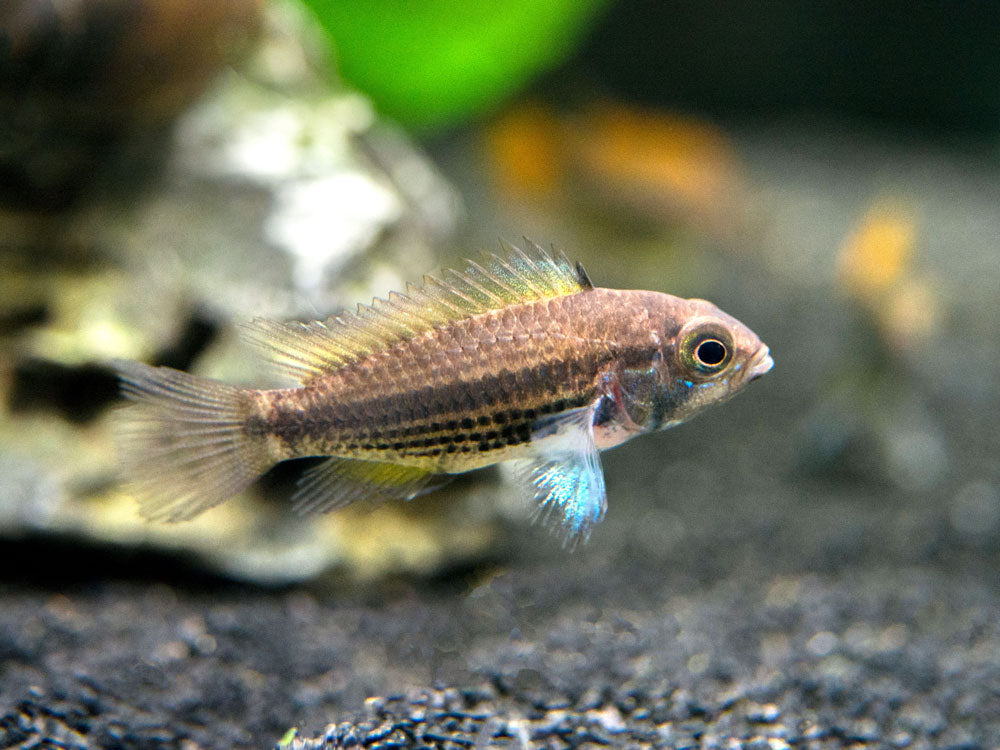
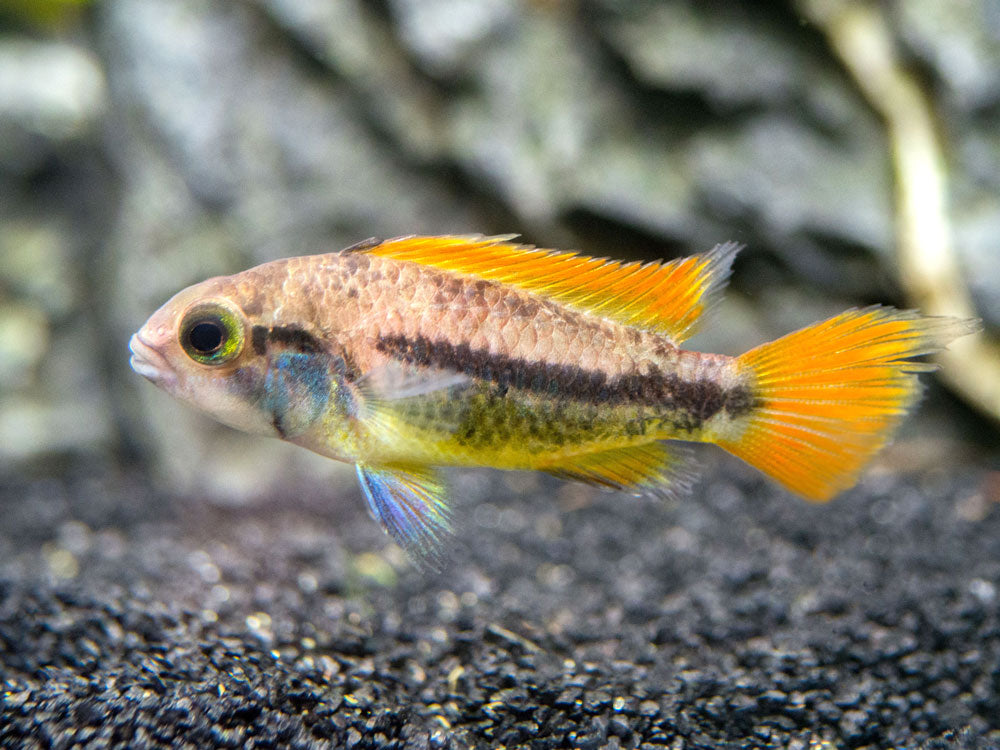
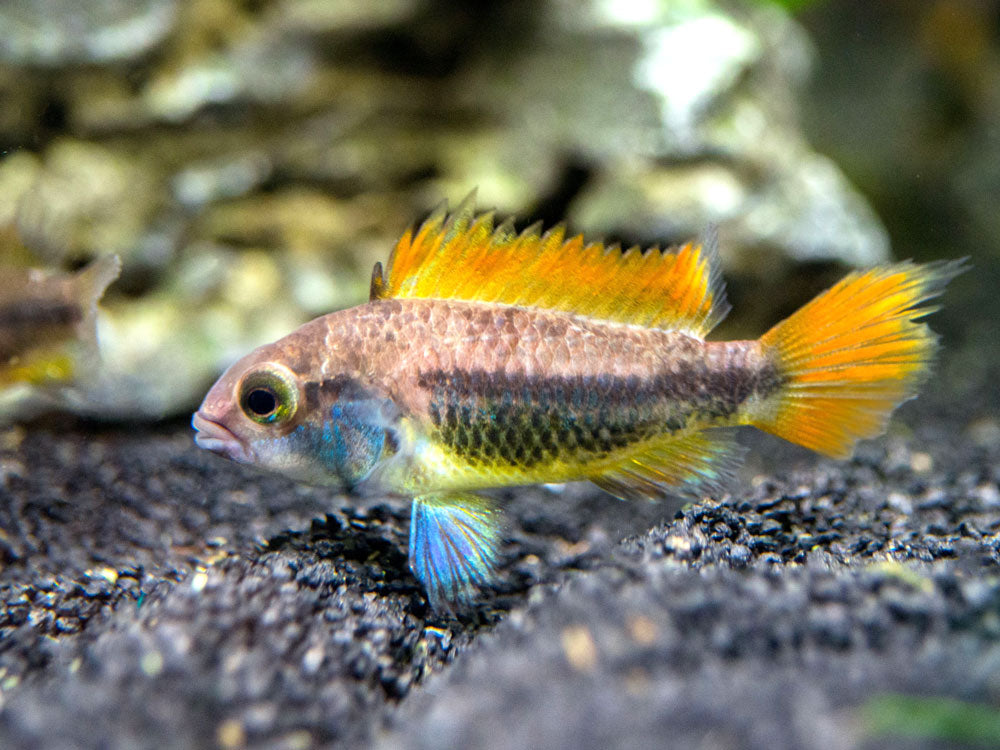
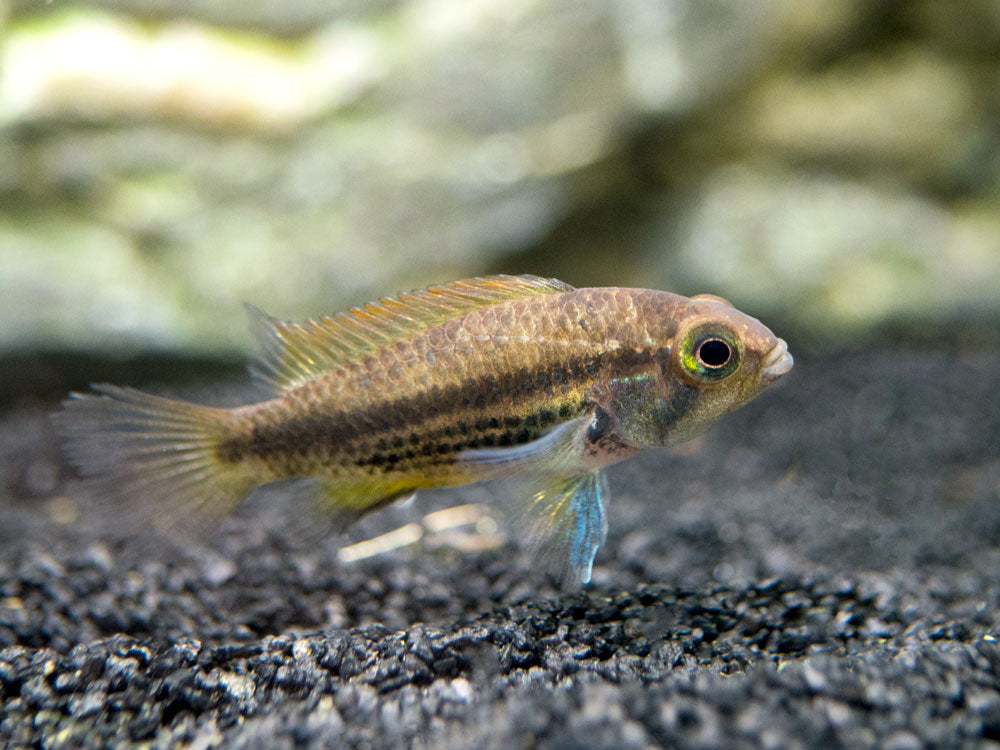
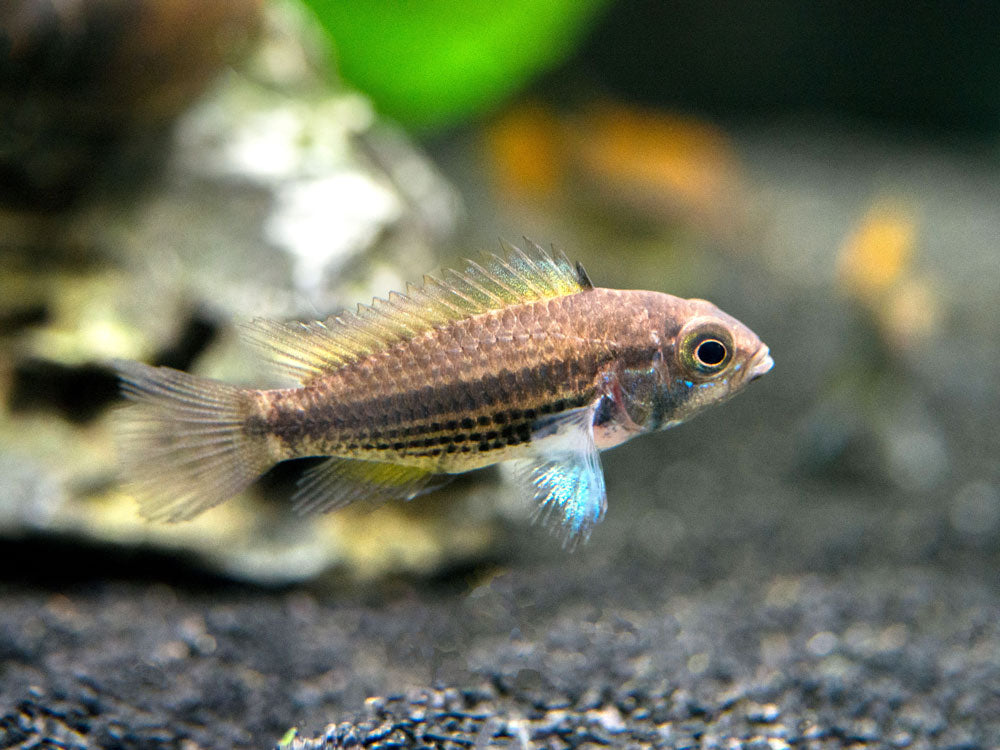
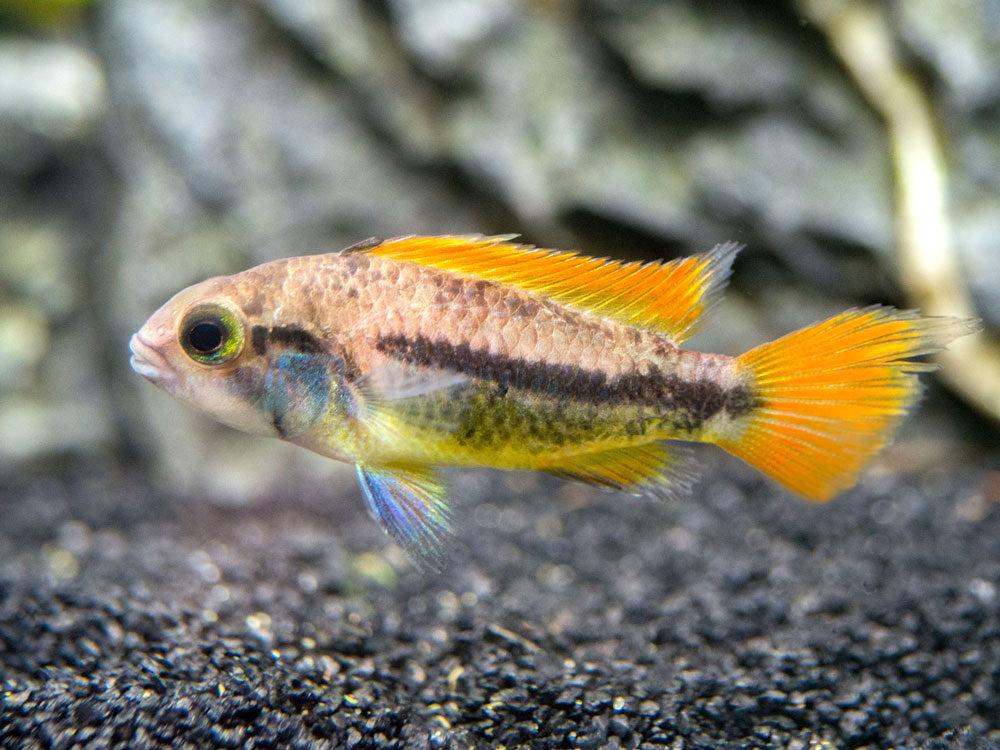
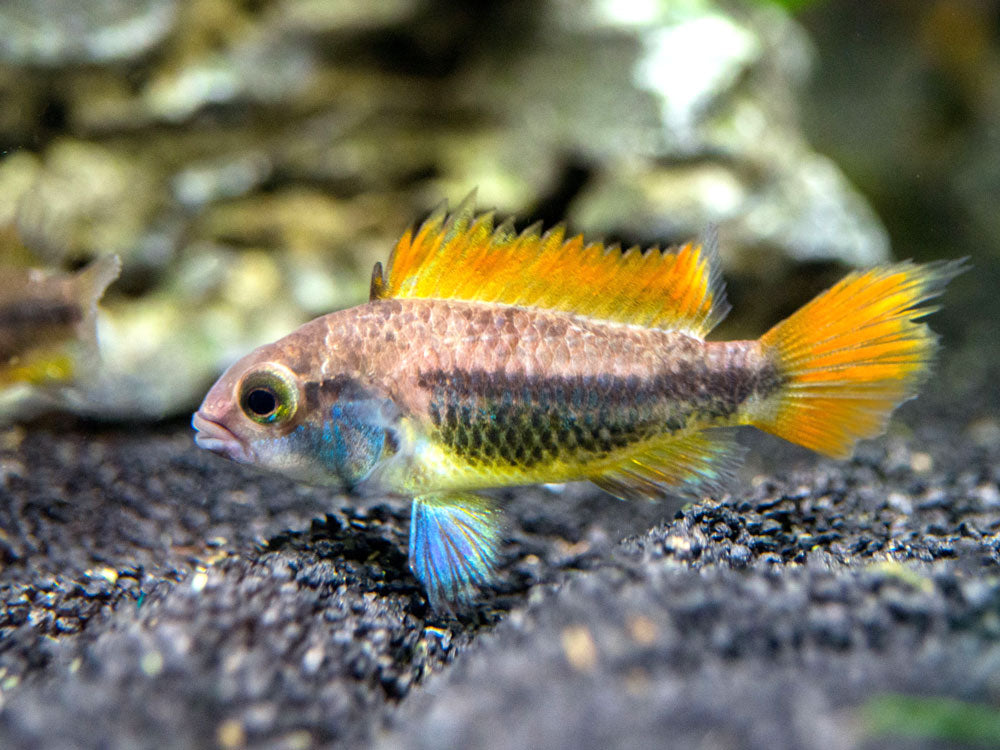
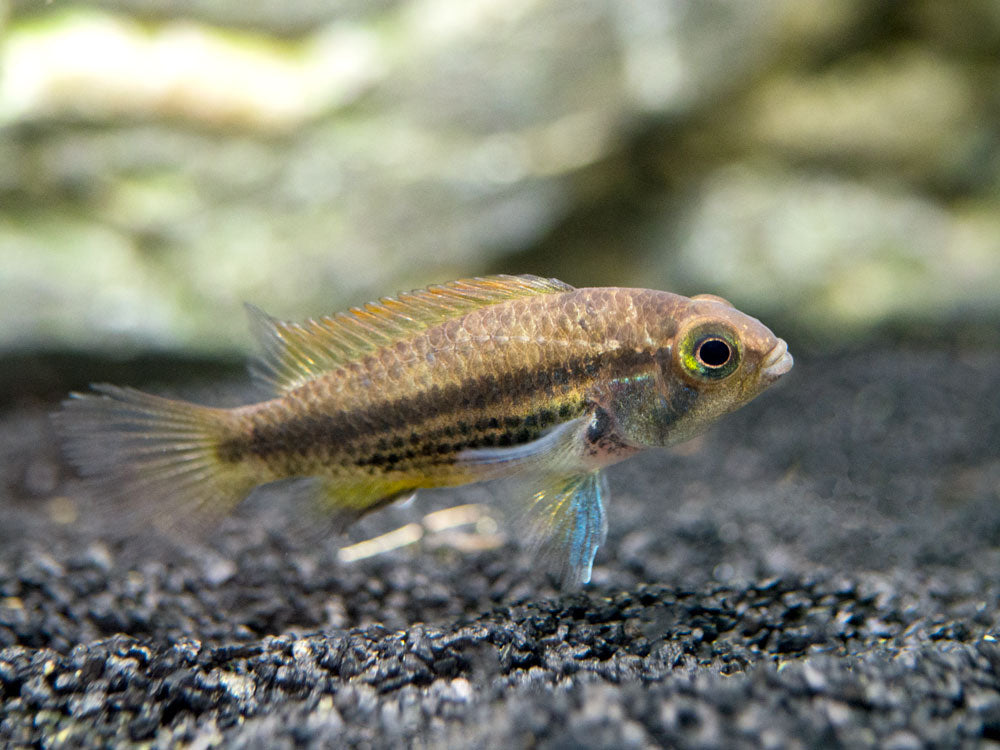
Orange Flash Cockatoo Dwarf Cichlid (Apistogramma cacatuoides), Tank-Bred
- In stock, ready to ship
- Backordered, shipping soon
For the safety of our animals, we ship live fish exclusively via UPS 1 Day Service. If your order contains this item, UPS 1 Day Service will be the only shipping option available during checkout.
Overview
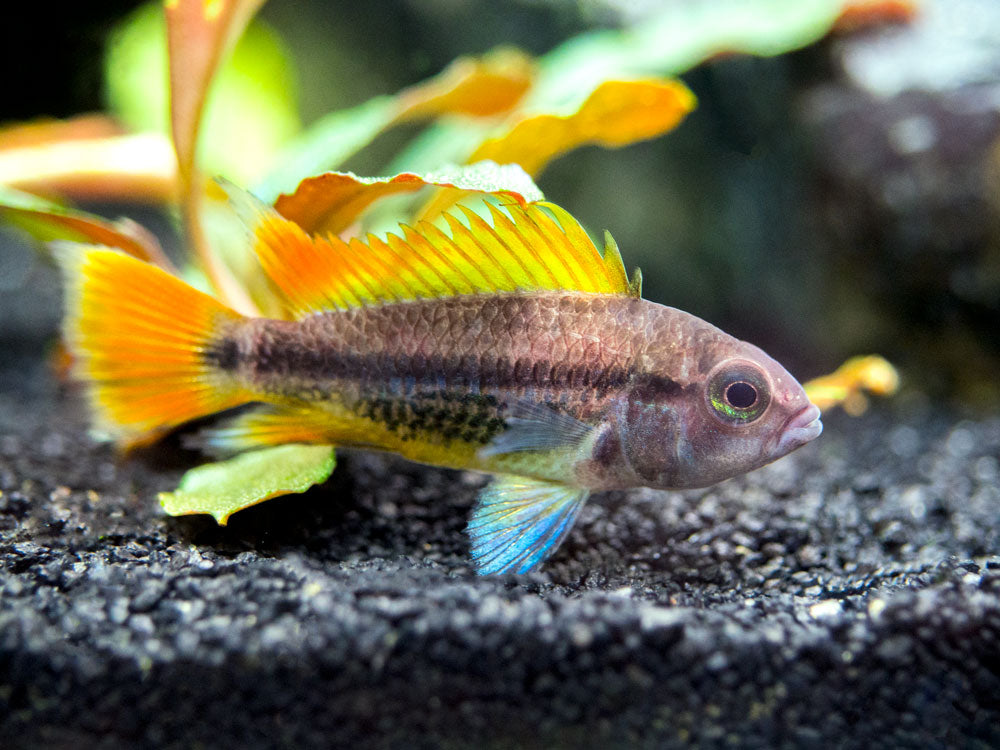
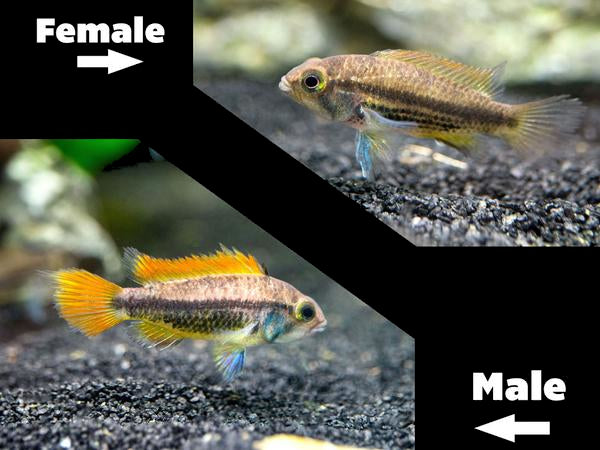
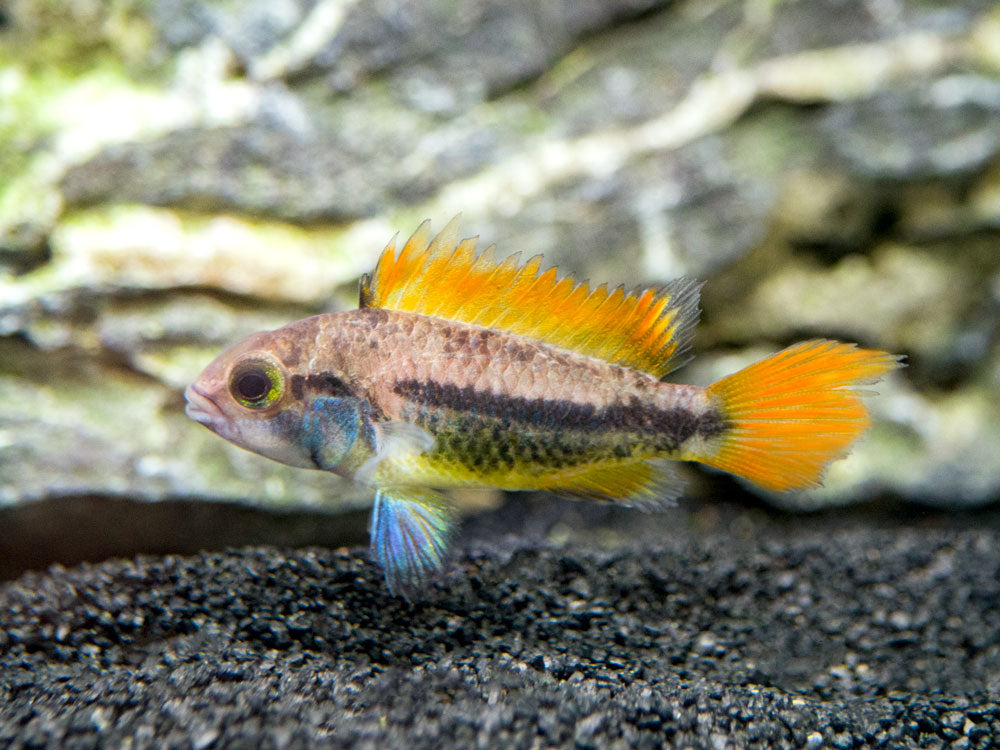
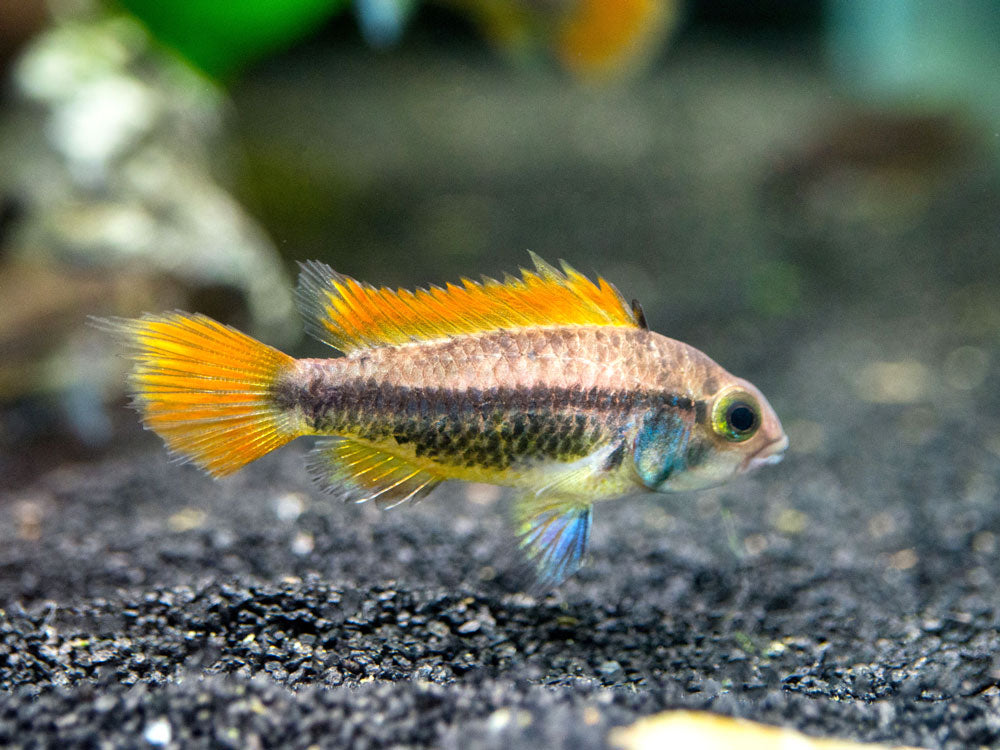
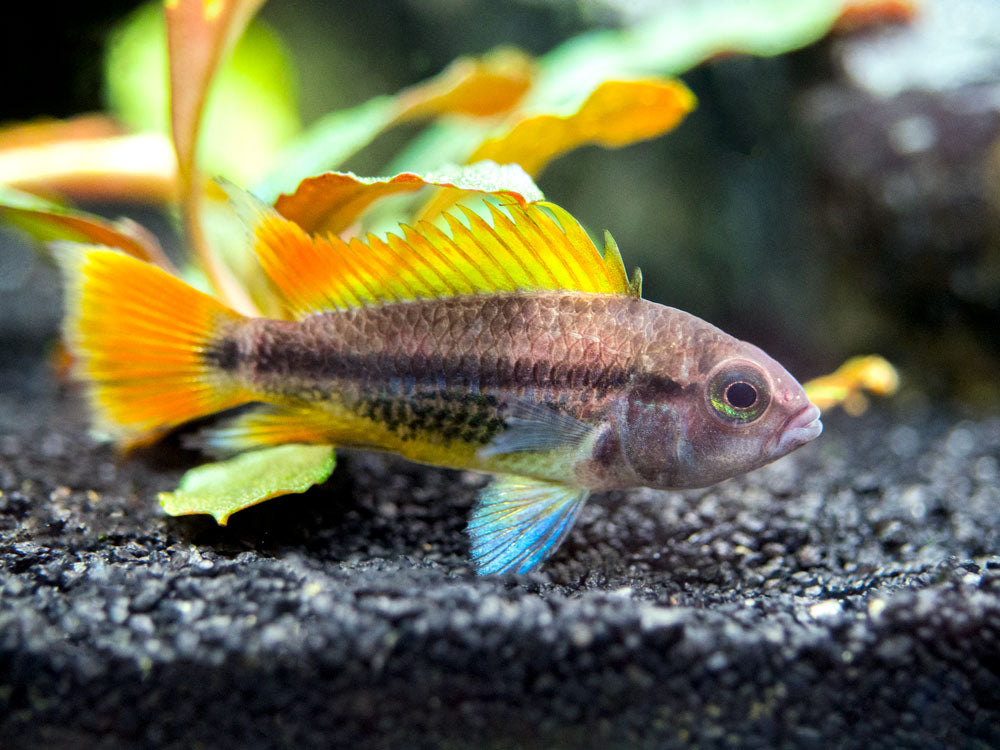
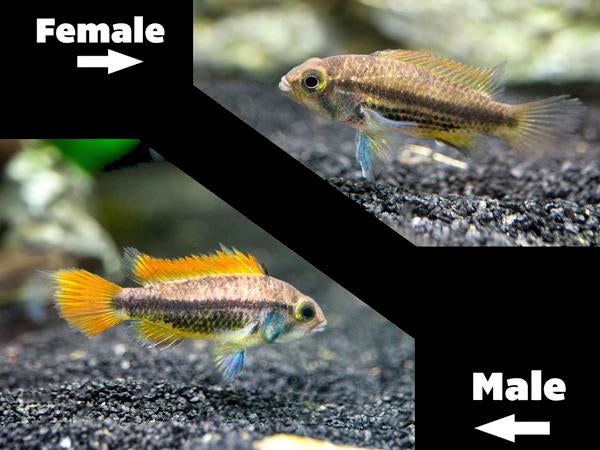
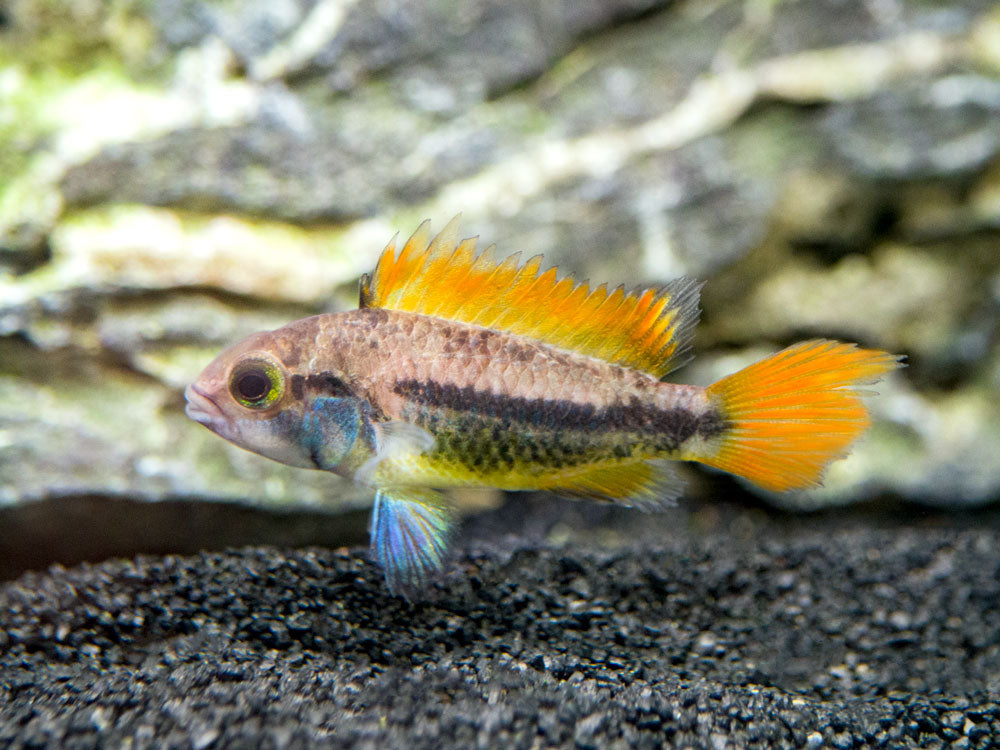
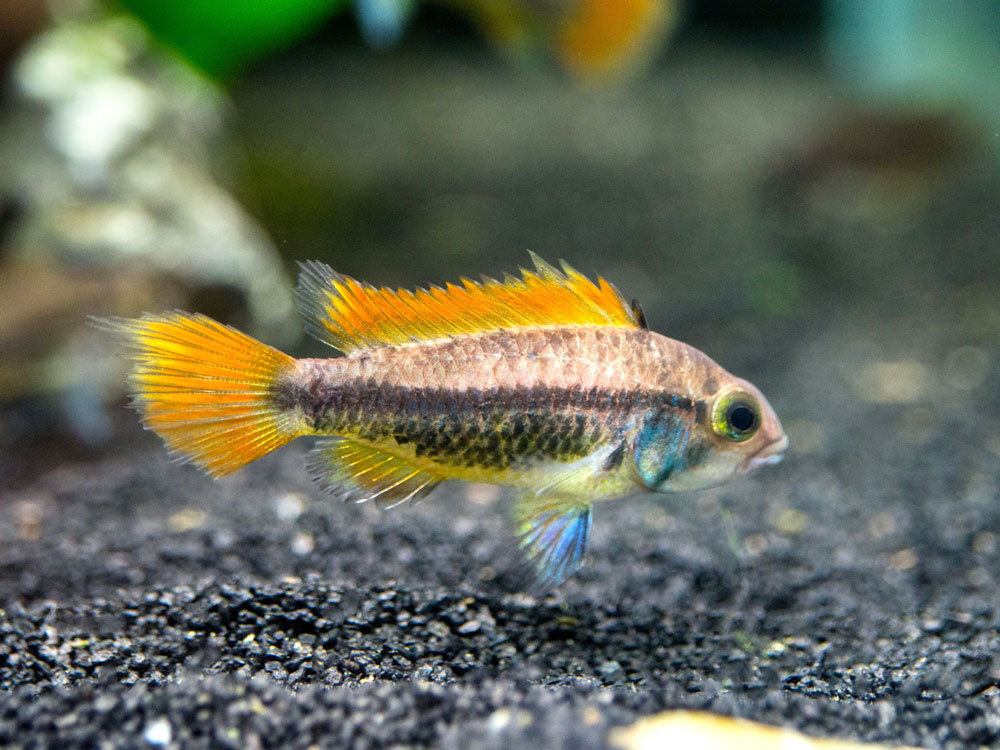
The Orange Flash Cockatoo Dwarf Cichlid is a spectacular selectively bred variety of Apistogramma cacatuoides known for its brilliant orange finnage, engaging personality, and fascinating dwarf cichlid behavior. Mature males develop vivid orange coloration throughout the dorsal, caudal, and anal fins, creating a striking contrast against their silver-blue bodies. Combined with the elongated dorsal fin rays that give Cockatoo Dwarf Cichlids their name, the result is a fish that commands attention without requiring a large aquarium.
One of the reasons we enjoy keeping Orange Flash Cockatoos is their ability to display many of the behaviors that make cichlids so appealing while remaining suitable for well-planned planted community aquariums. They are intelligent, curious, and constantly interacting with their environment, whether they are exploring caves, investigating leaf litter, or displaying to tank mates.
Tank-bred specimens adapt readily to aquarium life and are often more forgiving than many other dwarf cichlid species, making them an excellent introduction to the fascinating world of Apistogramma.
What We Love About This Fish
• Brilliant orange finnage that glows under aquarium lighting
• Fascinating dwarf cichlid personality and behavior
• Excellent centerpiece fish for planted aquariums
• Displays natural territorial and breeding behaviors
• Tank bred and well adapted to aquarium life
Quick Care Guide
• Care Level: Easy to Moderate
• Temperament: Semi-peaceful dwarf cichlid with territorial breeding behavior
• Diet: Carnivorous omnivore that readily accepts prepared, frozen, and live foods
• Origin: Tank Bred
• Average Adult Size: 3–4 inches (7.5–10 cm)
• Average Purchase Size: 1–2 inches (2.5–5 cm)
• Tank Level: Lower to middle water column
• Activity Level: Moderate and highly interactive
• Group Size: Single specimen, pair, or harem in appropriately sized aquariums
• Shrimp Compatibility: May prey upon dwarf shrimp and shrimp fry
The original Cockatoo Dwarf Cichlid (Apistogramma cacatuoides) originates from slow-moving tributaries, streams, and flooded forest habitats within the upper Amazon Basin of Peru and Brazil. These environments are often filled with submerged roots, fallen branches, leaf litter, and dense vegetation that provide shelter and breeding sites.
The Orange Flash variety was developed through selective breeding to enhance the vibrant orange coloration found throughout the fins while maintaining the hardiness and engaging behavior that have made Apistogramma cacatuoides one of the most popular dwarf cichlids in the hobby.
Although selectively bred, these fish still appreciate aquariums that incorporate natural cover, caves, driftwood, and botanical materials that mimic the environments of their wild ancestors.
Aquascaping
Orange Flash Cockatoo Dwarf Cichlids reward aquarists who create aquariums rich in structure and natural hiding places. Unlike open-water fish, they spend much of their time exploring the lower portions of the aquarium, investigating caves, root systems, and leaf litter in search of food and territory.
We especially enjoy using Malaysian Driftwood, Spiderwood, and natural stone to create visual barriers and territorial boundaries. Coconut caves, ceramic spawning caves, and naturally formed crevices provide shelter and encourage natural breeding behavior.
Plants such as Java Fern (Microsorum pteropus), Anubias (Anubias spp.), Cryptocoryne (Cryptocoryne spp.), and Amazon Sword (Echinodorus spp.) complement their habitat while maintaining open swimming areas. Floating plants such as Amazon Frogbit (Limnobium laevigatum) can help soften lighting and create a more relaxed environment.
Aquatic Arts Indian Almond Leaves, Guava Leaves, Alder Cones, and other botanicals are particularly effective additions because they help recreate the leaf-litter habitats favored by many South American dwarf cichlids while supporting beneficial microbial activity throughout the aquarium.
For aquarists looking to create a South American-inspired aquascape, few fish integrate more naturally into planted, wood-filled layouts than Orange Flash Cockatoo Dwarf Cichlids.
Diet and Feeding
Orange Flash Cockatoo Dwarf Cichlids are opportunistic carnivorous omnivores that naturally consume insect larvae, tiny crustaceans, worms, and other small aquatic organisms.
In the aquarium, they thrive on a varied diet that combines quality prepared foods with protein-rich live and frozen offerings. High-quality micro pellets and premium cichlid foods provide an excellent nutritional foundation, while Live Moina (Moina macrocopa), Live Daphnia (Daphnia spp.), Baby Brine Shrimp (Artemia nauplii*), and frozen foods help maintain vibrant coloration and breeding condition.
One of the most enjoyable aspects of keeping this species is watching them hunt and forage among plants, driftwood, and leaf litter. Their active feeding behavior is a constant reminder of their natural instincts and intelligence.
Tank Mates and Compatibility
Orange Flash Cockatoo Dwarf Cichlids are generally peaceful by cichlid standards, but they remain territorial fish that appreciate clearly defined spaces within the aquarium. When housed appropriately, they make outstanding centerpiece fish for planted South American community aquariums.
Peaceful schooling fish such as Cardinal Tetras (Paracheirodon axelrodi), Ember Tetras (Hyphessobrycon amandae), Rummy Nose Tetras (Hemigrammus rhodostomus), Pencilfish (Nannostomus spp.), and Hatchetfish (Carnegiella spp.) are among our favorite companions because they occupy different areas of the aquarium while helping the cichlids feel secure.
Bottom-dwelling species such as Corydoras Catfish (Corydoras spp.) can coexist successfully in larger aquariums where ample territory and hiding places are available.
Algae-eating species such as Bristlenose Plecos (Ancistrus spp.) and Otocinclus (Otocinclus spp.) often integrate well into these aquariums without creating significant territorial conflicts.
Aggressive cichlids, fin nippers, and highly territorial fish should generally be avoided.
Ecosystem Match
Orange Flash Cockatoo Dwarf Cichlids excel in planted South American community aquariums featuring peaceful schooling fish, driftwood, caves, leaf litter, and botanical enrichment.
Shrimp Safe
Orange Flash Cockatoo Dwarf Cichlids are not considered shrimp safe.
Like many dwarf cichlids, they are natural micropredators that actively hunt small crustaceans and insect larvae in the wild. As a result, shrimp fry are very likely to be consumed, and smaller dwarf shrimp may also be viewed as potential prey.
Some aquarists successfully keep adult Amano Shrimp (Caridina multidentata) alongside Orange Flash Cockatoos, particularly in heavily planted aquariums with abundant cover. However, success varies depending on the individual fish and aquarium setup.
Dense mosses, driftwood, leaf litter, and botanical zones may improve shrimp survival rates but should not be relied upon as a guarantee.
Shrimp Compatibility Rating
Adult Amano Shrimp: Moderate Compatibility
Adult Neocaridina Shrimp: Low Compatibility
Juvenile Shrimp: Poor Compatibility
Shrimplets: Very High Predation Risk
Breeding
Orange Flash Cockatoo Dwarf Cichlids are cave-spawning dwarf cichlids and are considered one of the easier Apistogramma species to breed.
Females typically select a cave, coconut shell, or protected crevice where eggs are deposited. Following spawning, the female becomes highly protective of both the eggs and developing fry while the male patrols the surrounding territory.
Aquariums containing caves, driftwood, leaf litter, and botanical materials help encourage natural breeding behavior. Live foods such as Baby Brine Shrimp (Artemia nauplii*) and Live Moina (Moina macrocopa) are excellent conditioning foods prior to spawning.
One of the most rewarding experiences for Apistogramma keepers is observing the female carefully shepherd her fry throughout the aquarium while defending them from potential threats.
Breeding Difficulty
Moderate
Reproduction Type
Cave-Spawning Egg Layer
Frequently Asked Questions
Are Orange Flash Cockatoo Dwarf Cichlids good for beginners?
Yes. They are often considered one of the best beginner-friendly dwarf cichlids due to their hardiness, manageable size, and adaptability.
How large do Orange Flash Cockatoo Dwarf Cichlids get?
Adult males typically reach 3–4 inches, while females usually remain somewhat smaller.
Can Orange Flash Cockatoo Dwarf Cichlids live in a community aquarium?
Yes. They do very well with peaceful schooling fish and other non-aggressive species when adequate territory is provided.
Are Orange Flash Cockatoo Dwarf Cichlids shrimp safe?
No. They are natural micropredators and may consume shrimp, especially smaller individuals and shrimp fry.
What is the minimum aquarium size for Orange Flash Cockatoo Dwarf Cichlids?
A 20-gallon long aquarium is generally recommended for a pair, while larger aquariums provide greater flexibility for community setups.
Do Orange Flash Cockatoo Dwarf Cichlids need caves?
Yes. Caves and sheltered areas are highly beneficial and become essential if breeding is desired.
What foods bring out the best coloration?
Live and frozen foods such as Baby Brine Shrimp, Daphnia, Moina, and Bloodworms help maintain vibrant coloration and breeding condition.
Can multiple males be kept together?
In larger aquariums with plenty of visual barriers and territories, multiple males may coexist, although aggression should always be monitored.
Why are they called Cockatoo Dwarf Cichlids?
The elongated dorsal fin rays of mature males resemble the crest feathers of a cockatoo, inspiring their common name.
Are Orange Flash Cockatoo Dwarf Cichlids tank bred?
Yes. These specimens are tank bred and adapted to aquarium life.
For the safety of our animals, we only ship live fish, crabs, and select other inverts exclusively via UPS 1 Day Air. If your order contains this item, you will only see UPS 1 Day Air as a shipping option during checkout. If other items are in your cart that can ship with 2 day or standard shipping options the only shipping method you can still select is UPS 1 Day Air.
UPS 1 Day is a description of the duration of time a shipment will spend in transit once it has been shipped. This does not guarantee the package will be shipped the same or next day from which the order was placed.
Shipping Schedule for this service
Current Handling Time:
1-9 business days
Here at Aquatic Arts, we consider the welfare of the live animals we are shipping to be of the foremost importance. This process is much more involved than simply creating a shipping label and affixing it to a box. Depending on the order, it takes from 4 to 7 people to complete this process properly. We check the weather conditions here where they fly out of the Indianapolis UPS facility and the destination for each shipment. We start early each morning and go through a multi-step process to have the day's shipments prepared in time for the UPS pickup. The volume of orders in our system also affects the processing time. Therefore our stated handling time is 1-9 business days.
Shipping Rate
Pricing is by size of package needed to fill entire order and distance it must travel. It will be calculated at checkout.
