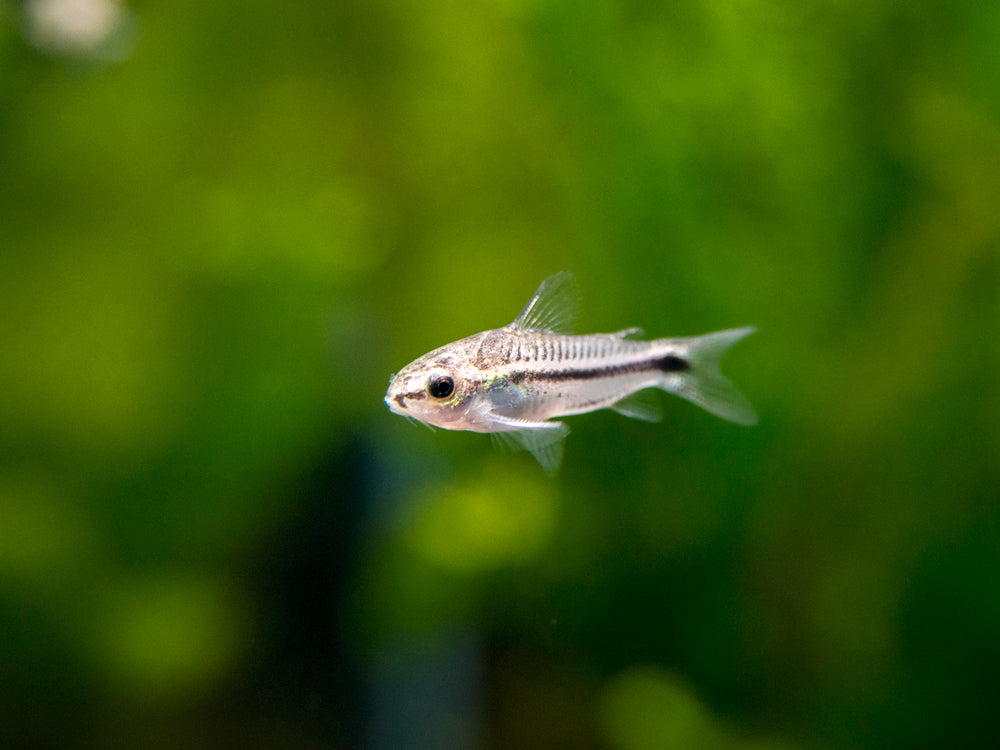
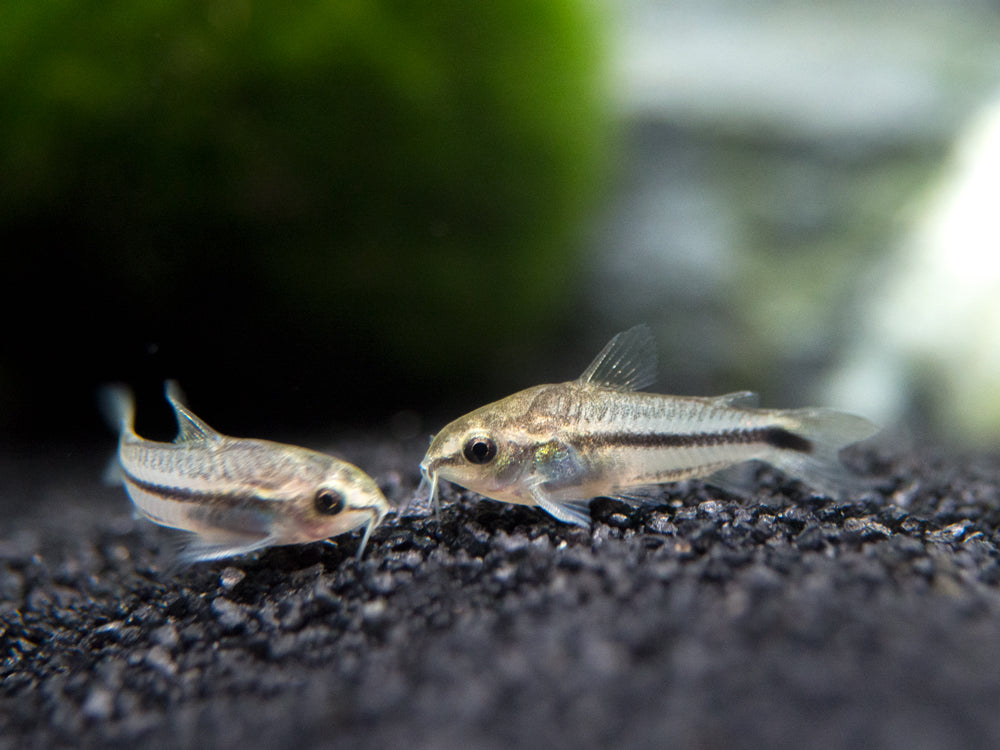
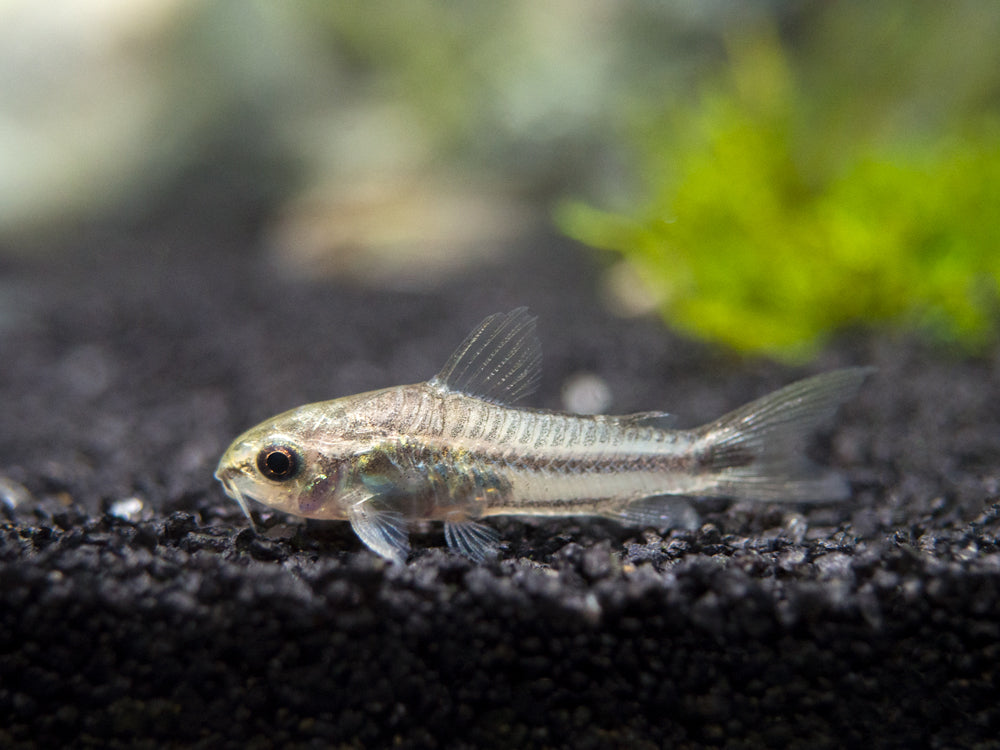
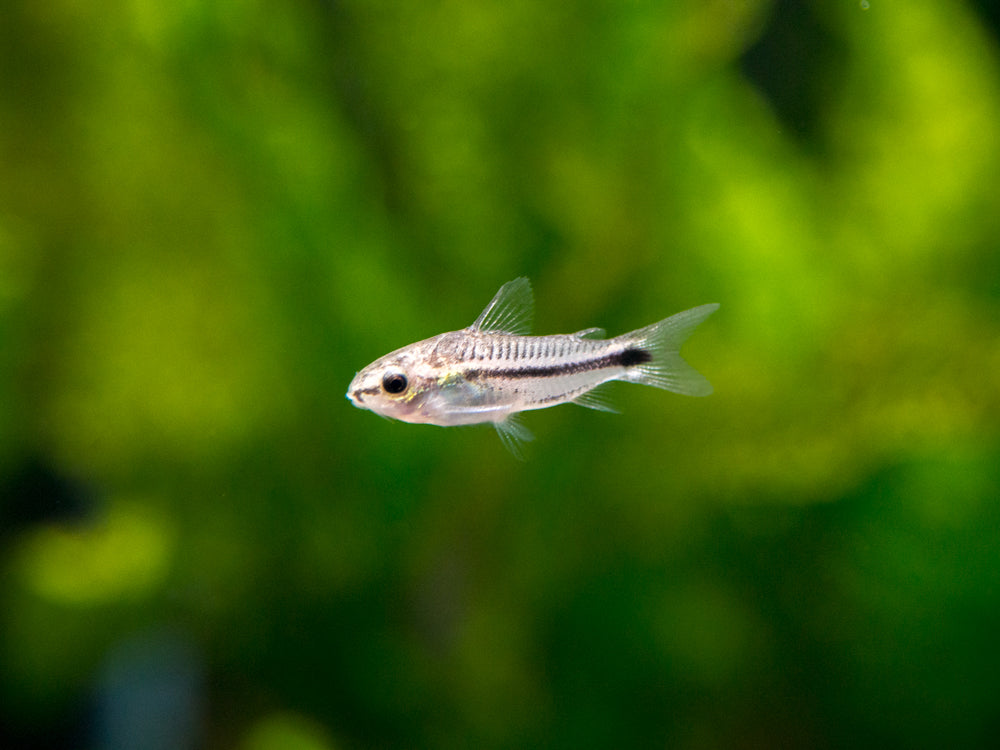
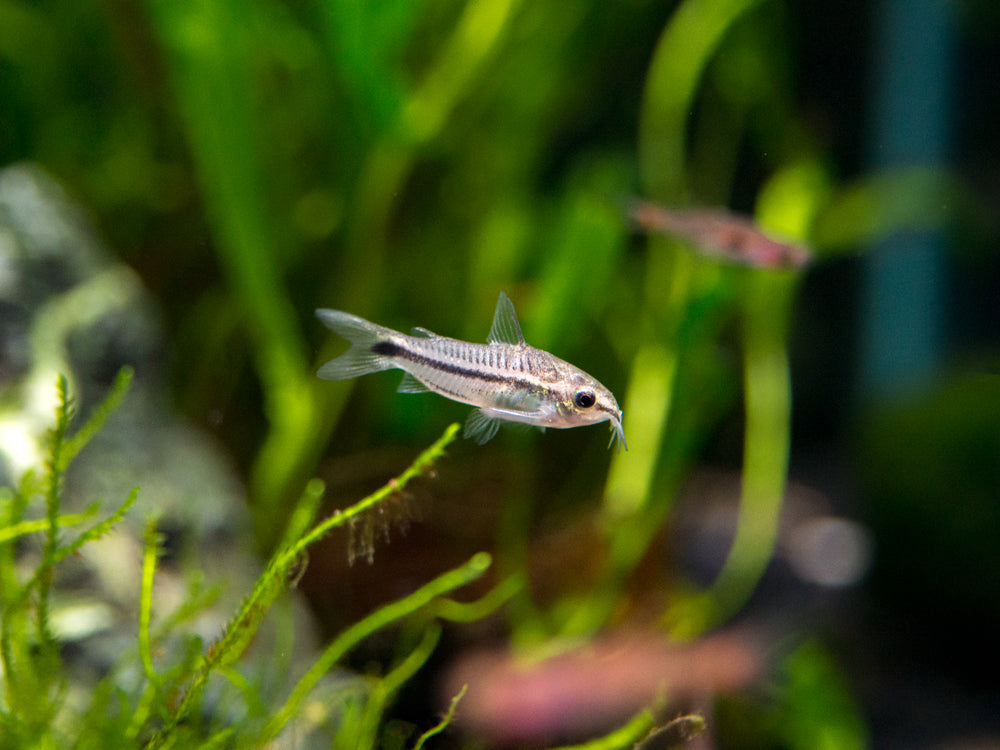
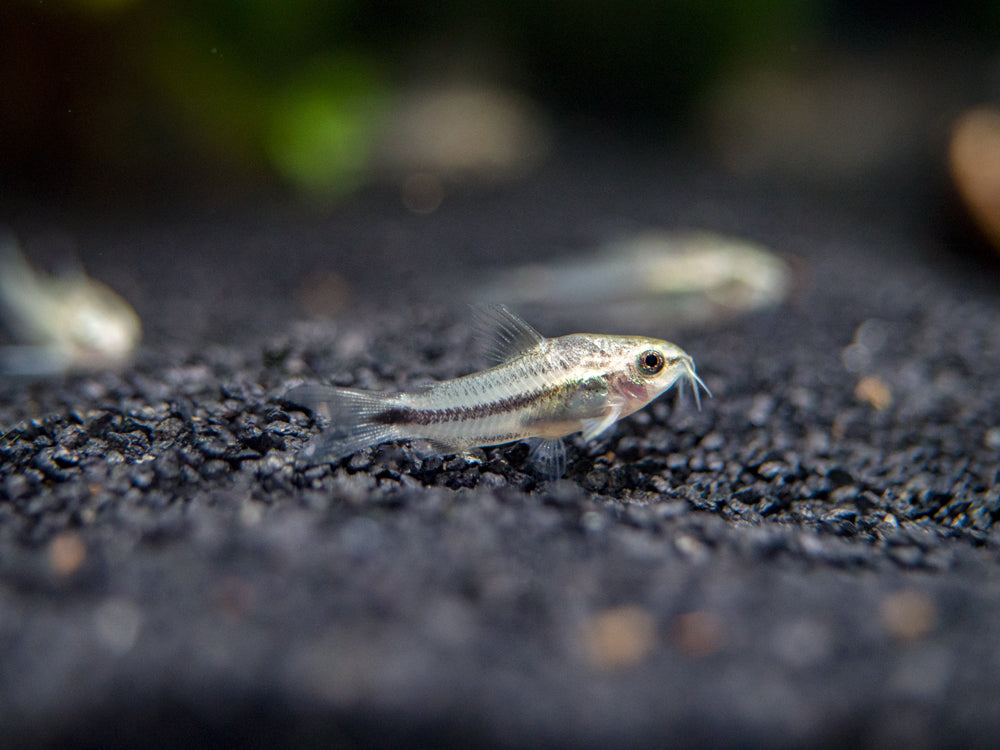
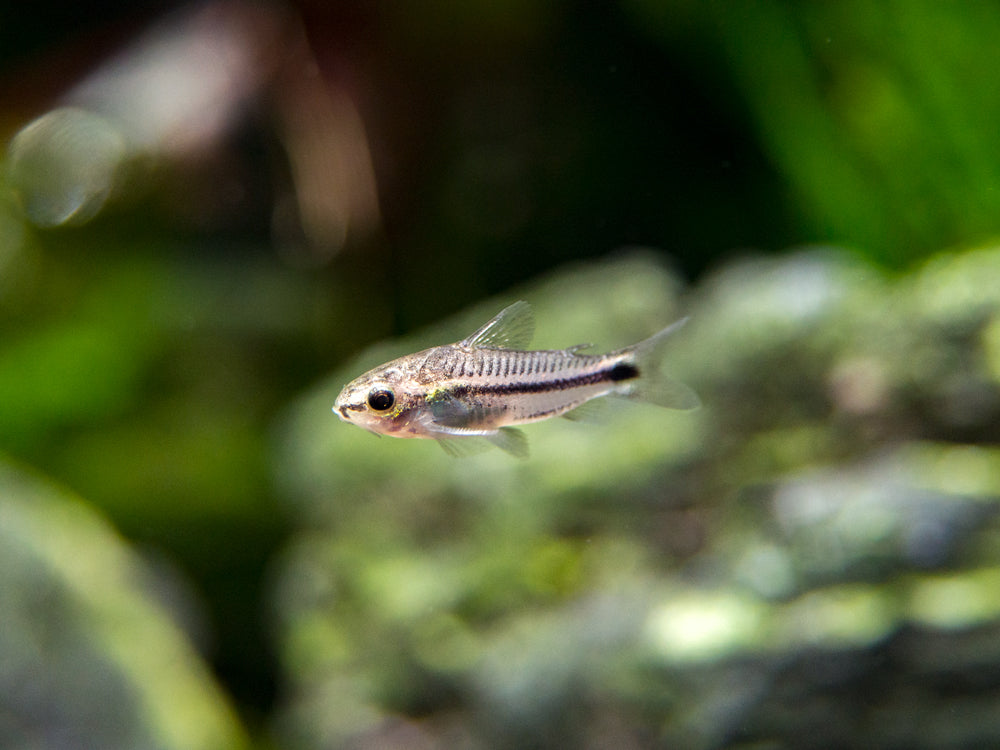
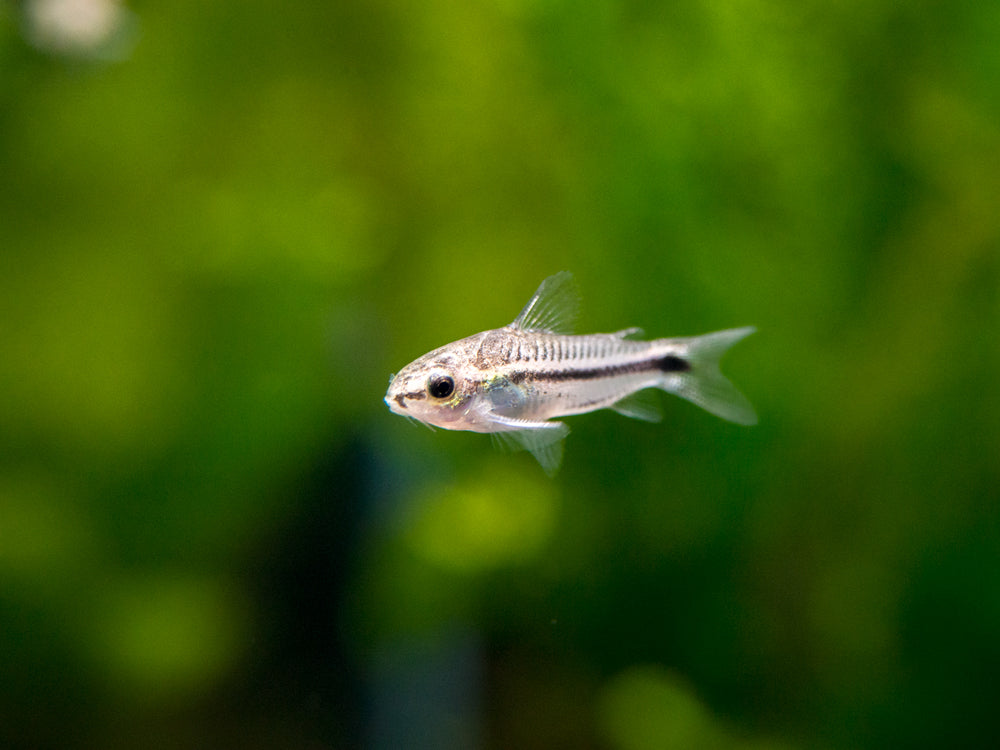
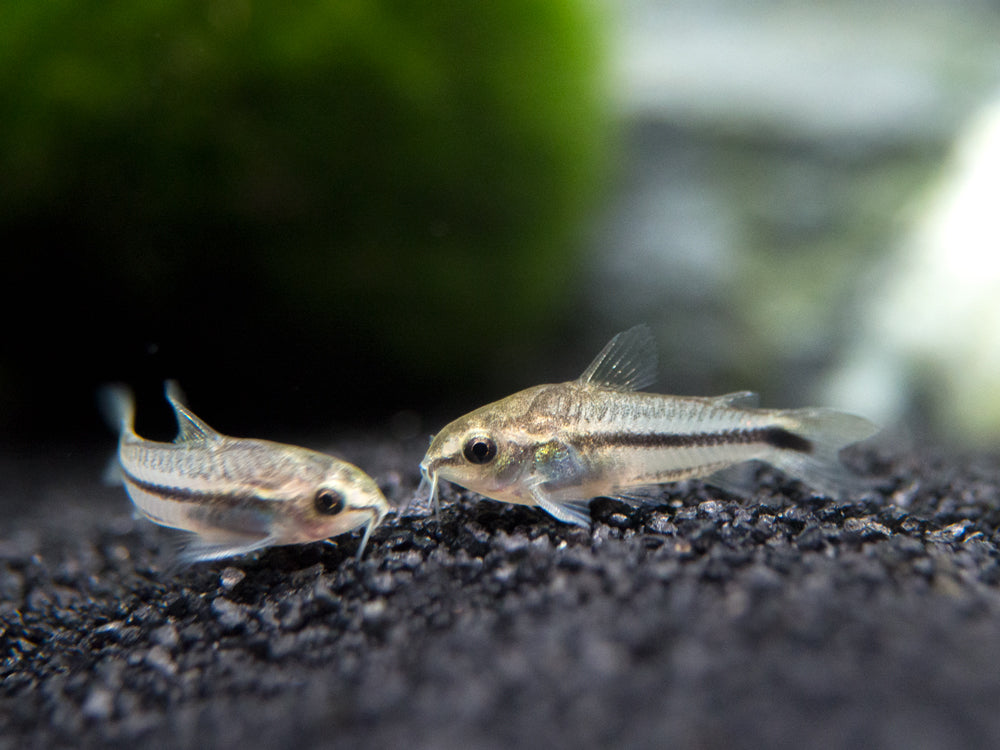
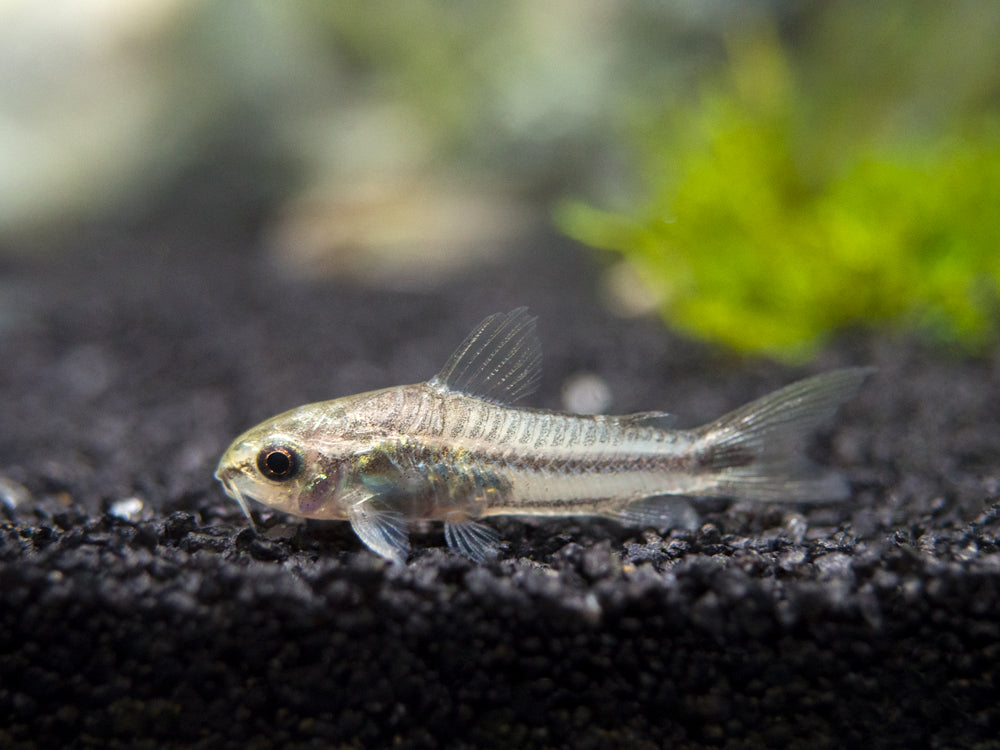
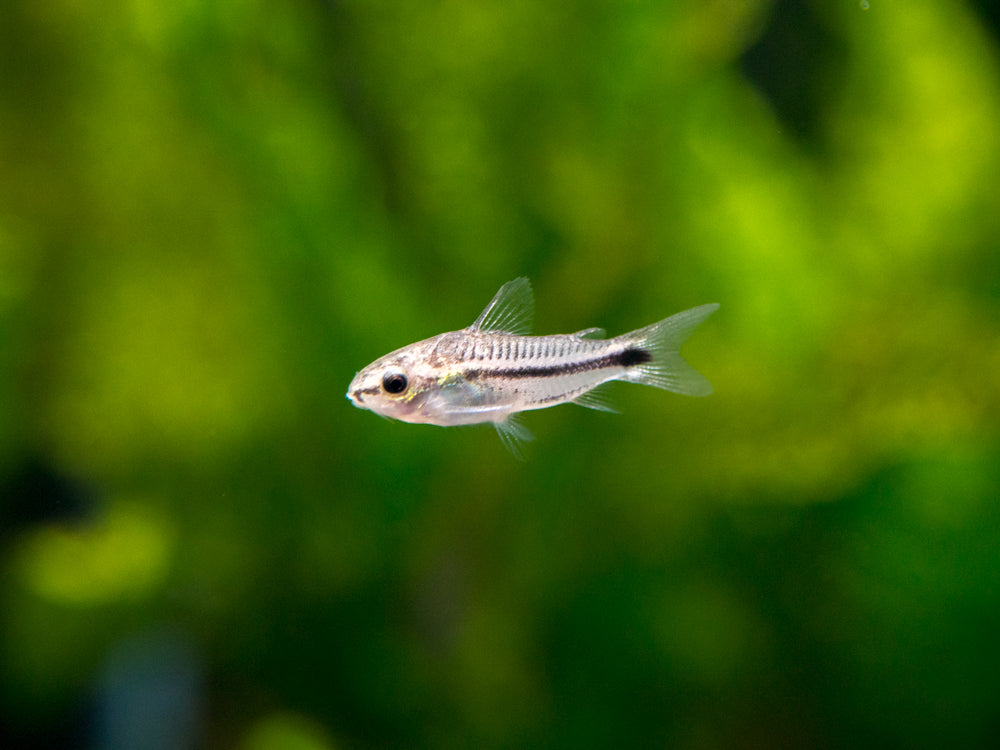
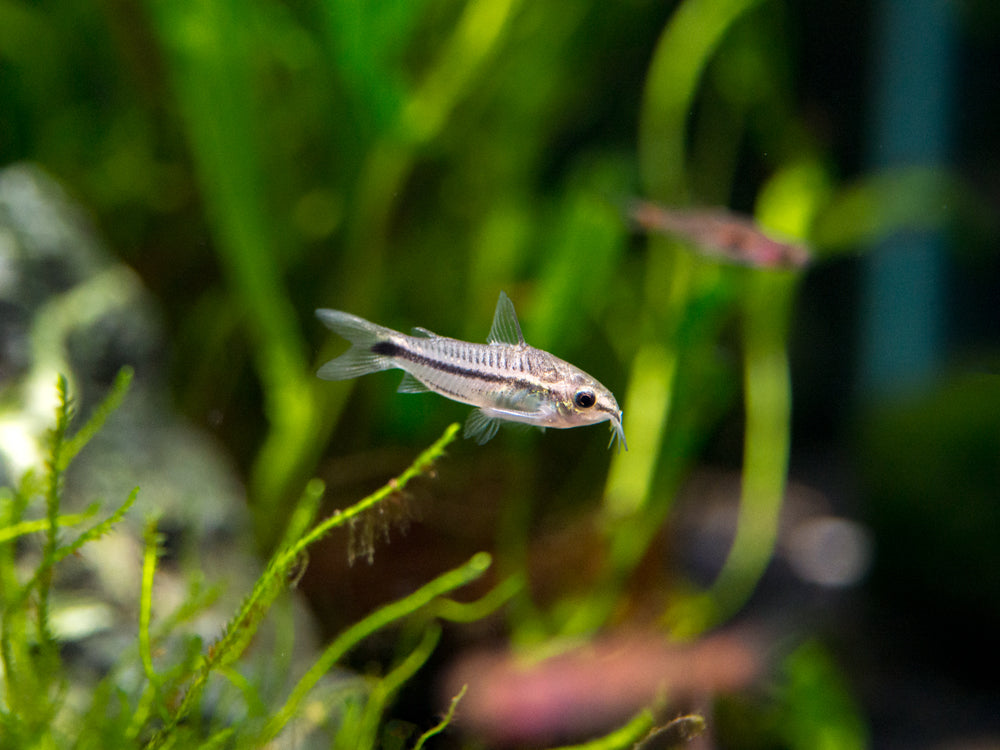
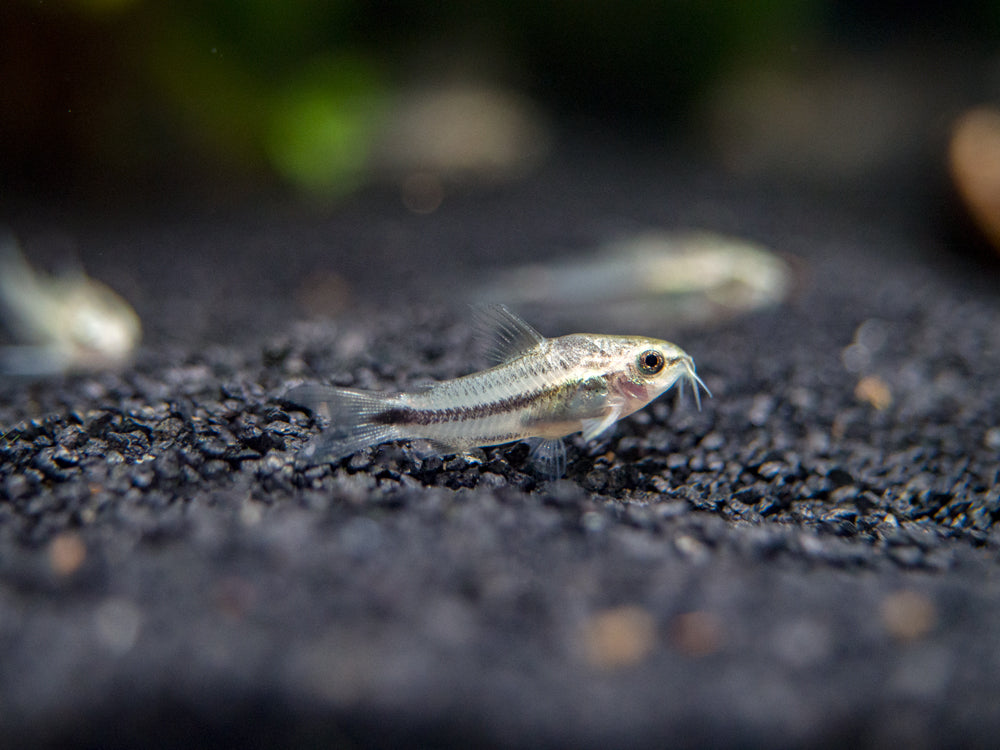
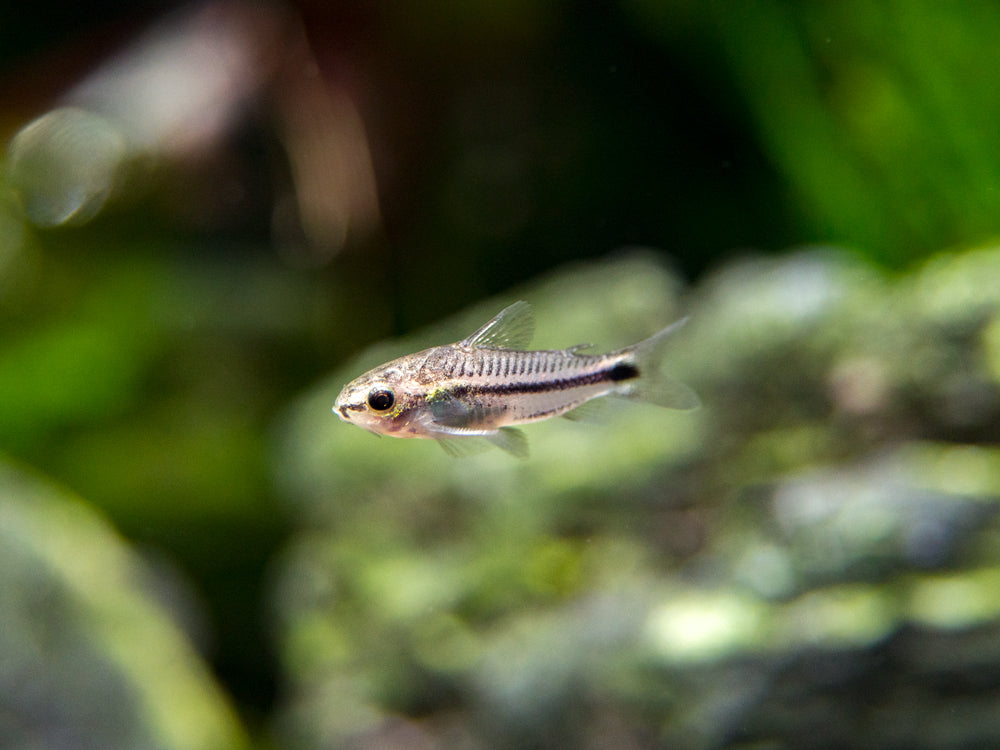
Pygmy Cory Catfish (Corydoras pygmaeus), Tank-Bred
- In stock, ready to ship
- Backordered, shipping soon
We are proud to offer tank-raised specimens of this peaceful, perfect nano and planted tank bottom-dweller! These tank-raised specimens are considerably younger, healthier, and more durable than their wild-caught counterparts.
The Pygmy Cory Catfish (Corydoras pygmaeus) is a very animated, distinctively marked schooling fish that is perfect for the nano, community, and planted aquarium. This species is very popular with many shrimp keepers due to its exceptionally small size and peaceful disposition.
The Pygmy Cory Catfish is a very peaceful schooling fish that is compatible with most nano aquarium animals. It might eat dwarf shrimp fry, but is generally safe to keep with adult dwarf shrimp. It is a classic scavenger and will inhabit and feed at the aquarium floor, which should be comprised of sand or smooth gravel. Very coarse substrate can damage its delicate barbels and underbelly. This fish is otherwise undemanding as it will accept most dry and frozen foods. It is adaptable to most tropical freshwater conditions as long as standard regular maintenance is performed and sudden changes are avoided.
- Very peaceful and hardy addition to almost any aquarium
- Compatible with most adult dwarf shrimp and other invertebrates
- Thrives in schools in well-planted aquaria
- Distinctive coloration and group schooling behavior.
- Temperature: 72° - 79° F (22° - 25° C)
- pH: 6.2 - 7.2. Softer water is preferred, but this fish is flexible as long as sudden changes are avoided.
- KH: 6 - 10 dKH
- Minimum tank size: 8 gallons for a school of 6
- Diet: High-quality flake, pellet and wafer foods as well as frozen foods such as bloodworms and Tubifex.
- Social behavior: Peaceful; requires a school of 6 or more to thrive.
- Origin: Tank-Bred, but indigenous to South and Central America.
- Average adult size: 1.4 inches (3.5 cm)
- Average purchase size: 1/4 inches (.635 cm) to 1/2 inch (1.3 cm)
The original Pygmy Cory Catfish (Corydoras pygmaeus) was first documented in Brazil within the Rio Madeira basin of the Amazon watershed. This species inhabits slow-moving tributaries, shallow floodplain margins, and vegetated backwaters.
Native environments typically feature:
- Fine sand or silt substrate
- Soft to moderately soft water
- Submerged roots and leaf litter
- Gentle current
- Warm, stable temperatures
Unlike many Corydoras species that remain primarily substrate-bound, Corydoras pygmaeus frequently occupies lower midwater zones while foraging in groups.
Understanding this habitat supports proper aquarium design, particularly the use of soft substrate, stable parameters, and structured planting.
Pygmy Cory Catfish (Corydoras pygmaeus) thrive in planted aquariums that combine soft substrate, layered plant structure, and open swim space. Because this species utilizes both the substrate and lower midwater zones, aquascape layout directly influences comfort and natural schooling behavior.
• Substrate: Fine sand is strongly recommended to protect sensitive barbels during natural sifting behavior. Avoid coarse gravel or sharp substrates.
• Plants: Stem plants such as Rotala, Ludwigia, and Limnophila create vertical structure while allowing open swim corridors. Foreground plants and mosses provide visual security without restricting movement. Floating plants may help diffuse lighting and increase confidence.
• Hardscape: Driftwood, root structures, and smooth stones create shaded resting zones and natural visual breaks.
• Botanicals: Light use of Indian Almond Leaves or similar leaf litter can replicate natural floodplain environments and encourage natural behavior. Avoid excessive debris buildup that may trap waste.
• Open Swim Lanes: Maintain intentional open areas in the lower third of the aquarium to allow coordinated schooling behavior.
• Flow: Gentle to moderate flow is preferred. Avoid strong directional current that may exhaust small schooling fish.
A balanced aquascape supports natural foraging behavior, visible midwater schooling, and long-term stability for Corydoras pygmaeus.
Corydoras pygmaeus is an omnivorous species that consumes small invertebrates, organic matter, and microfauna in its natural habitat. In the aquarium, they readily accept micro sinking pellets, finely crushed flake foods, frozen bloodworms, baby brine shrimp, and other appropriately sized nano community foods.
Because this species feeds along the substrate as well as in the lower water column, it is important to ensure that food reaches them and is not entirely consumed by faster midwater fish. Offering multiple small feedings supports steady growth, strong group behavior, and long-term vitality.
Pygmy Cory Catfish are peaceful and well-suited for nano community aquariums.
They pair well with:
- Small rasboras
- Nano tetras
- Other peaceful Corydoras species
- Shrimp colonies
Avoid large predatory fish or aggressive species that may intimidate small schooling fish.
Keeping Corydoras pygmaeus in proper group sizes significantly reduces stress.
Pygmy Cory Catfish are generally considered shrimp safe. They do not actively prey on shrimp and coexist well with Neocaridina and Caridina species.
Very small shrimplets may occasionally be investigated but are not typically targeted.
Corydoras pygmaeus is an egg-scattering species. In mature aquariums with stable water parameters and frequent water changes, spawning may occur.
Eggs are typically deposited on glass, plants, or smooth surfaces. Adults do not provide parental care and may consume eggs if left in the main aquarium.
• How big do Pygmy Cory Catfish get?
Corydoras pygmaeus typically grows to about 1 inch in length.
• Are Pygmy Cory Catfish good for nano tanks?
Yes. They are one of the best Corydoras species for 10-gallon and larger nano aquariums.
• Do Pygmy Cory Catfish need sand?
Fine sand is recommended to protect their sensitive barbels.
• Are Pygmy Cory Catfish peaceful?
Yes. They are peaceful schooling fish suitable for calm community aquariums.
• How many Pygmy Cory Catfish should be kept together?
Groups of at least 6 are recommended for natural behavior.
• Can Pygmy Cory Catfish live with shrimp?
Yes. They are generally compatible with freshwater shrimp species.
• Do Pygmy Cory Catfish swim midwater?
Yes. Unlike many Corydoras species, Corydoras pygmaeus frequently swims in midwater.
• What do Pygmy Cory Catfish eat?
They eat micro sinking pellets, crushed flake, frozen foods, and nano community foods.
• Are Pygmy Cory Catfish hardy?
They are moderately hardy when kept in stable, established aquariums.
• How long do Corydoras pygmaeus live?
With proper care, they can live several years in freshwater aquariums.
For the safety of our animals, we only ship live fish, crabs, and select other inverts exclusively via UPS 1 Day Air. If your order contains this item, you will only see UPS 1 Day Air as a shipping option during checkout. If other items are in your cart that can ship with 2 day or standard shipping options the only shipping method you can still select is UPS 1 Day Air.
UPS 1 Day is a description of the duration of time a shipment will spend in transit once it has been shipped. This does not guarantee the package will be shipped the same or next day from which the order was placed.
Shipping Schedule for this service
Current Handling Time:
1-9 business days
Here at Aquatic Arts, we consider the welfare of the live animals we are shipping to be of the foremost importance. This process is much more involved than simply creating a shipping label and affixing it to a box. Depending on the order, it takes from 4 to 7 people to complete this process properly. We check the weather conditions here where they fly out of the Indianapolis UPS facility and the destination for each shipment. We start early each morning and go through a multi-step process to have the day's shipments prepared in time for the UPS pickup. The volume of orders in our system also affects the processing time. Therefore our stated handling time is 1-9 business days.
Shipping Rate
Pricing is by size of package needed to fill entire order and distance it must travel. It will be calculated at checkout.
