



Black Chin Livebearer (Girardinus metallicus) – Bred by Aquatic Arts
- In stock, ready to ship
- Backordered, shipping soon
Species Description
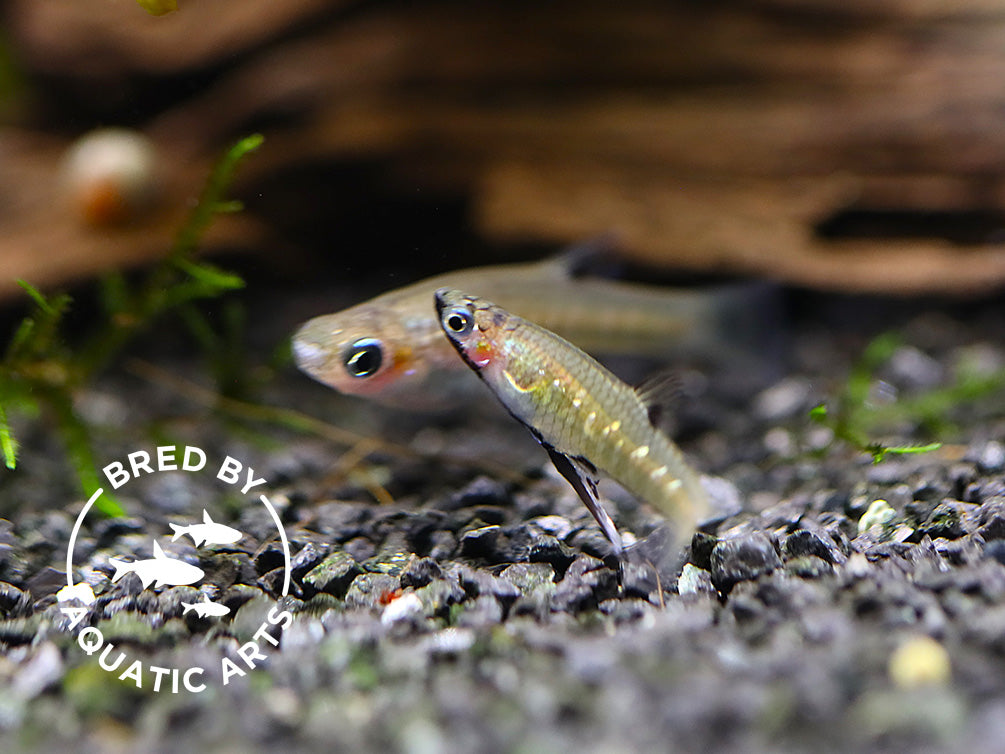
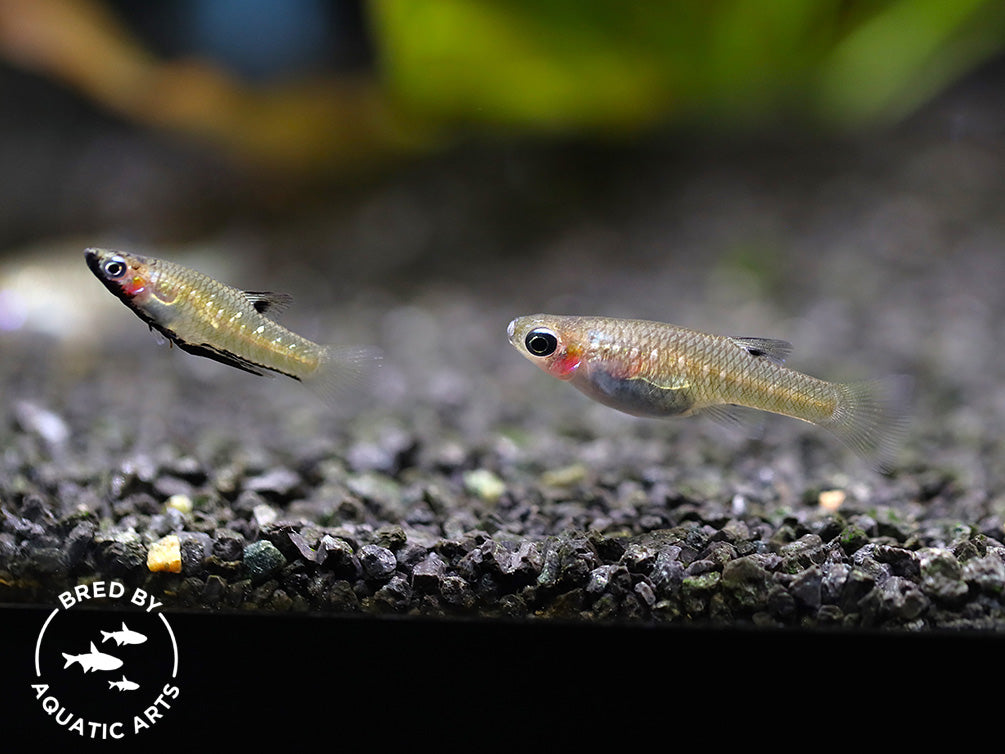
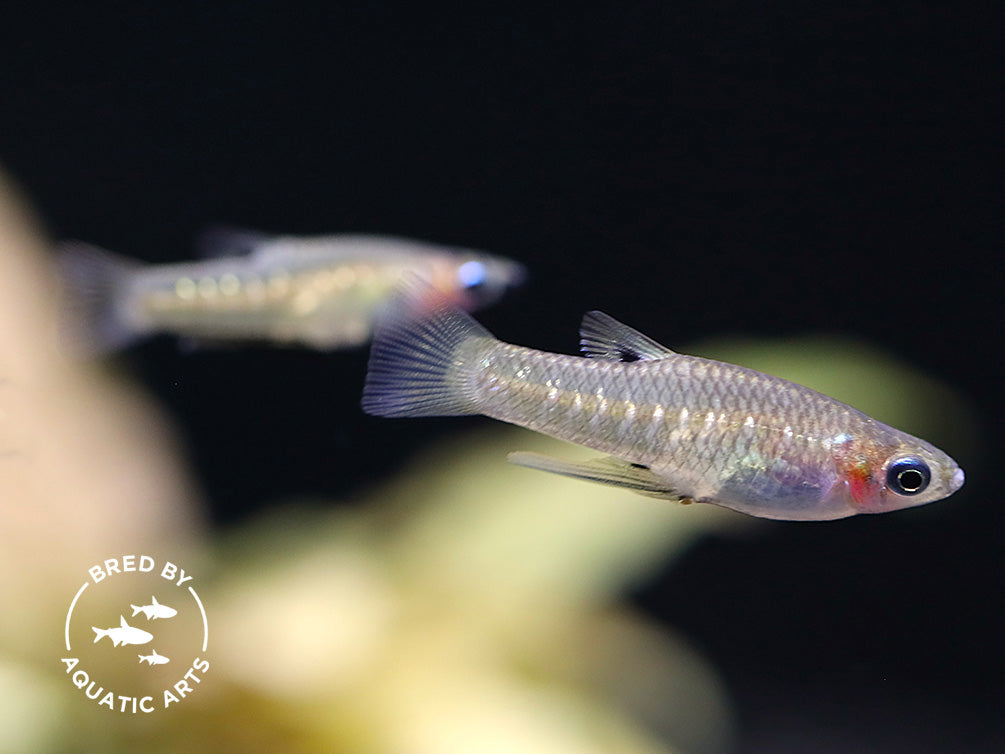
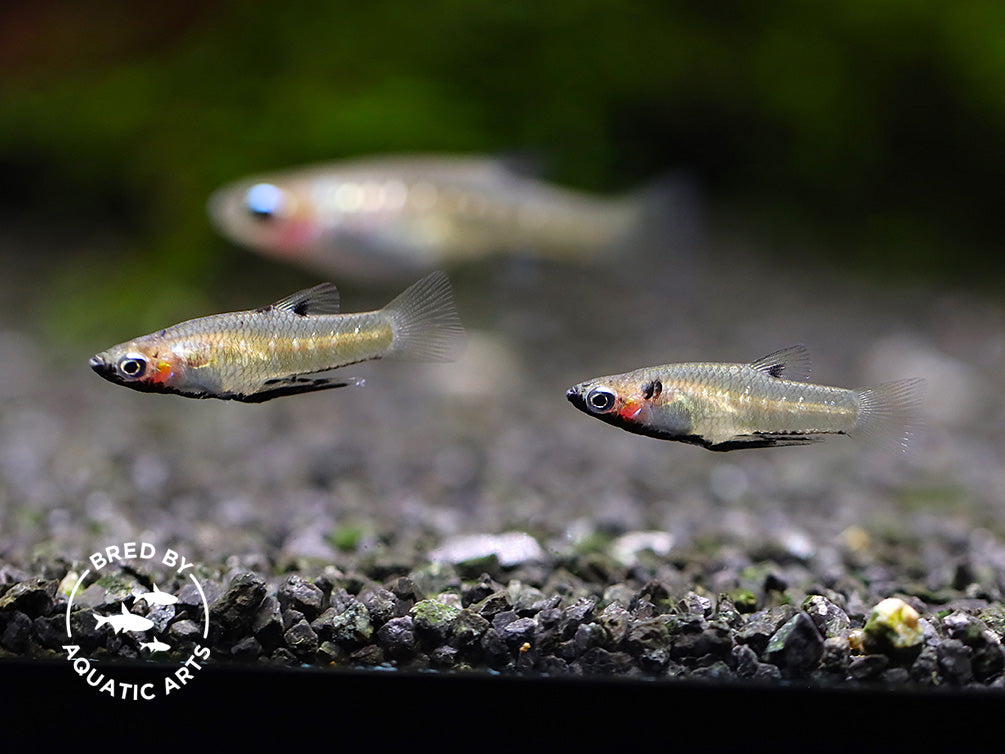
The Black Chin Livebearer (Girardinus metallicus) is one of the rarest livebearing fish available in the aquarium hobby, offering aquarists the opportunity to keep a species that is as fascinating as it is uncommon. Bred by Aquatic Arts, this beautiful Cuban native is admired for its shimmering metallic body, energetic personality, and the distinctive black chin and throat that give mature males their memorable common name. While often overshadowed by more familiar livebearers such as guppies and platies, the Black Chin Livebearer rewards aquarists with unique behaviors, peaceful social interactions, and nearly constant activity throughout the aquarium.
Unlike many ornamental livebearers that spend much of their time swimming in open water, Black Chin Livebearers are natural foragers. Throughout the day they methodically inspect plants, driftwood, rocks, and other hardscape as they graze on biofilm, algae, and tiny microorganisms. This constant exploration makes them exceptionally enjoyable to observe, particularly in well-established planted aquariums where they can display their full range of natural behaviors.
Black Chin Livebearers thrive in groups and develop an engaging social hierarchy without becoming overly aggressive. Males regularly display to one another and court females with subtle posturing, while females spend much of their time calmly grazing and exploring alongside the group. Their peaceful disposition allows them to integrate well into thoughtfully selected community aquariums while remaining interesting enough to become the centerpiece of a species-focused aquarium.
Every Black Chin Livebearer offered by Aquatic Arts is carefully bred and raised under aquarium conditions, producing healthy, well-acclimated fish that readily adapt to home aquariums. Whether you are searching for an uncommon livebearer, expanding your planted aquarium, or adding a conversation piece to your collection, the Black Chin Livebearer offers a rewarding combination of rarity, beauty, and personality that few freshwater fish can match.
What We Love About This Fish
- One of the rarest livebearer species available in the freshwater aquarium hobby.
- Mature males develop striking black chin markings highlighted by a beautiful metallic sheen.
- Constantly grazes algae, biofilm, and microorganisms while actively exploring the aquarium.
- Bred by Aquatic Arts for exceptional health, hardiness, and aquarium adaptability.
Quick Care Guide
Care Level: Easy. Black Chin Livebearers are hardy fish that adapt readily to established freshwater aquariums with stable water conditions.
Temperament: Peaceful. They are active community fish that enjoy living in groups and spend much of the day exploring their surroundings.
Diet: Omnivore (Prepared Foods, Algae, Biofilm, Live and Frozen Foods).
Source: Bred by Aquatic Arts. Girardinus metallicus is native to Cuba.
Average Adult Size: Up to approximately 2 inches (5 cm).
Suggested Minimum Aquarium Size: 15 gallons. Larger aquariums provide additional swimming space and encourage more natural social behaviors.
Swimming Zone: Primarily the middle and upper portions of the aquarium while frequently moving throughout the tank to graze on plants, driftwood, rocks, and décor.
Breeding: Livebearer. Black Chin Livebearers reproduce readily under favorable aquarium conditions and can establish sustainable colonies.
Approximate Purchase Size: Approximately 0.75 to 1 inch.
Water Parameters
Temperature: 72°–80°F (22°–27°C). Stable tropical temperatures support healthy growth, natural behavior, and breeding activity.
pH: 7.0–8.2. Black Chin Livebearers appreciate neutral to moderately alkaline water.
General Hardness (GH): 8–20 dGH. Moderately hard to hard water closely resembles the mineral content found throughout much of the species' native habitat.
Carbonate Hardness (KH): 5–15 dKH. Adequate carbonate hardness helps stabilize pH and promotes long-term health.
The Black Chin Livebearer (Girardinus metallicus) is native to Cuba, where it inhabits a wide variety of freshwater environments including slow-moving streams, marshes, ponds, drainage canals, flooded grasslands, and vegetated shorelines. Many of these habitats are densely planted with submerged and emergent vegetation, creating an ecosystem rich in algae, biofilm, and microscopic organisms that serve as important natural food sources.
Unlike many tropical fish that originate from soft, acidic rainforest waters, Black Chin Livebearers naturally occur in mineral-rich waters that range from neutral to moderately alkaline. These stable conditions, combined with abundant aquatic vegetation and plentiful natural grazing opportunities, have made the species highly adaptable to life in the aquarium.
The Black Chin Livebearers offered by Aquatic Arts are bred under aquarium conditions rather than collected from the wild. As a result, they readily adapt to established home aquariums while retaining the active foraging behavior and peaceful social interactions that make the species so enjoyable to observe.
One of the greatest joys of keeping Black Chin Livebearers is watching them interact with a thoughtfully aquascaped aquarium. Rather than spending all of their time swimming in open water, these fish naturally explore every inch of their surroundings, making a well-planted aquarium feel alive with constant movement and discovery.
Imagine a planted aquarium filled with clusters of fine-leaved stem plants, patches of lush mosses, and pieces of natural driftwood surrounded by smooth river stones. Open swimming areas through the center of the aquarium allow the group to remain active together, while dense vegetation around the sides and back provides shelter, grazing surfaces, and comfortable retreat areas. Throughout the day, Black Chin Livebearers move from plant to plant and across hardscape surfaces, carefully picking at algae, biofilm, and tiny microorganisms much as they would in nature.
Live plants such as Water Sprite (Ceratopteris thalictroides), Guppy Grass (Najas guadalupensis), Hornwort (Ceratophyllum demersum), and various Anubias species provide excellent cover while encouraging healthy biofilm development. Mosses, including Java Moss (Taxiphyllum barbieri), offer additional grazing opportunities for both adults and fry and create natural nursery areas if breeding occurs.
Natural driftwood and rounded stones help establish territories without encouraging aggression while increasing the surface area available for beneficial microorganisms to grow. Allowing portions of the aquarium to mature naturally with a light coating of algae and biofilm creates an even richer environment, encouraging Black Chin Livebearers to display their instinctive grazing behavior throughout the day.
Although these fish appreciate planted environments, they should also have plenty of open swimming space where groups can remain together and males can perform their characteristic courtship displays. Moderate filtration with gentle to moderate water movement closely replicates the calm freshwater habitats from which the species originates while maintaining excellent water quality.
The Black Chin Livebearer (Girardinus metallicus) is an opportunistic omnivore that spends much of its day grazing on naturally occurring food sources. In its native Cuban habitats, this species feeds continuously on algae, biofilm, microscopic crustaceans, insect larvae, tiny aquatic invertebrates, detritus, and plant material found on submerged vegetation and hard surfaces. This constant grazing behavior is one of the defining characteristics of the species and remains just as evident in the home aquarium.
A high-quality prepared flake or micro pellet should serve as the foundation of the Black Chin Livebearer's diet. Because these fish naturally feed throughout the day, offering small portions once or twice daily helps mimic their natural feeding habits while reducing waste. They readily accept quality prepared foods formulated for tropical community fish, but they truly thrive when their diet includes a variety of supplemental foods.
To encourage optimal coloration, growth, and breeding condition, supplement their diet several times each week with frozen or live foods such as daphnia, baby brine shrimp, cyclops, microworms, grindal worms, and finely sized bloodworms. These protein-rich foods help support healthy development while also stimulating the natural hunting behaviors that make Black Chin Livebearers so enjoyable to observe.
Although they are not a substitute for a proper cleanup crew, Black Chin Livebearers constantly browse algae, biofilm, and microorganisms growing on aquarium décor, driftwood, rocks, and plant leaves. Allowing a healthy aquarium to develop natural biofilm provides an additional food source while encouraging the species' instinctive grazing behavior. Aquariums that are kept overly sterile often limit these natural feeding opportunities.
A varied, balanced diet not only promotes vibrant coloration and steady growth but also supports healthy reproduction. Well-conditioned females produce stronger, healthier fry, while males display more intense coloration and increased courtship activity when provided with consistent nutrition. Offering a diverse selection of prepared, frozen, and live foods throughout the week is one of the best ways to maintain this uncommon livebearer in peak condition for many years.
The Black Chin Livebearer (Girardinus metallicus) is a peaceful and highly social species that thrives in well-planned community aquariums with other small, non-aggressive fish. Their active but gentle nature makes them excellent companions for similarly sized species that appreciate comparable water conditions and will not intimidate or outcompete them during feeding. Black Chin Livebearers are happiest when maintained in groups of at least six individuals, allowing them to establish natural social interactions and display their full range of behaviors.
Excellent community companions include:
Ember Tetra – A peaceful midwater schooling fish that complements the active nature of Black Chin Livebearers without competing aggressively for territory.
Green Neon Tetra – A small schooling species that adds color and movement while remaining compatible in a planted community aquarium.
Least Rasbora – A tiny, gentle schooling fish that thrives in densely planted aquariums alongside Black Chin Livebearers.
Pygmy Corydoras – A peaceful bottom-dweller that helps utilize the lower portions of the aquarium without disturbing other inhabitants.
Otocinclus Catfish – A calm algae-grazing species that shares similar environmental preferences and complements planted aquariums.
Clown Killifish – A surface-oriented micro predator that peacefully occupies a different level of the aquarium.
Blue-Eyed Rainbowfish – Active schooling fish that occupy similar water conditions while adding additional movement and color.
Peaceful freshwater snails such as Nerite Snail, Mystery Snail, and Ramshorn Snail also make excellent additions by helping consume algae and leftover food without interfering with the Black Chin Livebearers' natural behavior.
Avoid housing Black Chin Livebearers with large or aggressive cichlids, predatory fish, fin-nipping species, or any aquarium inhabitants capable of viewing them as food. Fast, highly competitive feeders may also prevent them from receiving adequate nutrition during meals. Providing dense plant growth, open swimming space, and peaceful companions allows Black Chin Livebearers to display their natural confidence and social interactions.
Yes, with consideration.
Adult Black Chin Livebearers generally coexist peacefully with larger dwarf shrimp species, especially in heavily planted aquariums that provide abundant mosses, fine-leaved plants, and other refuges. Healthy adult Amano Shrimp and mature Neocaridina Shrimp are typically ignored.
As with nearly all omnivorous community fish, newly hatched shrimp shrimplets may be viewed as a food source if encountered in open areas of the aquarium. Dense plant growth, mosses, leaf cover, and complex hardscape greatly increase shrimplet survival by providing natural hiding places where young shrimp can mature safely.
For hobbyists hoping to establish thriving shrimp colonies while also enjoying Black Chin Livebearers, a mature planted aquarium with abundant cover offers the greatest opportunity for long-term success.
Breeding Snapshot
Breeding Difficulty: Easy
Reproduction Type: Livebearer
Black Chin Livebearers (Girardinus metallicus) are among the easier uncommon livebearers to breed in the home aquarium. Given stable water conditions, a nutritious diet, and a peaceful environment, healthy groups often begin reproducing without any special intervention. Their manageable size and relatively straightforward breeding behavior make them an enjoyable species for hobbyists interested in observing the complete life cycle of a livebearing fish.
Unlike egg-laying species, female Black Chin Livebearers give birth to fully formed, free-swimming fry. Males actively court females using subtle body movements and display behaviors before mating. In well-established aquariums, these courtship displays become a regular and fascinating part of the group's daily interactions, especially as males compete for the attention of receptive females.
Pregnant females typically seek the security of dense vegetation shortly before giving birth. Fine-leaved plants, floating vegetation, and mosses provide excellent shelter for newborn fry during their first days of life. Although adult Black Chin Livebearers are generally less predatory toward their own offspring than many larger livebearers, opportunistic predation can still occur, particularly in sparsely decorated aquariums. Providing abundant cover greatly improves fry survival.
Newly born fry are relatively large for their size and begin feeding almost immediately. They readily accept freshly hatched baby brine shrimp, microworms, vinegar eels, finely crushed high-quality flake foods, and powdered fry diets. Frequent small feedings combined with excellent water quality promote rapid growth and healthy development.
Maintaining Black Chin Livebearers in groups with multiple females per male helps reduce breeding stress and encourages more natural social dynamics. As successive generations mature, established colonies often become self-sustaining, allowing aquarists to enjoy every stage of the species' fascinating life cycle within a well-maintained planted aquarium.
Question: Are Black Chin Livebearers good for beginners?
Answer: Yes. Black Chin Livebearers are hardy, peaceful, and easy to care for, making them an excellent beginner fish.
Question: What makes Black Chin Livebearers unique?
Answer: Mature males develop the distinctive black chin marking that gives the species its common name, along with attractive metallic coloration.
Question: Are Black Chin Livebearers peaceful?
Answer: Yes. Black Chin Livebearers are peaceful community fish that do well with many similarly sized species.
Question: Are Black Chin Livebearers schooling fish?
Answer: No. Black Chin Livebearers are social fish that prefer to live in small groups but do not form true schools.
Question: How many Black Chin Livebearers should I keep?
Answer: We recommend keeping at least three Black Chin Livebearers for the most natural behavior.
Question: Are Black Chin Livebearers shrimp safe?
Answer: Adult shrimp are generally safe, although shrimplets may be eaten.
Question: Are Black Chin Livebearers good for planted aquariums?
Answer: Yes. Live plants provide cover, encourage natural behavior, and improve fry survival.
Question: What do Black Chin Livebearers eat?
Answer: They readily accept quality flakes, pellets, frozen foods, live foods, and vegetable-based foods.
Question: Are Black Chin Livebearers easy to breed?
Answer: Yes. Healthy Black Chin Livebearers breed readily and give birth to live young.
Question: Can Black Chin Livebearers live with guppies?
Answer: Yes. They generally coexist well with guppies in peaceful community aquariums.
Question: What makes Black Chin Livebearers different from guppies?
Answer: Black Chin Livebearers have a stockier body, natural metallic coloration, and the distinctive black chin marking found on mature males.
Question: Would Aquatic Arts recommend Black Chin Livebearers?
Answer: Yes. They are an excellent choice for planted community aquariums and hobbyists looking for an active, peaceful livebearer.
Question: How are Black Chin Livebearers shipped?
Answer: They ship UPS Next Day Air in our Aquatic Arts Live Arrival Guarantee Box at no additional charge.
Question: Are Black Chin Livebearers covered by the Live Arrival Guarantee?
Answer: Yes. Every Black Chin Livebearer is covered by our 100% Live Arrival Guarantee.
Question: Why do Aquatic Arts customers love Black Chin Livebearers?
Answer: Customers appreciate their peaceful temperament, unique appearance, easy care, and fascinating livebearing behavior.
For the safety of our animals, we only ship live fish, crabs, and select other inverts exclusively via UPS 1 Day Air. If your order contains this item, you will only see UPS 1 Day Air as a shipping option during checkout. If other items are in your cart that can ship with 2 day or standard shipping options the only shipping method you can still select is UPS 1 Day Air.
UPS 1 Day is a description of the duration of time a shipment will spend in transit once it has been shipped. This does not guarantee the package will be shipped the same or next day from which the order was placed.
Shipping Schedule for this service
Current Handling Time:
1-9 business days
Here at Aquatic Arts, we consider the welfare of the live animals we are shipping to be of the foremost importance. This process is much more involved than simply creating a shipping label and affixing it to a box. Depending on the order, it takes from 4 to 7 people to complete this process properly. We check the weather conditions here where they fly out of the Indianapolis UPS facility and the destination for each shipment. We start early each morning and go through a multi-step process to have the day's shipments prepared in time for the UPS pickup. The volume of orders in our system also affects the processing time. Therefore our stated handling time is 1-9 business days.
Shipping Rate
Pricing is by size of package needed to fill entire order and distance it must travel. It will be calculated at checkout.
We stand behind the health and quality of every fish we ship. Each Black Chin Livebearer is carefully quarantined, observed, and conditioned before leaving our facility to help ensure it arrives healthy and ready to thrive in its new aquarium.
Every order is backed by our 100% Live Arrival Guarantee. In the unlikely event that an issue occurs during transit, simply contact our team and we will work quickly to help resolve the situation.
When your fish arrive, we recommend introducing them promptly into a fully cycled aquarium with stable water parameters and peaceful tank mates. Black Chin Livebearers thrive when maintained in groups and provided with clean, well-oxygenated water, quality nutrition, and a well-established aquarium with plenty of swimming space and plant cover.
In addition to our Live Arrival Guarantee, every purchase includes access to our experienced support team. Whether you have questions about acclimation, feeding, compatibility, breeding, aquascaping, or general husbandry, we are here to help you get the most from your livebearer keeping experience.
For assistance with your order or livestock care questions, please contact us at info@aquaticarts.com.
For complete details about our Live Arrival Guarantee, please visit:
