



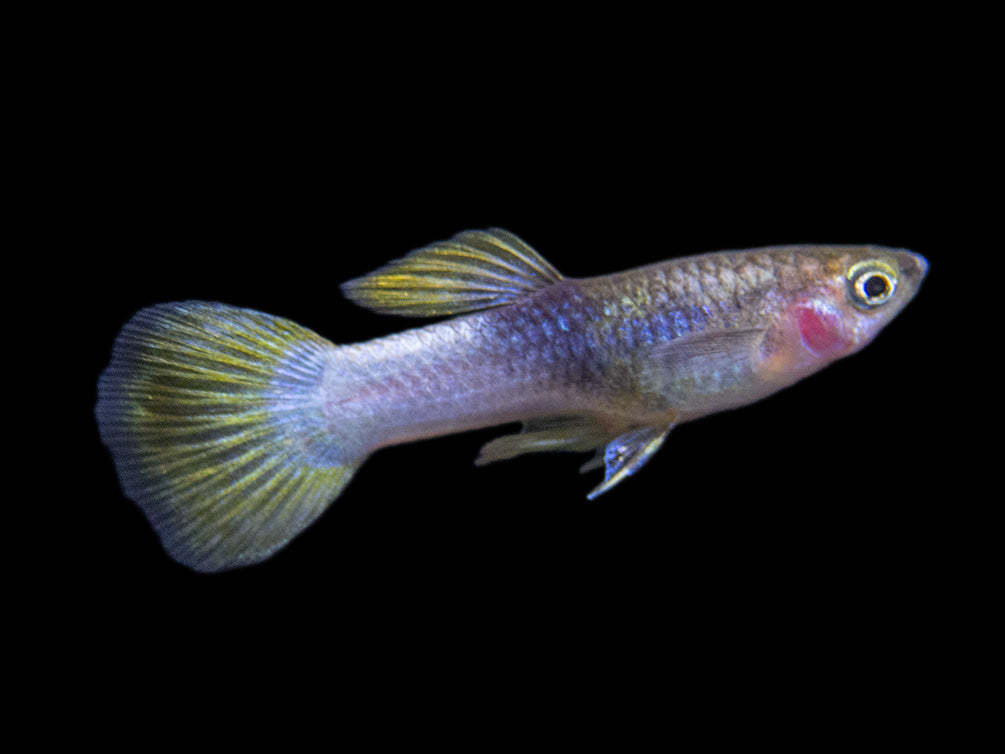

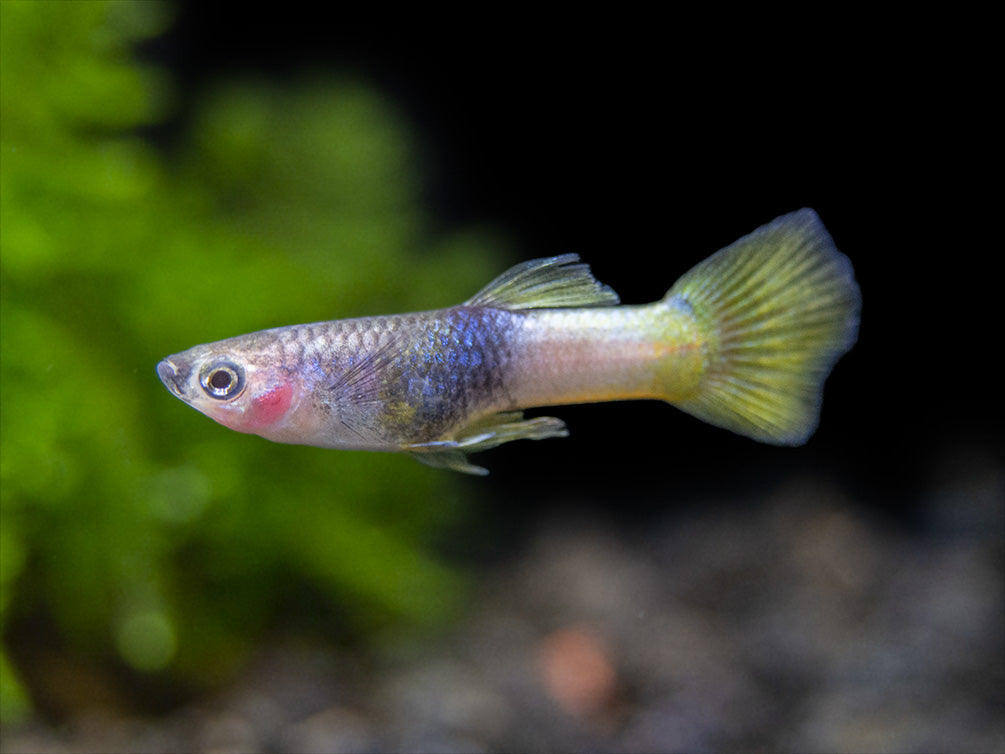
Pingu Guppy (Poecilia reticulata var. “Pingu”), Males and Females, Tank-Bred!
- Low stock - 4 items left
- Backordered, shipping soon
Species Overview
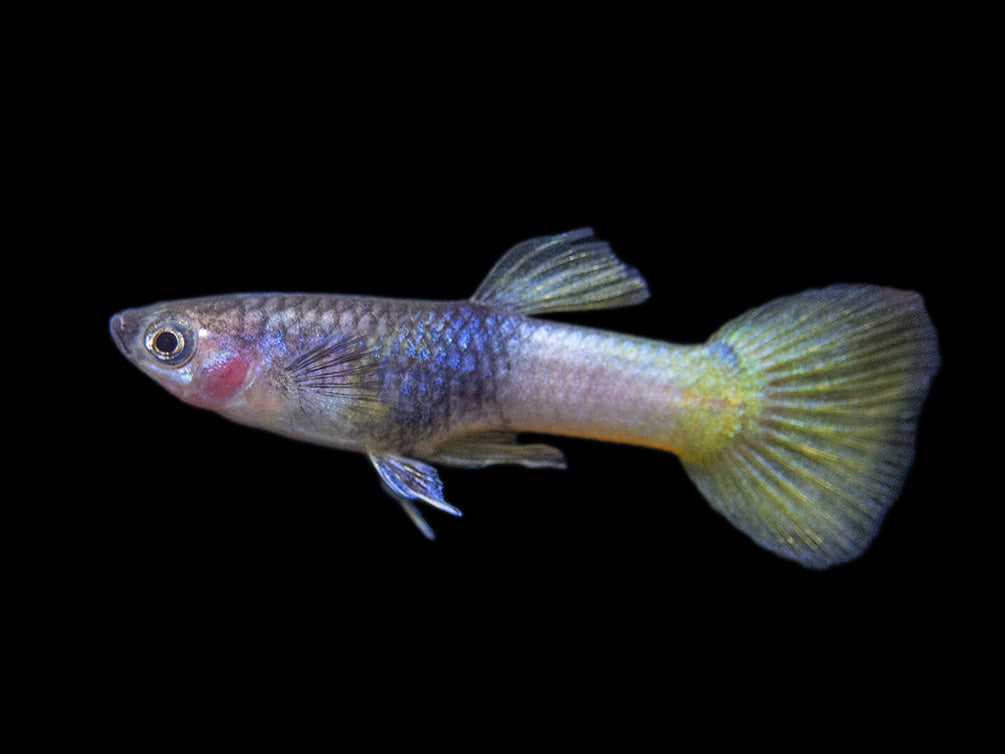
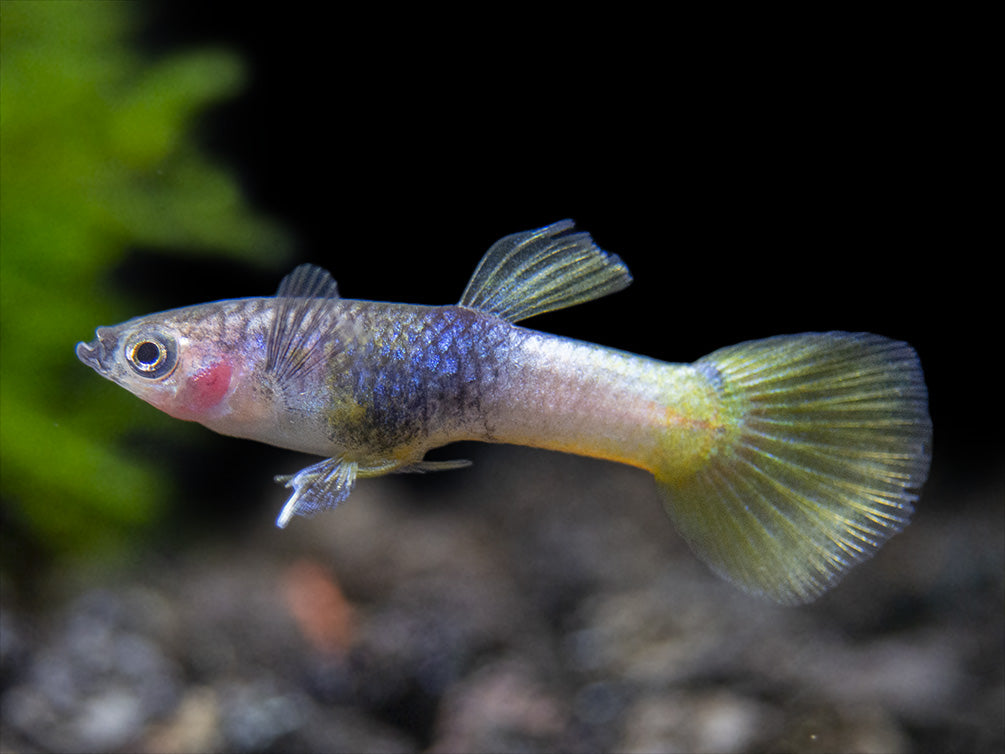
The Pingu Guppy is a beautiful selectively bred guppy variety that combines shimmering metallic blue coloration with bright yellow finnage to create one of the most eye-catching color combinations available in the freshwater aquarium hobby. The contrast between the iridescent blue shoulder, silver-white body, and vibrant yellow tail gives this strain a clean, elegant appearance that immediately stands out in planted aquariums and community displays.
Unlike heavily patterned guppy strains that rely on intricate markings, the beauty of the Pingu Guppy comes from its simplicity and contrast. As these fish move through the aquarium, light reflects from the metallic blue scales while the bright yellow finnage creates flashes of color among the plants and hardscape. Mature males display the most intense coloration, while females exhibit a more subtle appearance and are essential for hobbyists interested in breeding projects.
One of the most exciting aspects of this strain is the availability of both regular and ribbon-fin forms. Regular Pingu Guppies display the classic guppy profile and finnage that hobbyists have enjoyed for generations. Ribbon Pingu Guppies develop elongated fin rays that create a more flowing and dramatic appearance, adding an entirely different visual dimension to the fish. Whether selecting regular fish, ribbon fish, or breeding pairs, hobbyists can choose the option that best fits their aquarium goals.
Like most guppy varieties, Pingu Guppies are peaceful, active, and highly adaptable community fish. Their constant movement brings life and energy to the aquarium while their distinctive coloration provides a focal point among plants, driftwood, and hardscape. Whether maintained as a showcase fish, part of a larger guppy colony, or within a selective breeding project, the Pingu Guppy offers an outstanding combination of beauty, personality, and ease of care.
What We Love About This Fish
• Metallic blue shoulder coloration contrasted by vibrant yellow finnage
• Available in both regular and ribbon-fin forms
• Peaceful temperament and excellent community compatibility
• Outstanding choice for planted aquariums, display colonies, and breeding projects
Quick Care Guide
Care Level: Easy
Temperament: Peaceful
Diet: Omnivore (Prepared Foods, Algae-Based Foods, Frozen Foods, Live Foods)
Adult Size: Males approximately 1.25–1.75 inches, females approximately 1.75–2.5 inches
Minimum Tank Size: 10 Gallons
Swimming Zone: Middle to Upper Water Column
Social Behavior: Best kept in groups
Origin: Tank Bred
Approximate Purchase Size: 0.75–1.25 Inches
Tank Parameters
Temperature: 72°–82°F (22°–28°C)
pH: 7.0–8.2
General Hardness (GH): 8–20 dGH (140–350 ppm)
Carbonate Hardness (KH): 4–12 dKH
Total Dissolved Solids (TDS): 180–400 ppm
Minimum Aquarium Size: 10 Gallons
Recommended Group Size: 4+ Guppies
Swimming Zone: Middle to Upper Water Column
Water Flow: Low to Moderate
Experience Level: Beginner Friendly
Origin: Tank Bred
The Pingu Guppies offered by Aquatic Arts are tank bred and are not collected from the wild. While the coloration and finnage of the Pingu Guppy are the result of selective breeding, understanding the natural habitat of the Common Guppy helps explain many of the behaviors that make this species so successful in the aquarium.
The ancestral form of the Common Guppy (Poecilia reticulata) originates from portions of northern South America and nearby Caribbean islands. Wild guppies inhabit streams, ponds, canals, ditches, and slow-moving waterways where aquatic vegetation, submerged roots, and seasonal plant growth provide both food and shelter.
In nature, guppies spend much of their day actively searching for algae, biofilm, microorganisms, insect larvae, and other small food sources. Their constant grazing behavior, adaptability, and willingness to utilize a variety of habitats have contributed to their success both in the wild and within the aquarium hobby.
Wild guppy habitats typically provide a balance of open water and protective cover. Fish move between vegetation and open swimming areas while foraging throughout the day. This natural behavior remains evident in the aquarium, where Pingu Guppies thrive when provided with plant cover, stable water conditions, and room to actively explore their environment.
Today, Pingu Guppies remain popular because they combine the hardiness and personality of traditional guppies with a unique color pattern that is rarely seen in nature. Aquariums that provide clean water, quality nutrition, and a well-structured environment often showcase the best coloration, behavior, and overall health that this strain has to offer.
Pingu Guppies are one of those fish that seem to glow when placed in the right aquarium. Their metallic blue shoulder coloration and bright yellow finnage create a striking contrast against green aquatic plants, making them ideal centerpiece fish for planted aquariums and guppy-focused displays. While the hardscape and plants provide the structure of the aquarium, Pingu Guppies provide the movement and flashes of color that bring the entire ecosystem to life.
One of our favorite ways to showcase Pingu Guppies is in a heavily planted aquarium featuring Pearl Weed, Rotala, Water Sprite, Guppy Grass, Cryptocoryne, and floating plants such as Frogbit or Red Root Floaters. The lush green vegetation creates a natural backdrop that allows the metallic blue and yellow coloration to stand out from every angle. Dark substrate and darker backgrounds further enhance the contrast, making the colors appear even more vibrant.
Because Pingu Guppies spend much of their time exploring the middle and upper portions of the aquarium, we recommend designing the layout with both open swimming corridors and densely planted areas. Open water allows the fish to display their natural social behavior, while plant thickets provide security for females, fry, shrimp, and other community inhabitants.
For hobbyists interested in creating a more complete freshwater ecosystem, Aquatic Arts Botanical Combo Packs, Aquatic Arts Mixed Fruit Leaf Packs, and Aquatic Arts Tannin Tea Bags can be incorporated in moderation. While guppies naturally prefer harder water and do not require leaf litter habitats, these botanicals can provide additional grazing surfaces for shrimp, support beneficial microorganisms, and add natural textures throughout the aquarium when used appropriately.
The finished aquarium feels alive from top to bottom. Shrimp graze among the botanicals, snails patrol the hardscape, plants sway gently in the current, and flashes of metallic blue and bright yellow move throughout the aquascape. Whether you choose regular or ribbon-fin forms, Pingu Guppies become living accents within the aquarium, tying together the plants, hardscape, and ecosystem with constant movement and color.
Pingu Guppies are omnivorous livebearers that naturally graze throughout the day. In the wild, guppies feed on algae, biofilm, microorganisms, small aquatic insects, insect larvae, tiny crustaceans, and other food sources found among aquatic vegetation and shallow freshwater habitats. This combination of plant-based grazing and protein-rich foods plays an important role in their overall health, coloration, and reproduction.
In the aquarium, Pingu Guppies readily accept a wide variety of prepared, frozen, and live foods. A high-quality flake or micro pellet should serve as the foundation of their diet, providing the balanced nutrition necessary to support long-term health and vibrant coloration.
To help Pingu Guppies develop their best coloration and maintain excellent body condition, we recommend supplementing their diet with Baby Brine Shrimp, Daphnia, Moina, Cyclops, and other appropriately sized frozen or live foods. These foods provide additional protein and nutrients that help support growth, immune function, breeding condition, and overall vitality.
The metallic blue coloration and bright yellow finnage that make this strain so desirable are often most vibrant when the fish receive a varied diet. Consistent access to quality nutrition helps males display their strongest coloration, while females benefit from additional nutritional support during pregnancy and fry production.
Because Pingu Guppies are active grazers with relatively small stomachs, they typically perform best when offered smaller portions rather than large infrequent meals. Feeding only what the fish can consume within a few minutes helps maintain water quality while ensuring the entire group has access to food.
Pingu Guppies are usually among the first fish to respond during feeding time and quickly learn feeding routines. Their active nature and enthusiastic feeding response make them enjoyable fish to observe and easy to maintain in both community aquariums and breeding colonies.
For hobbyists maintaining breeding projects, a varied diet rich in quality prepared foods, live foods, and frozen foods can help support stronger breeding condition, improved fry production, and healthy juvenile development. Well-fed Pingu Guppies often display more intense coloration, better finnage development, and increased overall activity throughout the aquarium.
Pingu Guppies are peaceful community fish that coexist well with a wide variety of aquarium inhabitants. Their active yet non-aggressive nature makes Pingu Guppies excellent additions to planted aquariums, freshwater community tanks, and ecosystem-focused displays. Because they spend most of their time in the middle and upper portions of the aquarium, they pair especially well with species that occupy different areas of the tank.
Excellent tank mates include:
• Endler's Livebearer (Poecilia wingei) – Active Community Fish
• Celestial Pearl Danio (Danio margaritatus) – Nano Schooling Fish
• Emerald Dwarf Rasbora (Celestichthys erythromicron) – Peaceful Nano Fish
• Pygmy Corydoras (Corydoras pygmaeus) – Social Bottom Dweller
• Corydoras Catfish (Corydoras spp.) – Community Bottom Dweller
• Otocinclus Catfish (Otocinclus spp.) – Algae-Grazing Community Fish
• Kuhli Loach (Pangio kuhlii) – Peaceful Bottom Dweller
• Honey Gourami (Trichogaster chuna) – Peaceful Centerpiece Fish
• Amano Shrimp (Caridina multidentata) – Cleanup Crew Member
• Nerite Snails (Neritina spp.) – Algae-Grazing Invertebrate
• Mystery Snails (Pomacea diffusa) – Community Aquarium Scavenger
Pingu Guppies are highly social fish and often display their best coloration and behavior when maintained with other peaceful community species. Their active swimming behavior adds movement and energy to the aquarium without creating stress for tank mates.
Ribbon Pingu Guppies deserve a small additional consideration when selecting companions. Because the elongated ribbon fins can be more delicate than standard finnage, we recommend avoiding species known for fin-nipping behavior. Fish such as Tiger Barbs, Serpae Tetras, and other aggressive fin nippers may damage the extended fins of ribbon specimens.
Pingu Guppies are best maintained with peaceful species that appreciate similar water parameters and community-oriented environments. Avoid large predatory fish, aggressive cichlids, and any species capable of viewing guppies as food.
When housed with compatible tank mates, Pingu Guppies become excellent centerpiece fish within a balanced aquarium ecosystem, providing constant movement, vibrant coloration, and engaging social behavior throughout the aquarium.
Adult Shrimp: Usually Safe
Juvenile Shrimp: Use Caution
Pingu Guppies are generally considered one of the more shrimp-compatible fish available for planted community aquariums. Their peaceful temperament and relatively small size allow Pingu Guppies to coexist successfully with many established freshwater shrimp colonies while still providing movement and color throughout the aquarium.
Adult Neocaridina Shrimp, Caridina Shrimp, Amano Shrimp, Bamboo Shrimp, and Vampire Shrimp are typically ignored by healthy adult Pingu Guppies. In well-structured aquariums, these species often occupy different ecological niches, allowing them to coexist with minimal interaction.
Like most community fish, Pingu Guppies are opportunistic feeders and may consume newly hatched shrimplets if given the opportunity. Hobbyists focused on maximizing shrimp colony growth should expect some predation on baby shrimp, particularly in sparsely planted aquariums with limited cover.
Dense plant growth, mosses, floating plants, root systems, and botanicals can dramatically improve shrimplet survival rates. Aquariums that incorporate Java Moss, Subwassertang, Guppy Grass, floating plants, Aquatic Arts Botanical Combo Packs, Aquatic Arts Mixed Fruit Leaf Packs, and other natural hiding areas often support both thriving shrimp colonies and active groups of Pingu Guppies.
For hobbyists looking to maintain a colorful planted community aquarium that includes both fish and shrimp, Pingu Guppies are often an excellent choice. Their peaceful nature makes them far less problematic than many larger community fish species, while still providing the activity and personality that many aquarists enjoy.
Aquatic Arts Shrimp Compatibility Rating: 8/10
Suitable For:
- Adult Neocaridina Shrimp
- Adult Caridina Shrimp
- Amano Shrimp
- Bamboo Shrimp
- Vampire Shrimp
- Mixed Community Shrimp Displays
Use Caution With:
- Newly Hatched Shrimplets
- High-End Breeding Colonies
- Dedicated Shrimp Breeding Projects
For hobbyists whose primary goal is shrimp breeding and maximum shrimplet survival, a shrimp-only aquarium remains the best option. For hobbyists seeking a balanced planted aquarium that combines colorful fish, active shrimp, and a thriving ecosystem, Pingu Guppies can be an outstanding addition when adequate cover is provided.
Breeding Difficulty: Easy
Reproduction Type: Livebearer
Pingu Guppies are among the easiest aquarium fish to breed and are frequently recommended for hobbyists interested in livebearer reproduction. Healthy females can produce fry regularly when maintained with males, quality nutrition, and stable water conditions.
Unlike egg-laying fish, Pingu Guppies give birth to fully formed live young that are immediately capable of swimming, grazing, and feeding. Breeding often occurs naturally in community aquariums, and many hobbyists are surprised to discover fry appearing without any special intervention.
Healthy females become noticeably fuller-bodied during pregnancy and may seek cover among plants as they approach birth. Dense vegetation such as Guppy Grass, Water Sprite, Pearl Weed, floating plants, and mosses can help provide shelter for newborn fry and increase survival rates. Without adequate cover, adult fish and other aquarium inhabitants may consume some fry.
A varied diet plays an important role in breeding success. Conditioning adult Pingu Guppies with quality flakes, micro pellets, Baby Brine Shrimp, Daphnia, Moina, Cyclops, and other nutritious foods often results in stronger breeding condition, healthier females, and improved fry development.
For hobbyists interested in maintaining the distinctive coloration and finnage of this strain, selective breeding can be particularly rewarding. Careful pair selection helps preserve the metallic blue shoulder coloration, bright yellow finnage, and overall quality of the line.
Ribbon Fin Breeding Considerations
Hobbyists should be aware that we have observed Ribbon Male Pingu Guppies occasionally experience reduced breeding efficiency compared to Regular Male Pingu Guppies. The elongated ribbon fin rays can sometimes interfere with successful mating, resulting in lower fertilization rates or less consistent reproduction.
Because of this, breeders seeking maximum fry production often utilize a Regular Male paired with Ribbon Females or maintain both Regular and Ribbon fish within their breeding programs. Ribbon Males are highly desirable for their appearance, but they may require additional patience when used as the primary breeding male.
For hobbyists purchasing the Ribbon Pair option, breeding is certainly possible, but reproduction may be less consistent than what is typically observed with Regular Pingu Guppy pairs. Regardless of which form you choose, stable water conditions, quality nutrition, and abundant plant cover will significantly improve long-term breeding success.
Are Pingu Guppies beginner friendly?
Yes. Pingu Guppies are among the most beginner-friendly freshwater fish available. Their hardiness, peaceful temperament, and adaptability make them an excellent choice for new aquarium hobbyists.
What makes Pingu Guppies unique?
Pingu Guppies are known for their metallic blue shoulder coloration, silver-white body, and bright yellow finnage. This striking combination creates a clean and elegant appearance that stands out in planted aquariums and guppy collections.
Are Pingu Guppies good for a first aquarium?
Yes. Pingu Guppies are easy to care for, readily accept prepared foods, and adapt well to a variety of aquarium conditions.
What size aquarium is recommended for Pingu Guppies?
We recommend a minimum aquarium size of 10 gallons. Larger aquariums provide additional swimming space and help maintain stable water parameters.
How many Pingu Guppies should be kept together?
Pingu Guppies are social fish and generally perform best when maintained in groups.
What is the temperament of Pingu Guppies?
Pingu Guppies are peaceful community fish that coexist well with many other non-aggressive aquarium inhabitants.
Are Pingu Guppies active or shy?
Pingu Guppies are active fish that spend much of the day exploring the aquarium and interacting with tank mates.
What area of the aquarium do Pingu Guppies occupy?
Pingu Guppies primarily utilize the middle and upper portions of the aquarium.
Are Pingu Guppies suitable for planted aquariums?
Yes. Pingu Guppies are excellent choices for planted aquariums where their metallic blue and yellow coloration contrasts beautifully against aquatic plants.
What do Pingu Guppies eat?
Pingu Guppies are omnivores that readily accept flakes, pellets, algae-based foods, frozen foods, and live foods.
What foods help improve Pingu Guppy coloration?
A varied diet including Baby Brine Shrimp, Daphnia, Moina, Cyclops, spirulina-based foods, and quality prepared foods can help support optimal coloration and finnage development.
Can Pingu Guppies live with shrimp?
Adult freshwater shrimp are generally safe with Pingu Guppies.
Are baby shrimp safe with Pingu Guppies?
Newly hatched shrimplets may occasionally be consumed by Pingu Guppies. Dense plant growth and natural cover can improve survival rates.
Can Pingu Guppies live with snails?
Yes. Pingu Guppies are excellent companions for Nerite Snails, Mystery Snails, Rabbit Snails, and many other freshwater snail species.
What are the best tank mates for Pingu Guppies?
Excellent tank mates include Endler's Livebearers, Pygmy Corydoras, Corydoras Catfish, Otocinclus, Honey Gouramis, Amano Shrimp, and Nerite Snails.
Which fish should not be kept with Pingu Guppies?
Large predatory fish, aggressive cichlids, and known fin-nipping species should generally not be housed with Pingu Guppies.
Are Pingu Guppies easy to breed?
Yes. Pingu Guppies are among the easiest aquarium fish to breed and frequently reproduce in home aquariums.
Will Pingu Guppies breed in a community aquarium?
Yes. Pingu Guppies often reproduce in community aquariums, although fry survival depends on available cover and tank mates.
How often do Pingu Guppies produce fry?
Healthy female Pingu Guppies may produce fry approximately every 25–35 days under favorable conditions.
What is the difference between male and female Pingu Guppies?
Male Pingu Guppies display more intense coloration, larger tails, and more elaborate finnage. Female Pingu Guppies are typically larger-bodied with more subdued coloration.
What is a Ribbon Pingu Guppy?
A Ribbon Pingu Guppy carries the ribbon-fin trait, which produces elongated fin rays that create a more flowing and dramatic appearance compared to standard guppies.
What is the difference between a Regular Pingu Guppy and a Ribbon Pingu Guppy?
Regular Pingu Guppies display traditional finnage, while Ribbon Pingu Guppies develop elongated fin rays that create a more elegant and ornamental appearance.
Are Ribbon Pingu Guppies more difficult to care for?
No. Ribbon Pingu Guppies generally require the same care as Regular Pingu Guppies, although their extended fins should be protected from fin-nipping tank mates.
What is included in the Regular Male option?
The Regular Male option includes one male Pingu Guppy with standard finnage.
What is included in the Regular Female option?
The Regular Female option includes one female Pingu Guppy with standard finnage.
What is included in the Regular Pair option?
The Regular Pair option includes one Regular Male Pingu Guppy and one Regular Female Pingu Guppy.
What is included in the Ribbon Male option?
The Ribbon Male option includes one male Pingu Guppy displaying the ribbon-fin trait.
What is included in the Ribbon Female option?
The Ribbon Female option includes one female Pingu Guppy displaying the ribbon-fin trait.
What is included in the Ribbon Pair option?
The Ribbon Pair option includes one Ribbon Male Pingu Guppy and one Ribbon Female Pingu Guppy.
Can Ribbon Pingu Guppies be bred?
Yes. Ribbon Pingu Guppies can be successfully incorporated into breeding projects, although breeding results may vary depending on the fish used.
Are Ribbon Male Pingu Guppies fertile?
Ribbon Male Pingu Guppies are generally fertile, but we have observed that the elongated ribbon fin rays can occasionally interfere with successful mating, which may reduce breeding efficiency compared to Regular Male Pingu Guppies.
Which is better for breeding: Regular or Ribbon Pingu Guppies?
For hobbyists focused on maximizing fry production, Regular Male Pingu Guppies are often the more reliable choice. Ribbon fish are highly desirable for their appearance and can still be successfully incorporated into breeding projects.
Which should I choose: Regular or Ribbon Pingu Guppies?
Choose Regular Pingu Guppies if your primary goal is breeding or maintaining a traditional guppy appearance. Choose Ribbon Pingu Guppies if you prefer a more ornamental fish with flowing, elongated finnage.
How do Pingu Guppies contribute to an aquarium ecosystem?
Pingu Guppies provide movement, color, and activity throughout the aquarium while complementing plants, shrimp, snails, and other peaceful community fish.
Would Aquatic Arts recommend Pingu Guppies for my aquarium?
Yes. Pingu Guppies are one of our favorite guppy varieties for planted aquariums, community tanks, and breeding projects. Their unique metallic blue and yellow coloration, peaceful temperament, and availability in both regular and ribbon forms make them an excellent choice for hobbyists of all experience levels.
Does the Aquatic Arts Live Arrival Guarantee apply to Pingu Guppies?
Yes. Every Pingu Guppy sold by Aquatic Arts is covered by our 100% Live Arrival Guarantee and is shipped in our Aquatic Arts Live Arrival Guarantee Box.
For the safety of our animals, we only ship live fish, crabs, and select other inverts exclusively via UPS 1 Day Air. If your order contains this item, you will only see UPS 1 Day Air as a shipping option during checkout. If other items are in your cart that can ship with 2 day or standard shipping options the only shipping method you can still select is UPS 1 Day Air.
UPS 1 Day is a description of the duration of time a shipment will spend in transit once it has been shipped. This does not guarantee the package will be shipped the same or next day from which the order was placed.
Shipping Schedule for this service
Current Handling Time:
1-9 business days
Here at Aquatic Arts, we consider the welfare of the live animals we are shipping to be of the foremost importance. This process is much more involved than simply creating a shipping label and affixing it to a box. Depending on the order, it takes from 4 to 7 people to complete this process properly. We check the weather conditions here where they fly out of the Indianapolis UPS facility and the destination for each shipment. We start early each morning and go through a multi-step process to have the day's shipments prepared in time for the UPS pickup. The volume of orders in our system also affects the processing time. Therefore our stated handling time is 1-9 business days.
Shipping Rate
Pricing is by size of package needed to fill entire order and distance it must travel. It will be calculated at checkout.
We stand behind the health and quality of every fish we ship. Each Pingu Guppy is carefully quarantined, observed, and conditioned before leaving our facility to help ensure it arrives healthy and ready to thrive in its new aquarium.
Every order is backed by our 100% Live Arrival Guarantee. In the unlikely event that an issue occurs during transit, simply contact our team and we will work quickly to help resolve the situation.
Every fish order is shipped in our Aquatic Arts Live Arrival Guarantee Box at no additional charge. Depending on seasonal conditions, heat packs, cold packs, and insulation may be included to help provide the safest possible shipping environment.
When your fish arrive, we recommend acclimating them promptly into a fully cycled aquarium with stable water parameters and appropriate tank mates. Pingu Guppies thrive when provided with clean water, quality nutrition, plant cover, and adequate swimming space. Ribbon Pingu Guppies should also be housed with peaceful tank mates that will not nip or damage their elongated fins.
In addition to our Live Arrival Guarantee, every purchase includes access to our experienced support team. Whether you have questions about acclimation, feeding, compatibility, breeding, ribbon-fin genetics, aquascaping, or long-term care, we are here to help you get the most from your aquarium.
For assistance with your order or livestock care questions, please contact us at info@aquaticarts.com.
For complete details about our Live Arrival Guarantee, please visit:
https://aquaticarts.com/policies/refund-policy
Best Fishes,
The Aquatic Arts Team


