


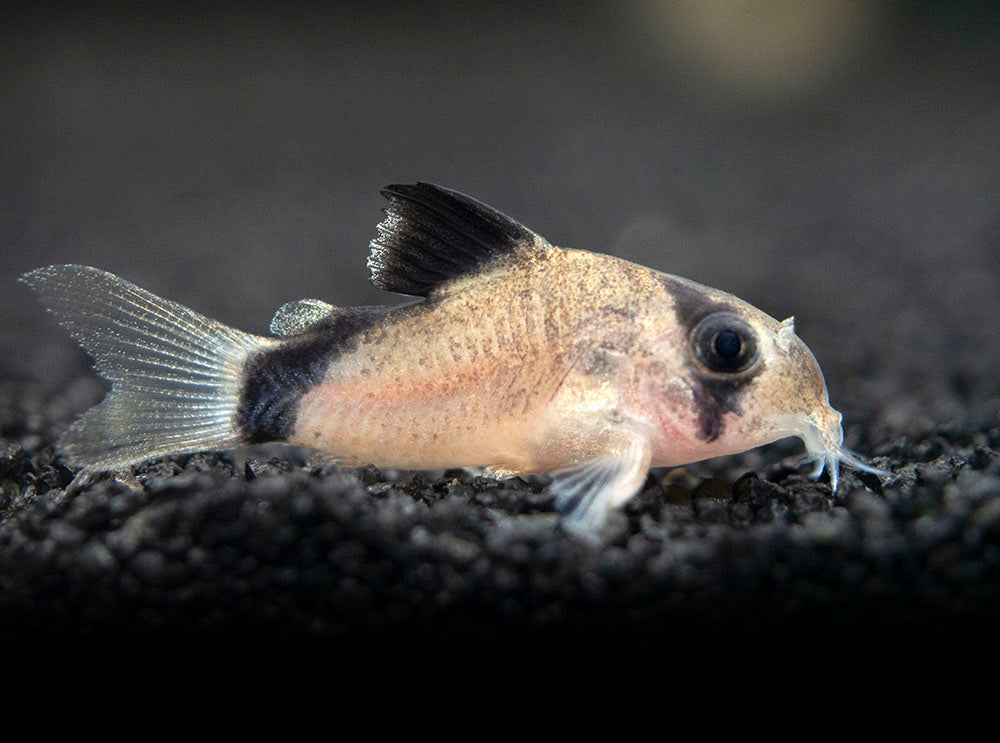

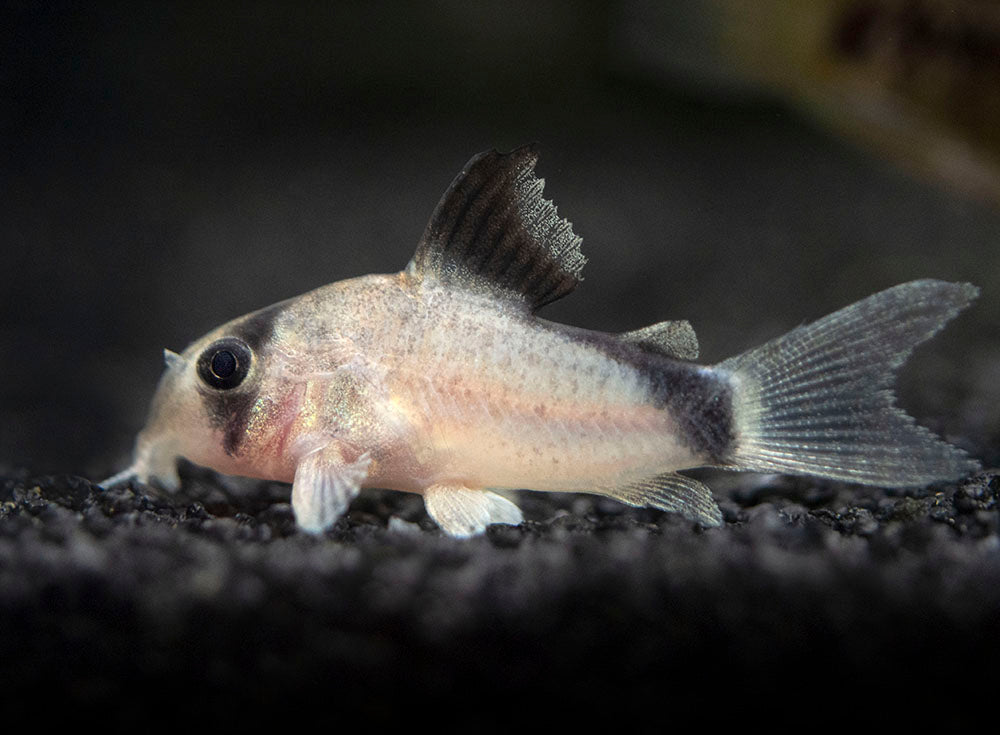

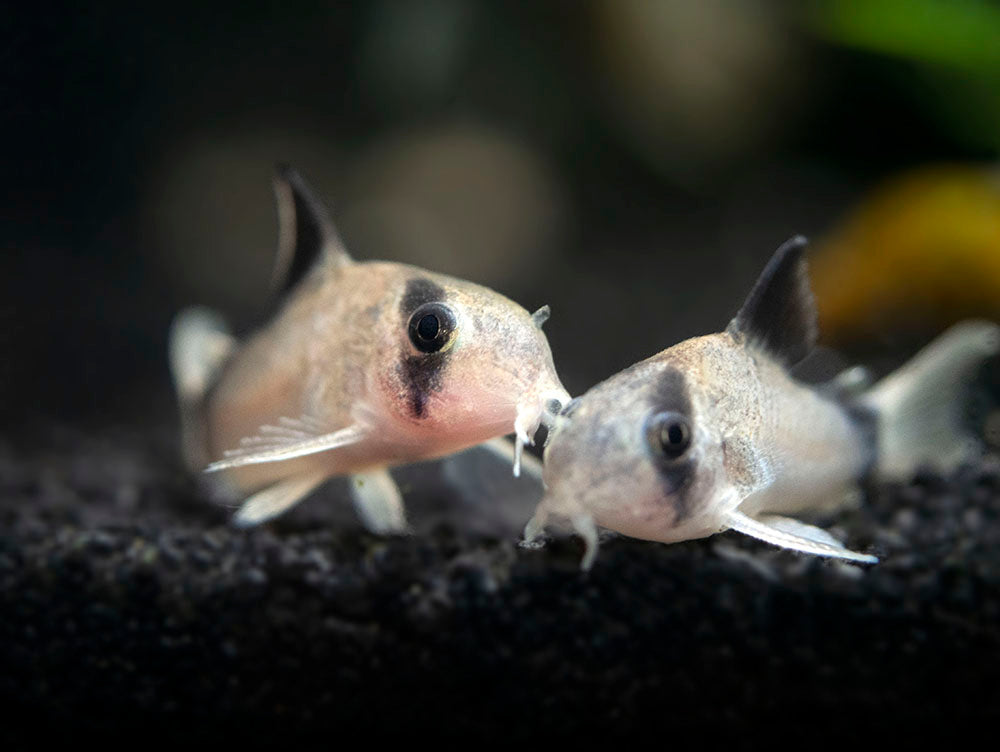
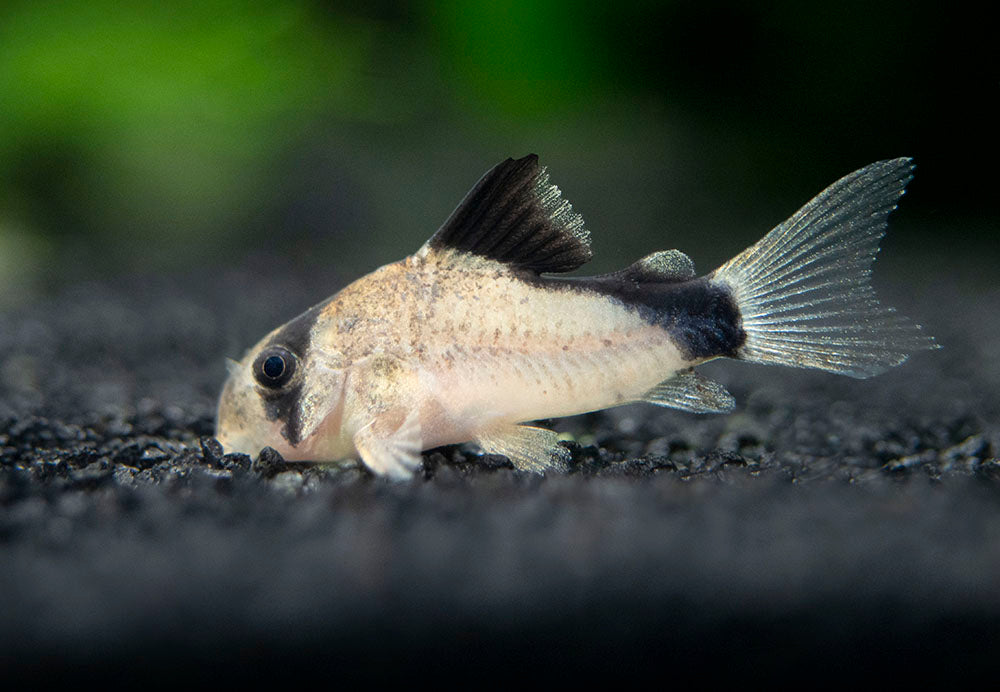
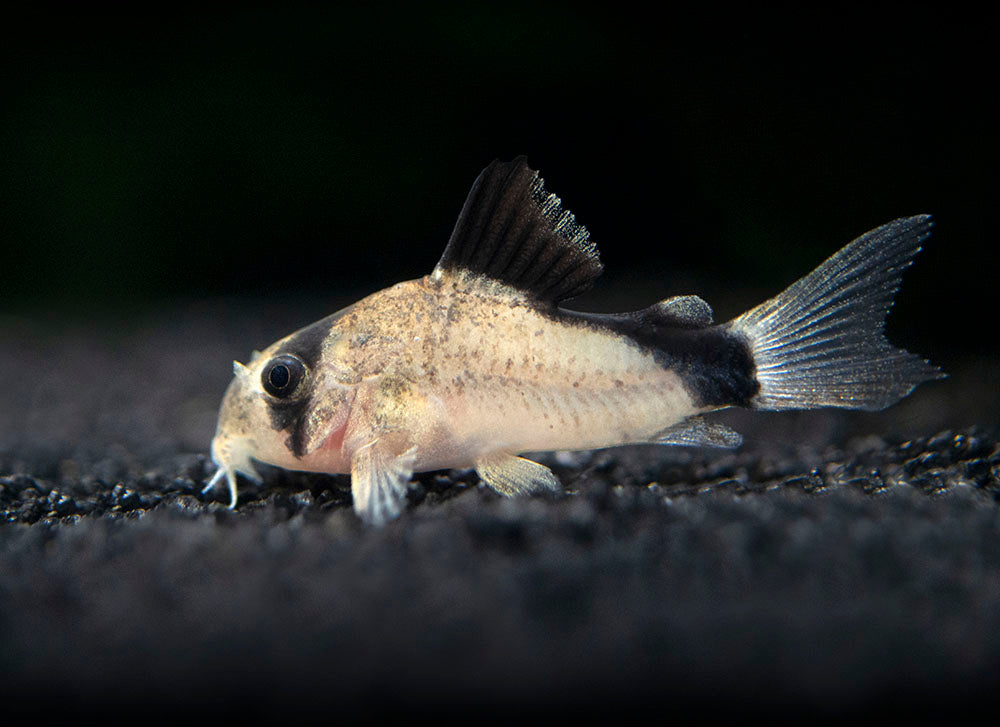
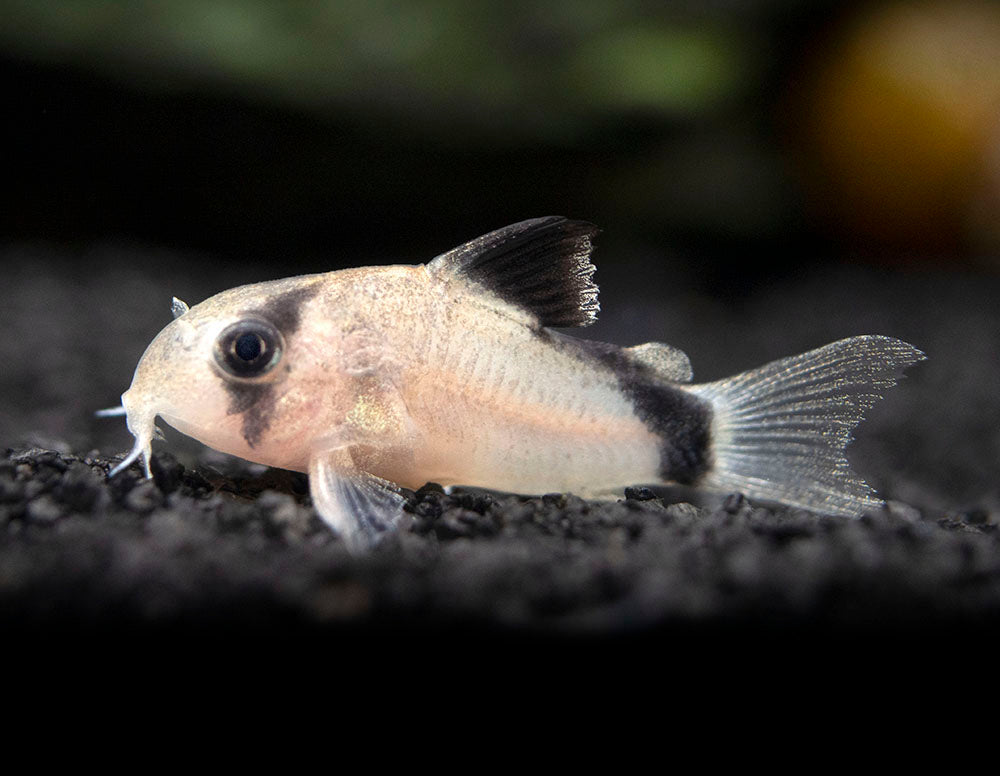
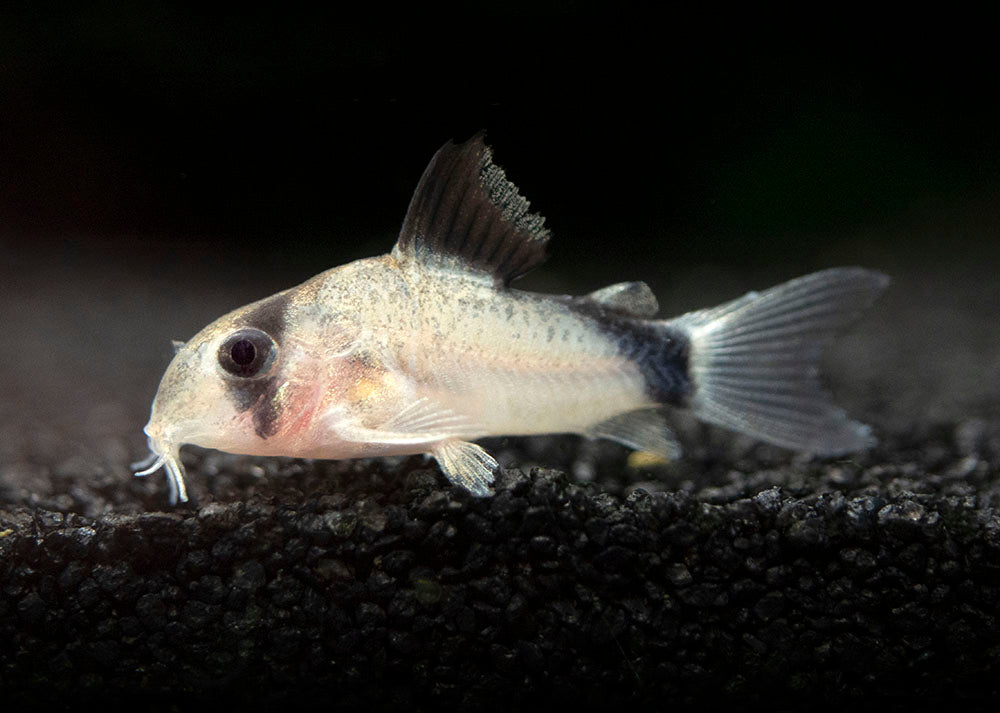
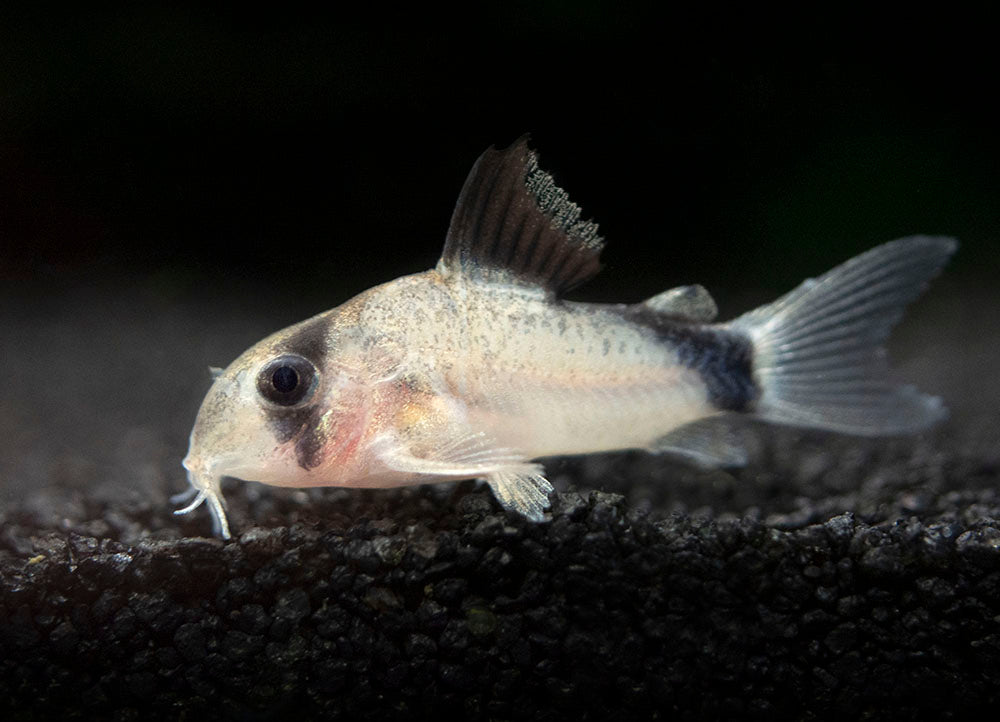
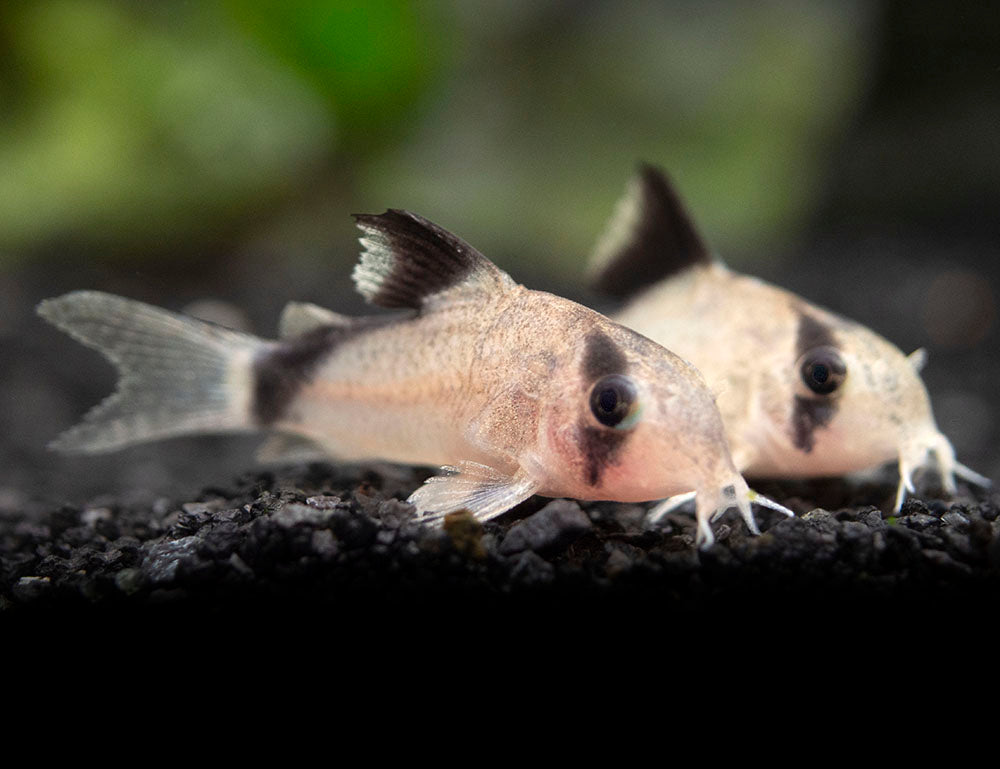
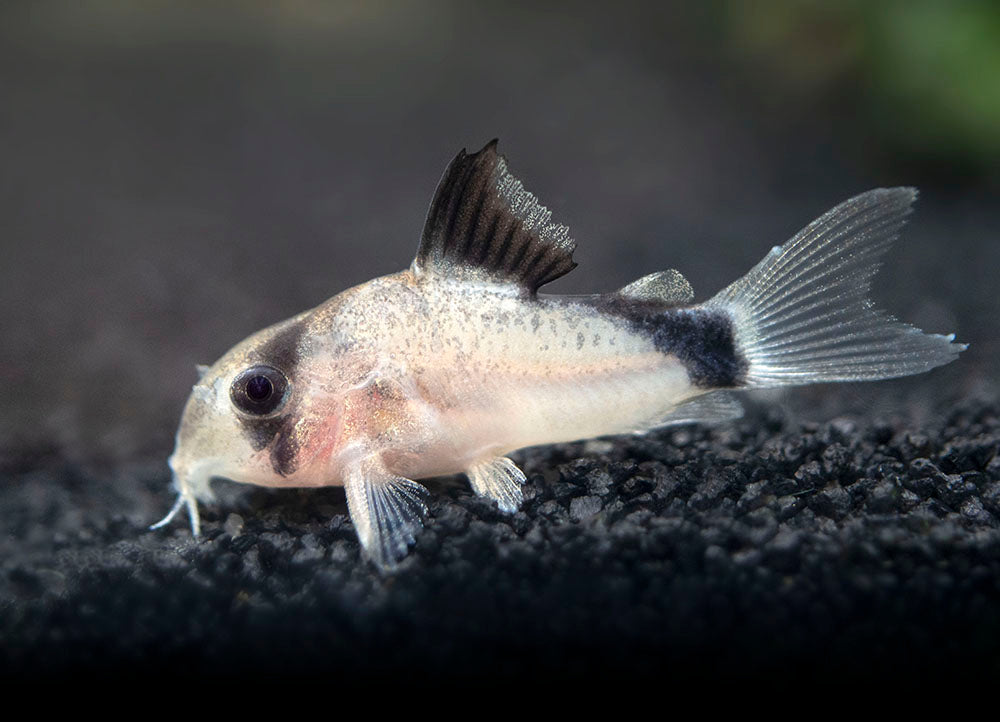
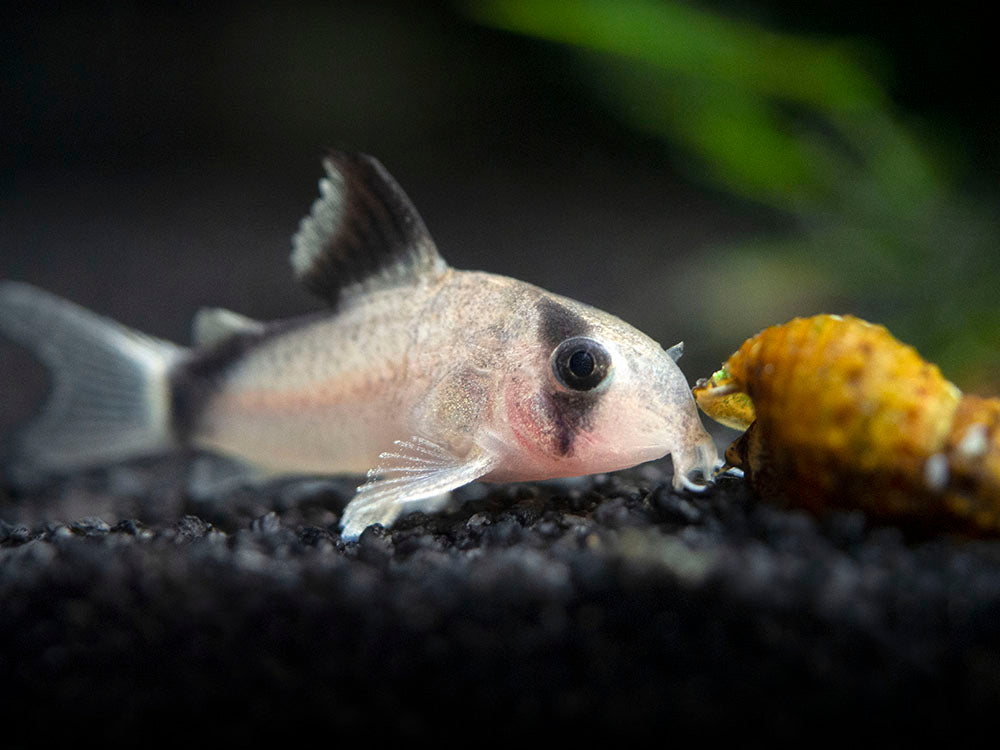

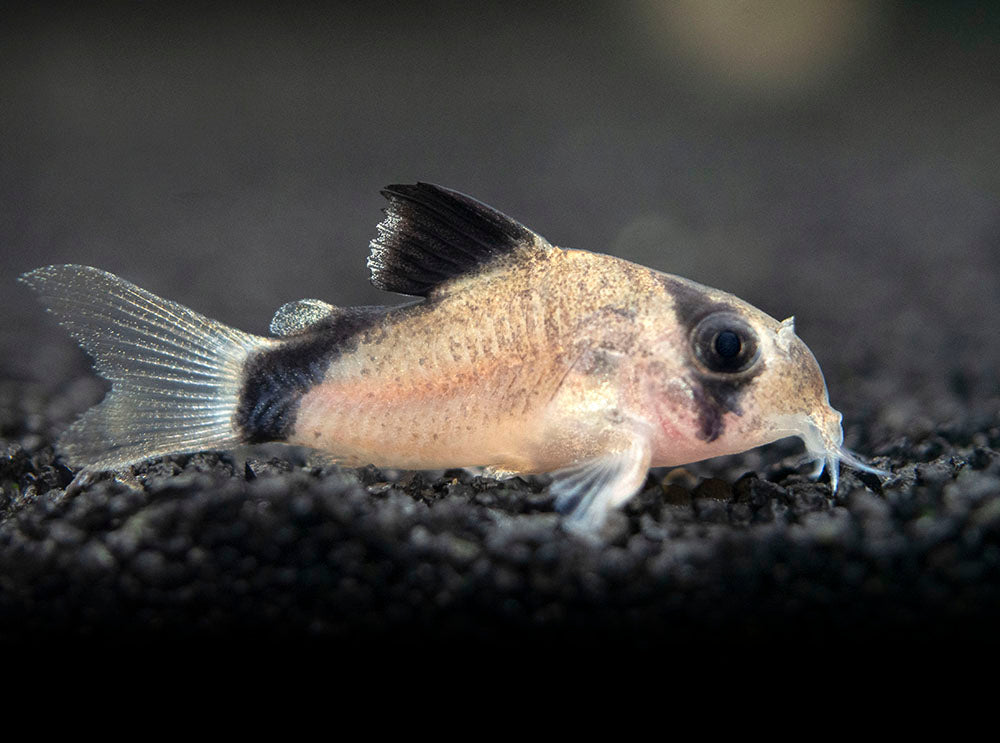


Bandit Cory Catfish (Corydoras metae) - Tank Bred
- Low stock - 1 item left
- Backordered, shipping soon
Species Overview
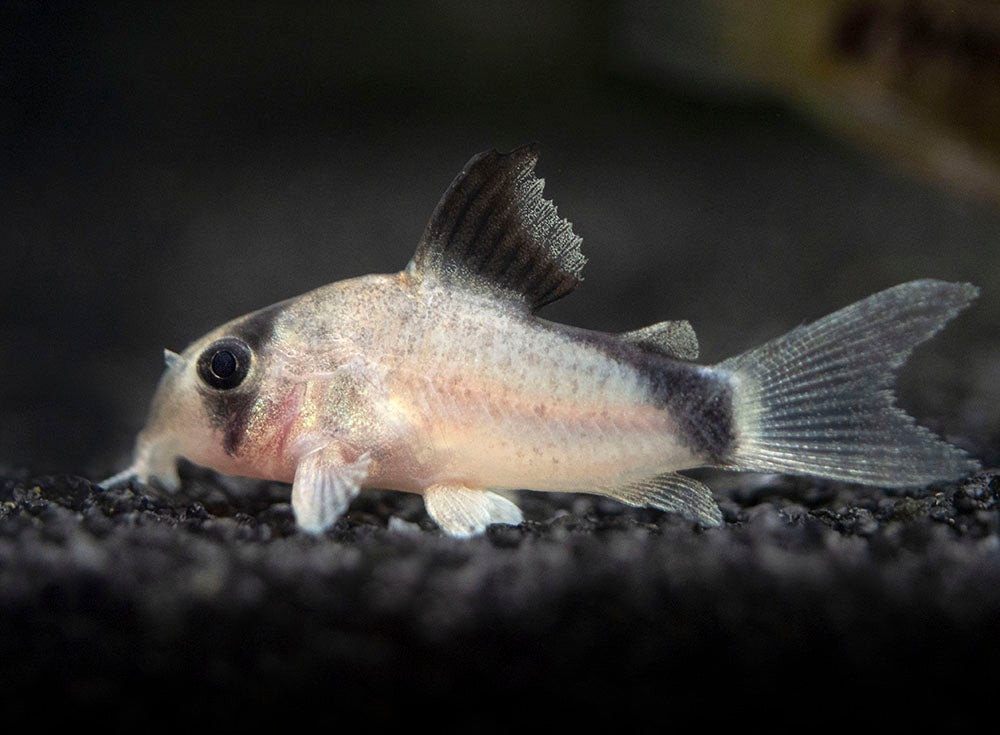
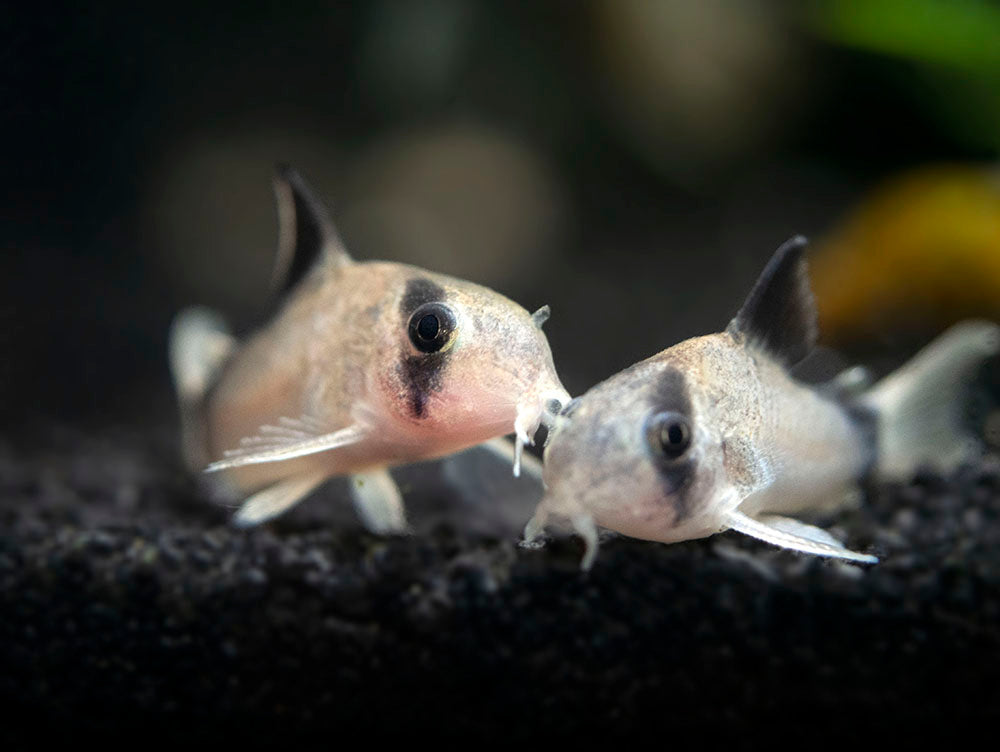
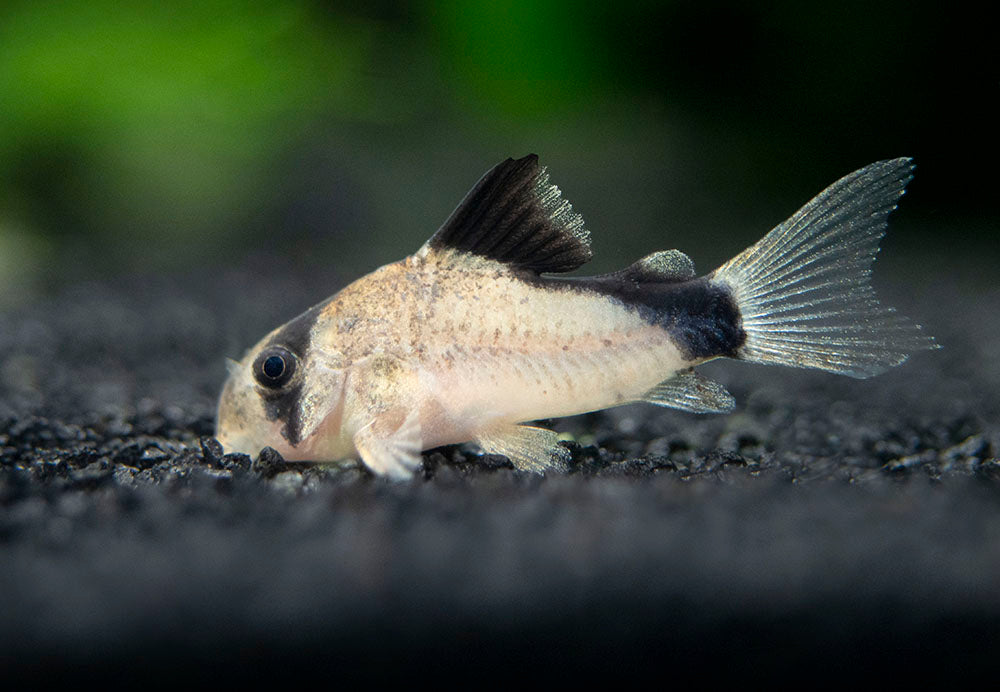
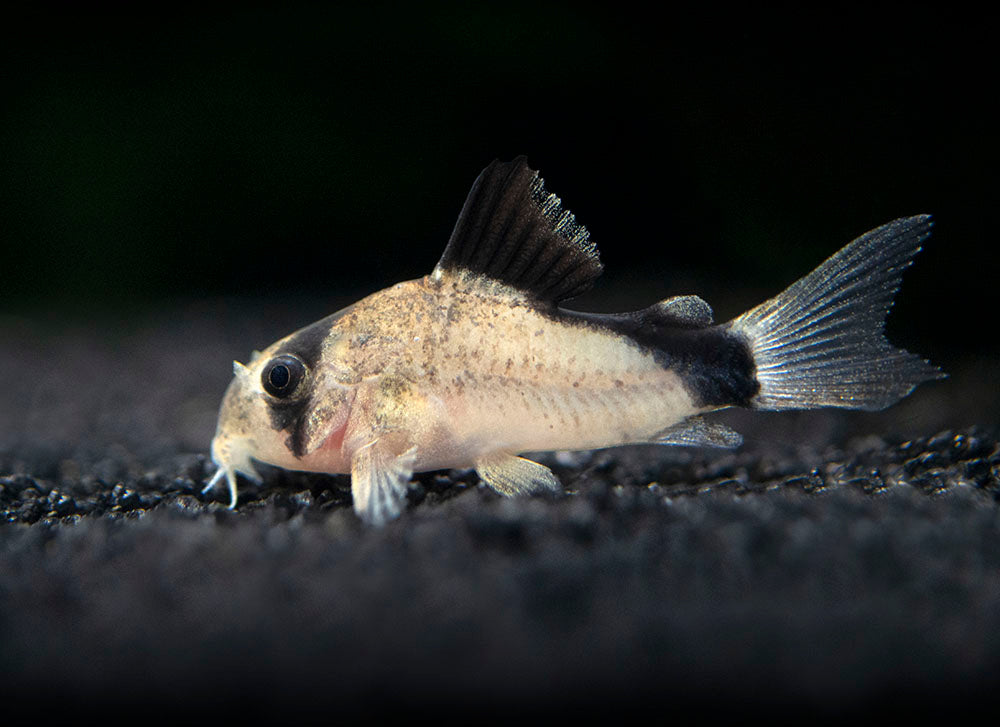
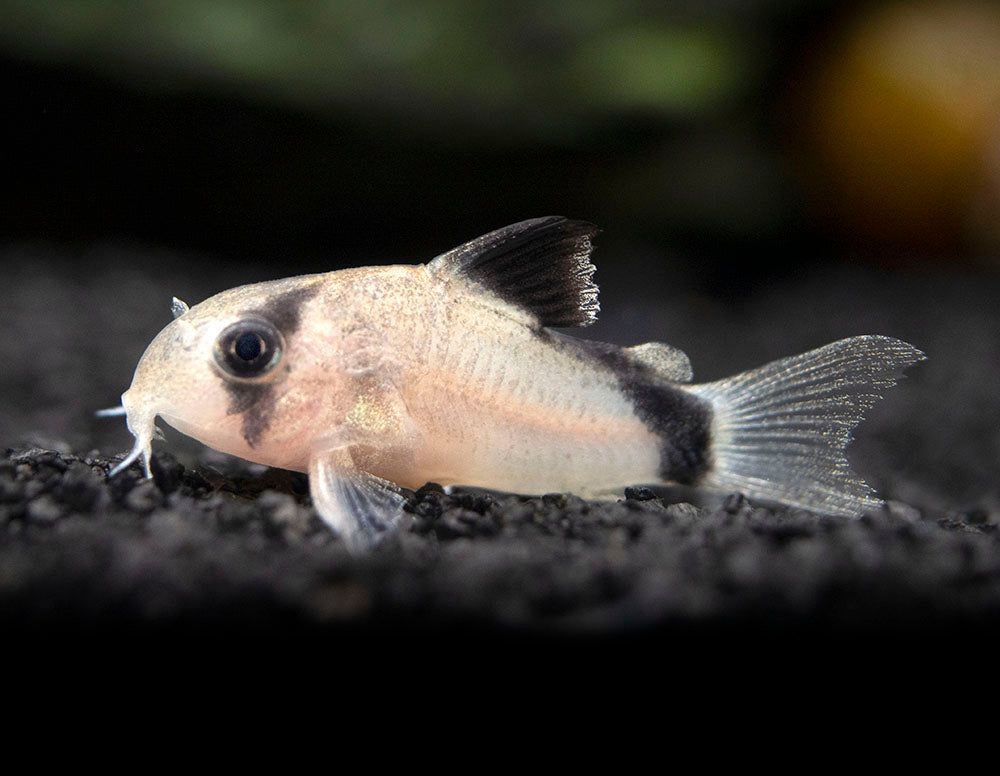
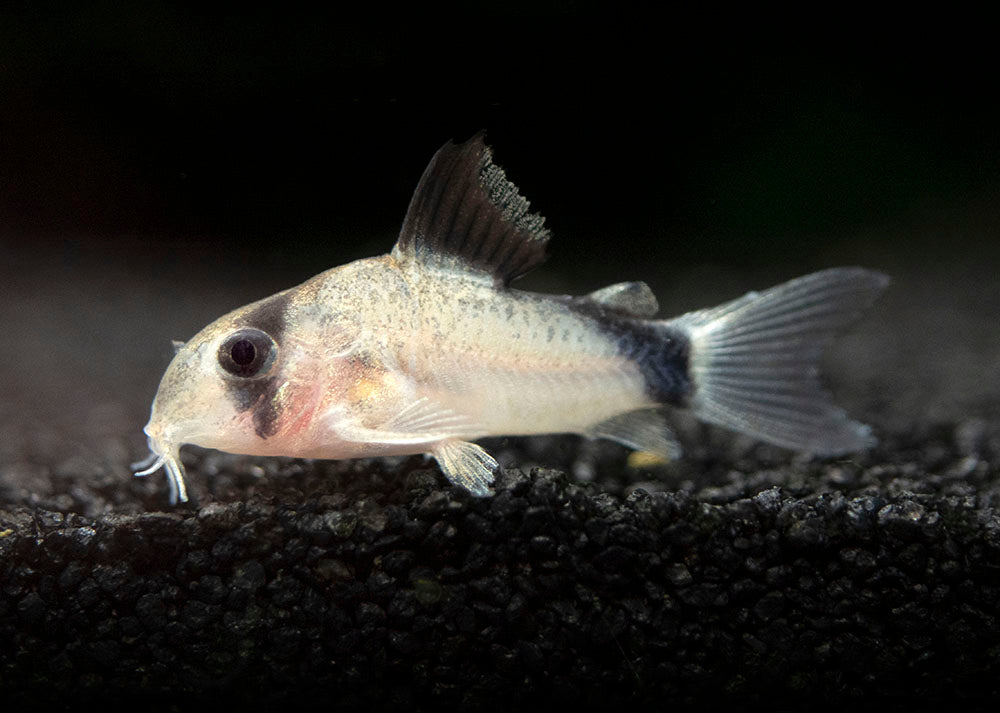
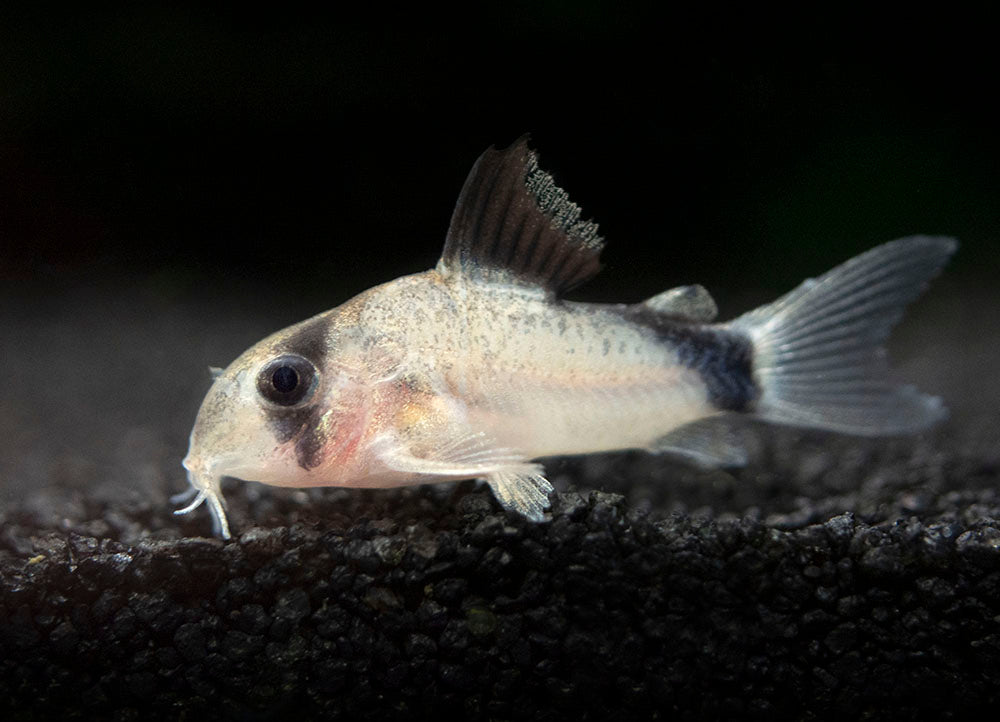
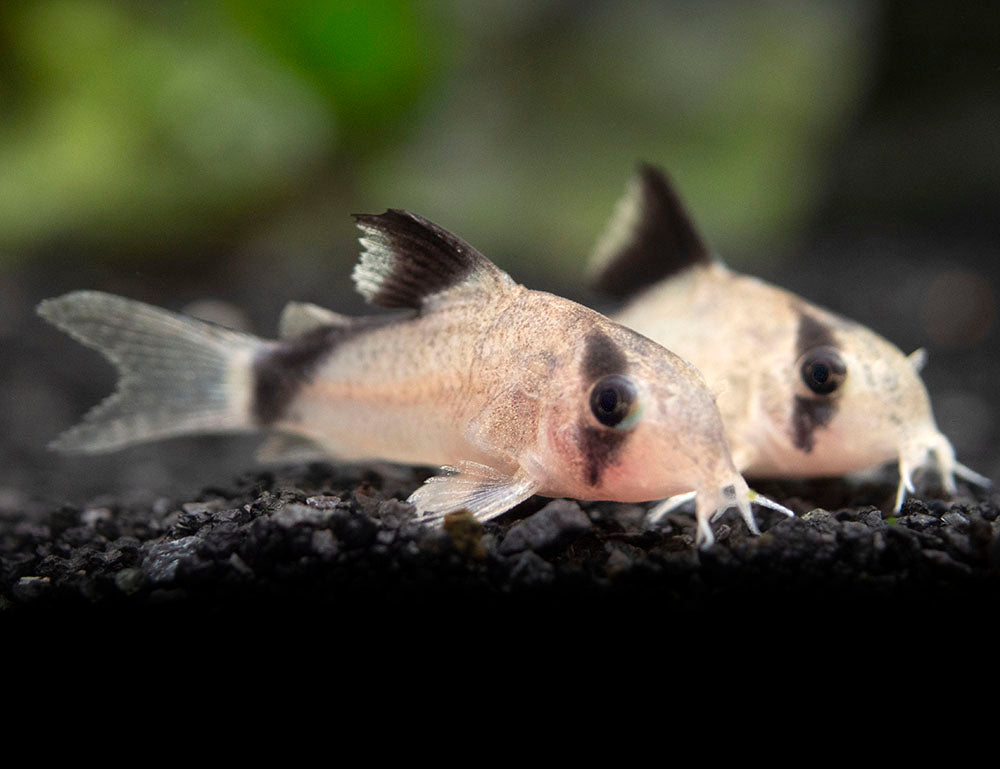
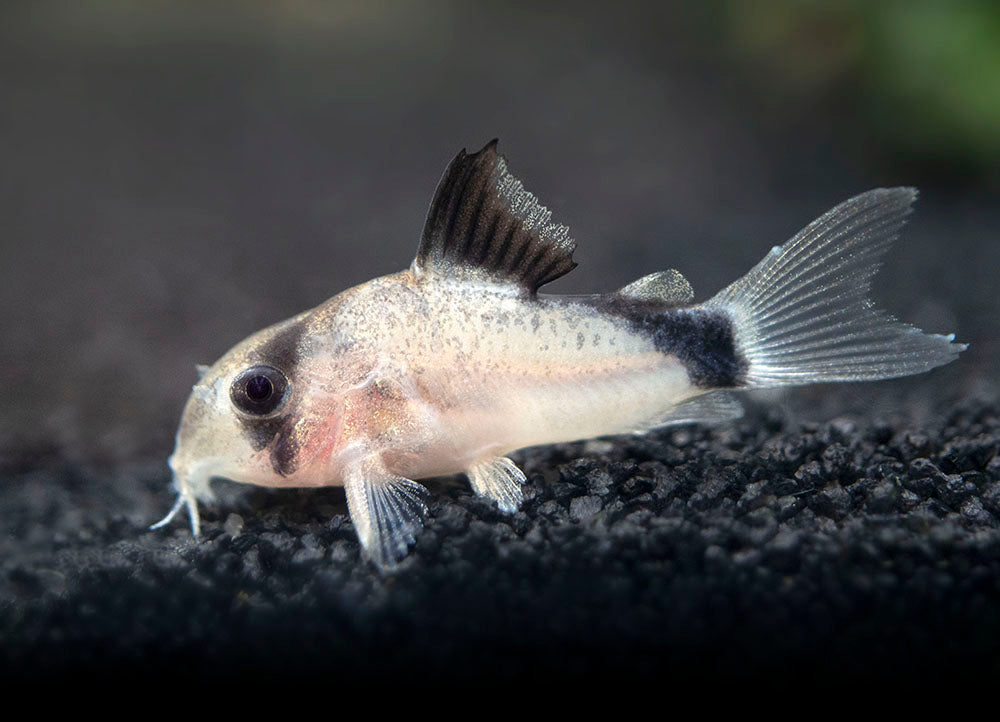
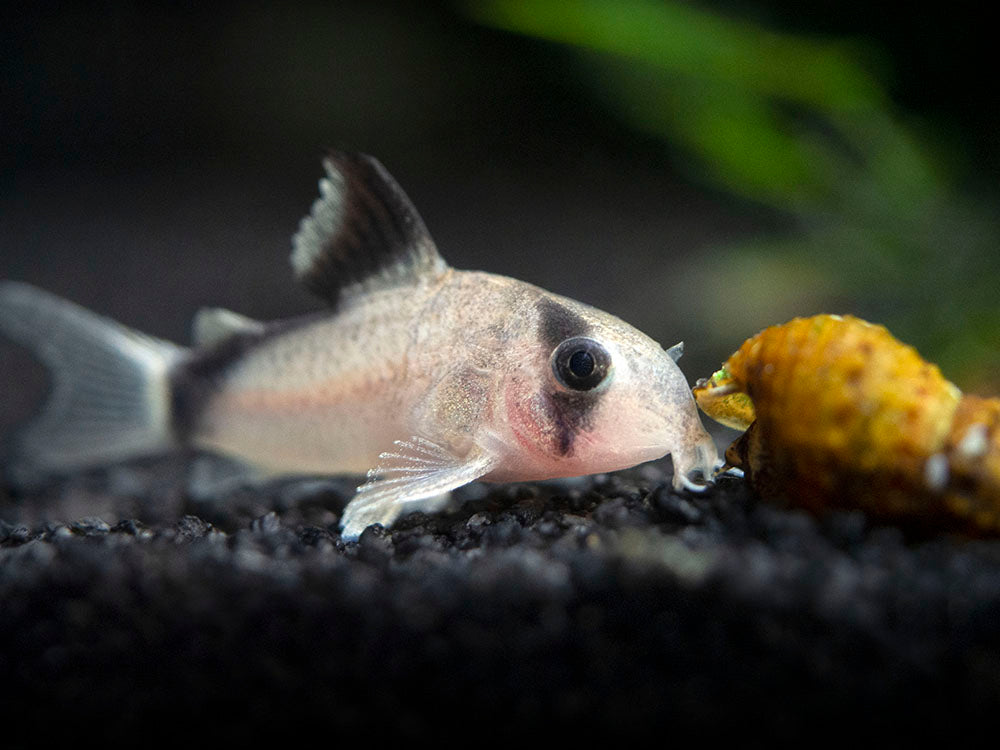
The Bandit Cory Catfish is one of the most recognizable and beloved members of the Corydoras genus. Instantly identified by the bold black "bandit mask" stretching across its eyes and the striking dark dorsal marking that resembles a flowing cape, this charming catfish combines distinctive beauty with the peaceful personality that has made Corydoras some of the most popular community fish in the freshwater aquarium hobby.
Our tank-bred, locally bred Bandit Cory Catfish are exceptionally well adapted to aquarium life and thrive in peaceful planted community aquariums. Constantly active, they spend their day exploring the substrate, investigating every corner of the aquarium, and foraging together with other Corydoras. Their playful social behavior and nonstop activity often make them one of the first fish visitors notice, despite spending nearly all of their lives along the bottom of the aquarium.
At Aquatic Arts, Bandit Cory Catfish have become one of our favorite Corydoras because they perfectly represent everything hobbyists love about the genus. They are peaceful, personable, endlessly entertaining, and thrive when maintained in groups. Whether you're building your first community aquarium or adding to an established South American aquascape, the Bandit Cory Catfish is a species you'll enjoy watching every single day.
What We Love About This Fish
- Distinctive black "bandit mask" and flowing dorsal marking unlike any other Corydoras
- Constantly active schooling catfish that brings movement to the bottom of the aquarium
- Outstanding companion for peaceful planted community aquariums
- Tank-bred and locally bred specimens that readily adapt to aquarium life
Quick Care Guide
- Care Level: Easy
- Temperament: Peaceful
- Diet: Omnivore (Sinking Pellets, Frozen Foods, Live Foods, and Premium Prepared Foods)
- Source: Tank-Bred, Locally Bred
- Average Adult Size: 2.2–2.5 Inches (5.5–6.4 cm)
- Average Purchase Size: 1–1.25 Inches (2.5–3.2 cm)
- Tank Level: Bottom
- Activity Level: Active Throughout the Day
- Social Classification: Schooling Species (Groups of 6 or More Recommended)
- Shrimp Safe: Yes
Recommended Tank Parameters
- Minimum Aquarium Size: 20 Gallons
- Temperature: 72–78°F (22–26°C)
- pH: 6.2–7.6
- GH: 2–12 dGH (35–215 ppm)
- KH: 2–8 dKH (35–140 ppm)
- TDS: 100–250 ppm
Swimming Zone
Bandit Cory Catfish spend nearly all of their lives exploring the lower regions of the aquarium. They move together in loose schools, sifting through the substrate with their sensitive barbels while weaving between driftwood, aquatic plants, and rocks in search of food. Unlike many bottom-dwelling fish that remain hidden throughout the day, healthy Bandit Cory Catfish remain active from morning until lights out, making them one of the most entertaining species to observe in a peaceful community aquarium.
Why Aquatic Arts?
Every Bandit Cory Catfish is carefully quarantined, observed, and conditioned before being offered for sale. Our tank-bred, locally bred fish are healthy, actively feeding, and fully acclimated to aquarium life before shipment. Backed by our experienced livestock team and our 100% Live Arrival Guarantee, we're committed to helping you succeed from the day your new Corydoras arrive.
Origin: Tank-Bred, Locally Bred. Native to the Meta River basin of Colombia.
One of the reasons Bandit Cory Catfish have remained one of the most popular Corydoras in the aquarium hobby is because of the environment they evolved to live in. In the wild, Corydoras metae inhabit the calm tributaries, flooded forests, and slow-moving streams of Colombia's Meta River basin, where schools of Corydoras spend the day exploring sandy bottoms scattered with fallen leaves, driftwood, and submerged roots. Rather than defending territories, they rely on the safety of the group while searching for tiny insects, worms, crustaceans, and other food hidden beneath the substrate.
One behavior we always enjoy watching is how naturally these fish work together. A school of Bandit Cory Catfish rarely stays still for long. Instead, they move as a group, stopping to sift through the sand before swimming off together to investigate the next area. That constant curiosity is one of the defining characteristics of the species and one of the biggest reasons they've remained a favorite among freshwater hobbyists for generations.
Although our Bandit Cory Catfish are tank-bred and locally bred, they retain these same natural instincts. Providing a soft sandy substrate, peaceful tank mates, and the companionship of other Corydoras allows them to display the active schooling and foraging behaviors that make this species so enjoyable to keep.
One of the biggest mistakes we see is aquariums with beautiful plants and decorations but very little open space for Corydoras to explore. Bandit Cory Catfish are constantly on the move, and a well-designed aquarium gives them plenty of room to forage together while still providing the security of driftwood, plants, and shaded retreats.
Hardscape
Soft sand is one of the best investments you can make for any Corydoras aquarium. Bandit Cory Catfish naturally sift the substrate using their sensitive barbels, and fine sand allows them to display this behavior without the risk of damaging those delicate sensory organs. Driftwood, smooth river stones, and scattered branches create natural pathways while leaving wide open areas where an entire school can forage together.
Plants
Bandit Cory Catfish pair beautifully with planted aquariums because healthy plants provide security without limiting swimming space. Amazon Sword Plants, Cryptocorynes, Vallisneria, Java Fern, Anubias, and floating plants all complement their natural habitat. We like planting heavily around the back and sides of the aquarium while leaving an open sandy foreground where the Corydoras can remain active throughout the day.
Botanicals
Natural botanicals are another excellent addition to a Corydoras aquarium. Moringa Leaves, Indian Almond Leaves, Alder Cones, Catappa Bark, and other Aquatic Arts Botanicals create a more natural appearance while encouraging the growth of beneficial microorganisms. As these botanicals slowly break down, they also create additional foraging opportunities that encourage the same investigative behavior Bandit Cory Catfish display in the wild.
Painting the Aquarium
Imagine a peaceful Colombian stream where soft light filters through the forest canopy onto an open sandy riverbed bordered by weathered driftwood, scattered botanicals, and lush aquatic plants. Above, a school of Cardinal Tetras moves effortlessly through the middle of the aquarium while a group of Bandit Cory Catfish works together across the sand, stopping every few inches to sift for tiny morsels before continuing their search. Every now and then the entire school changes direction at once, almost as if they had planned it. It's one of those simple behaviors that never gets old and reminds us why Corydoras have earned such a loyal following among freshwater hobbyists.
Bandit Cory Catfish are opportunistic omnivores that spend much of their day searching the substrate for small aquatic insects, insect larvae, tiny crustaceans, worms, and other edible organisms. Their sensitive barbels allow them to detect food hidden beneath the surface of the substrate, making them remarkably efficient foragers.
A quality sinking pellet or wafer should form the foundation of their diet, supplemented with frozen bloodworms, brine shrimp, mysis shrimp, daphnia, blackworms, and other protein-rich foods. While Bandit Cory Catfish eagerly consume leftover food that reaches the bottom, they should never be considered "cleanup fish" or expected to survive on scraps alone. Providing a varied, intentional feeding schedule promotes healthy growth, strong immune function, and vibrant coloration.
Offering food after midwater fish have finished eating helps ensure the entire school has access to a nutritious meal. Watching a group of Bandit Cory Catfish enthusiastically forage together is one of the most enjoyable behaviors this species displays.
Bandit Cory Catfish are among the most peaceful community fish available and coexist well with a wide variety of similarly peaceful freshwater species. Their calm temperament and bottom-dwelling lifestyle allow them to share the aquarium with fish occupying nearly every other level of the water column.
Social Classification
Bandit Cory Catfish are a Schooling Species and should always be maintained in groups. Aquatic Arts recommends keeping at least six individuals together, although larger schools often display even more natural behavior and greater confidence. A group of Bandit Cory Catfish actively foraging together is one of the defining sights of a thriving community aquarium.
Compatible tank mates include:
Cardinal Tetra (Paracheirodon axelrodi) – Peaceful South American schooling fish.
Rummy Nose Tetra (Hemigrammus rhodostomus) – Excellent dither fish for community aquariums.
Ember Tetra (Hyphessobrycon amandae) – Small, peaceful schooling fish.
Pencilfish (Nannostomus spp.) – Calm upper-water companions.
Honey Gourami (Trichogaster chuna) – Gentle centerpiece fish.
Otocinclus Catfish (Otocinclus spp.) – Peaceful algae grazers.
Bristlenose Plecos (Ancistrus spp.) – Compatible algae-eating companions.
Avoid large predatory fish and aggressive cichlids that may intimidate or prey upon Corydoras.
Ecosystem Match
Bandit Cory Catfish are an outstanding choice for planted South American community aquariums featuring peaceful schooling fish, driftwood, aquatic plants, and natural botanicals. Their constant activity and cooperative schooling behavior bring life to the bottom of the aquarium while complementing species occupying the middle and upper water column.
Shrimp Safe: Yes
Bandit Cory Catfish are considered shrimp safe and coexist well with adult Neocaridina Shrimp, Caridina Shrimp, Amano Shrimp, Bamboo Shrimp, and Vampire Shrimp. Because they spend their time searching for small food particles rather than hunting large prey, they rarely bother healthy adult shrimp.
Very small shrimplets may occasionally be eaten if encountered in open areas. Dense mosses, leaf litter, botanicals, and heavily planted aquariums provide excellent refuge that greatly improves shrimplet survival.
Breeding Difficulty: Easy to Moderate
Reproduction Type: Egg Layer
Bandit Cory Catfish are rewarding fish to breed in the home aquarium and often spawn when provided with excellent water quality, a varied diet, and regular water changes. Males actively court receptive females before the classic Corydoras "T-position" is observed, during which eggs are fertilized.
Females carefully attach adhesive eggs to aquarium glass, broad plant leaves, driftwood, or other smooth surfaces throughout the aquarium. Depending on water temperature, the eggs generally hatch within several days. Newly hatched fry readily accept freshly hatched baby brine shrimp, microworms, and finely powdered prepared foods, growing quickly under stable conditions with clean water.
Should I keep Bandit Cory Catfish alone or in a school?
Bandit Cory Catfish are true schooling fish and should always be kept with others of their own species whenever possible. While a single Bandit Cory Catfish can survive, it will rarely display the confidence, activity, or natural social behaviors seen in a proper group. We recommend keeping at least six Bandit Cory Catfish together, although larger schools are even more rewarding to watch as they forage across the aquarium floor in unison.
Are Bandit Cory Catfish good for beginners?
Absolutely. Bandit Cory Catfish are one of the best Corydoras species for beginner and experienced aquarists alike. Their peaceful temperament, hardy nature, and willingness to accept a variety of prepared foods make them an outstanding choice for community aquariums. Like all fish, they appreciate a fully cycled aquarium with stable water quality and regular maintenance.
What makes the Bandit Cory Catfish different from other Corydoras?
The bold black mask across the eyes gives the Bandit Cory Catfish its unmistakable appearance and inspired its common name. While all Corydoras are peaceful schooling catfish, Corydoras metae stands out for its striking markings, active personality, and constant curiosity. It is a species that attracts attention without ever dominating the aquarium.
Do Bandit Cory Catfish really need a sand substrate?
Fine sand is always our first recommendation because it allows Bandit Cory Catfish to display one of their most natural behaviors: gently sifting through the substrate with their sensitive barbels in search of food. Smooth gravel can also work, but coarse or sharp substrates may damage the barbels over time and limit this natural feeding behavior.
Are Bandit Cory Catfish algae eaters?
This is one of the biggest misconceptions about Corydoras. Bandit Cory Catfish are opportunistic omnivores, not algae eaters. While they happily consume uneaten food that reaches the bottom of the aquarium, they should never be expected to clean the tank or survive on leftovers alone. A quality sinking food supplemented with frozen or live foods is essential for long-term health.
What fish make the best tank mates for Bandit Cory Catfish?
Bandit Cory Catfish thrive alongside peaceful community fish that occupy different areas of the aquarium. Cardinal Tetras, Rummy Nose Tetras, Ember Tetras, Pencilfish, Honey Gouramis, Otocinclus, Bristlenose Plecos, and peaceful dwarf cichlids all make excellent companions. Their calm nature allows Bandit Cory Catfish to fit naturally into a wide variety of planted freshwater aquariums.
Are Bandit Cory Catfish shrimp safe?
Yes. Adult Neocaridina Shrimp, Caridina Shrimp, Amano Shrimp, Bamboo Shrimp, and Vampire Shrimp generally coexist very well with Bandit Cory Catfish. Very small shrimplets may occasionally become an easy meal, but healthy adult shrimp are rarely disturbed, especially in heavily planted aquariums with mosses and natural cover.
Why do Bandit Cory Catfish swim to the surface?
Many hobbyists are surprised the first time they see a Bandit Cory Catfish dart to the surface, take a quick gulp of air, and immediately return to the bottom. This is completely normal. Like all Corydoras, Bandit Cory Catfish can supplement their oxygen intake by swallowing atmospheric air. Occasional trips to the surface are expected, although frequent gasping may indicate poor water quality or low dissolved oxygen.
Do Bandit Cory Catfish dig up aquarium plants?
Not at all. Although Bandit Cory Catfish spend much of the day investigating the substrate, they are remarkably gentle around plants. They weave between stems and broad-leaf plants without uprooting them, making them one of the best bottom-dwelling fish for planted aquariums.
Can Bandit Cory Catfish be bred in the home aquarium?
Yes. Bandit Cory Catfish are one of the more rewarding Corydoras species to breed. Mature groups often spawn after cooler water changes that mimic seasonal rainfall. Females attach adhesive eggs to aquarium glass, plant leaves, or other smooth surfaces, and newly hatched fry readily accept baby brine shrimp and other appropriately sized foods.
Why do Bandit Cory Catfish always seem so busy?
One of the things we enjoy most about Bandit Cory Catfish is that they're almost always doing something. Healthy Corydoras rarely remain still for long. Instead, they spend the day exploring driftwood, inspecting plants, and foraging together across the substrate. Their constant activity and social interactions are a big part of what makes them such entertaining community fish.
Would Aquatic Arts recommend the Bandit Cory Catfish?
Without hesitation. Bandit Cory Catfish are everything we look for in a community fish: peaceful, hardy, social, and endlessly entertaining. Their distinctive markings, active schooling behavior, and compatibility with a wide variety of freshwater species make them one of our favorite Corydoras for both beginner and experienced aquarists.
How are Bandit Cory Catfish shipped?
Every Bandit Cory Catfish is carefully quarantined, observed, and conditioned before shipment to ensure it arrives healthy and feeding well. Fish orders are shipped using UPS Next Day Air in our Aquatic Arts Live Arrival Guarantee Box and are backed by our 100% Live Arrival Guarantee.
For the safety of our animals, we only ship live fish, crabs, and select other inverts exclusively via UPS 1 Day Air. If your order contains this item, you will only see UPS 1 Day Air as a shipping option during checkout. If other items are in your cart that can ship with 2 day or standard shipping options the only shipping method you can still select is UPS 1 Day Air.
UPS 1 Day is a description of the duration of time a shipment will spend in transit once it has been shipped. This does not guarantee the package will be shipped the same or next day from which the order was placed.
Shipping Schedule for this service
Current Handling Time:
1-9 business days
Here at Aquatic Arts, we consider the welfare of the live animals we are shipping to be of the foremost importance. This process is much more involved than simply creating a shipping label and affixing it to a box. Depending on the order, it takes from 4 to 7 people to complete this process properly. We check the weather conditions here where they fly out of the Indianapolis UPS facility and the destination for each shipment. We start early each morning and go through a multi-step process to have the day's shipments prepared in time for the UPS pickup. The volume of orders in our system also affects the processing time. Therefore our stated handling time is 1-9 business days.
Shipping Rate
Pricing is by size of package needed to fill entire order and distance it must travel. It will be calculated at checkout.
We stand behind the health and quality of every fish we ship. Each Bandit Cory Catfish is carefully quarantined, observed, and conditioned before leaving our facility to help ensure it arrives healthy and ready to thrive in its new aquarium.
Every order is backed by our 100% Live Arrival Guarantee. In the unlikely event that an issue occurs during transit, simply contact our team and we will work quickly to help resolve the situation.
Every fish order is shipped in our Aquatic Arts Live Arrival Guarantee Box at no additional charge. Depending on seasonal conditions, heat packs, cold packs, and insulation may be included to help provide the safest possible shipping environment.
When your fish arrive, we recommend acclimating them promptly into a fully cycled aquarium with stable water parameters and a soft substrate. Bandit Cory Catfish thrive when maintained in schools of six or more with peaceful community fish, excellent water quality, and plenty of open areas to forage alongside driftwood, aquatic plants, and natural cover. Providing the proper environment allows these active, social catfish to display the curious schooling behavior that has made Corydoras one of the world’s most popular freshwater fish.
In addition to our Live Arrival Guarantee, every purchase includes access to our experienced support team. Whether you have questions about acclimation, feeding, compatibility, breeding, aquascaping, or long-term care, we are here to help you get the most from your aquarium.
For assistance with your order or livestock care questions, please contact us at info@aquaticarts.com.
For complete details about our Live Arrival Guarantee, please visit:
https://aquaticarts.com/policies/refund-policy
Best Fishes,
The Aquatic Arts Team


