



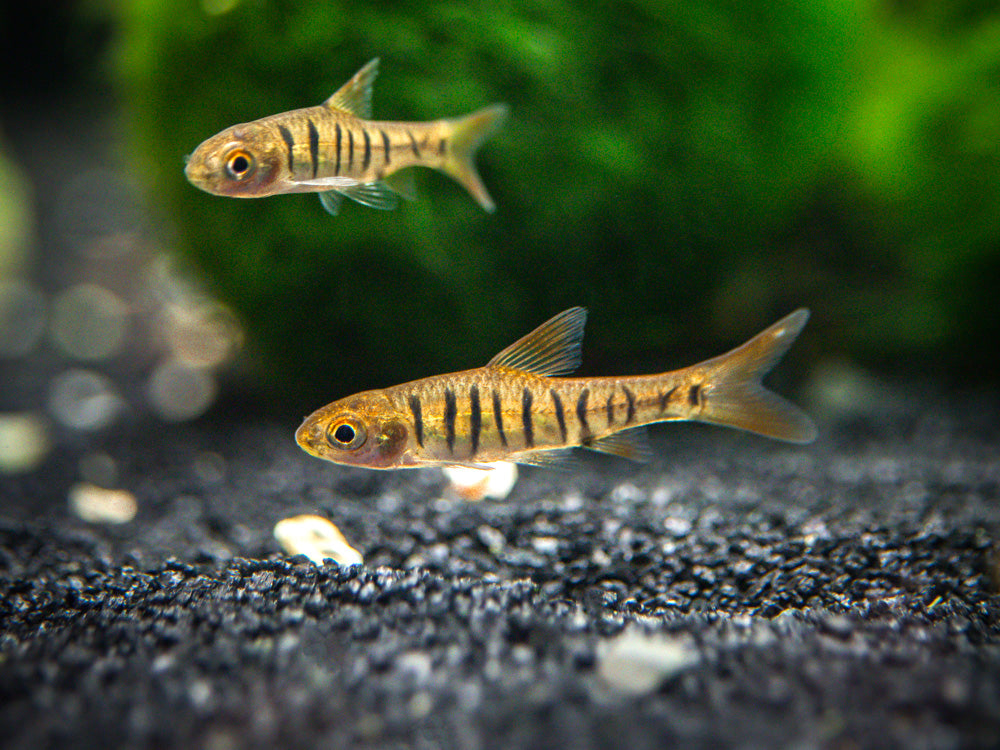
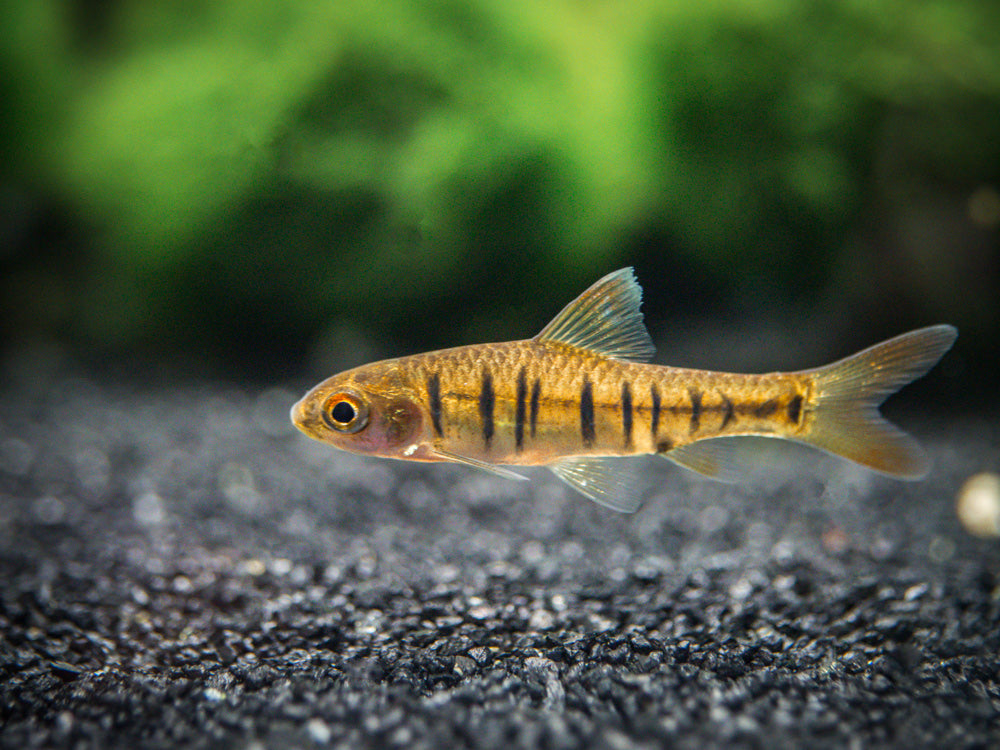
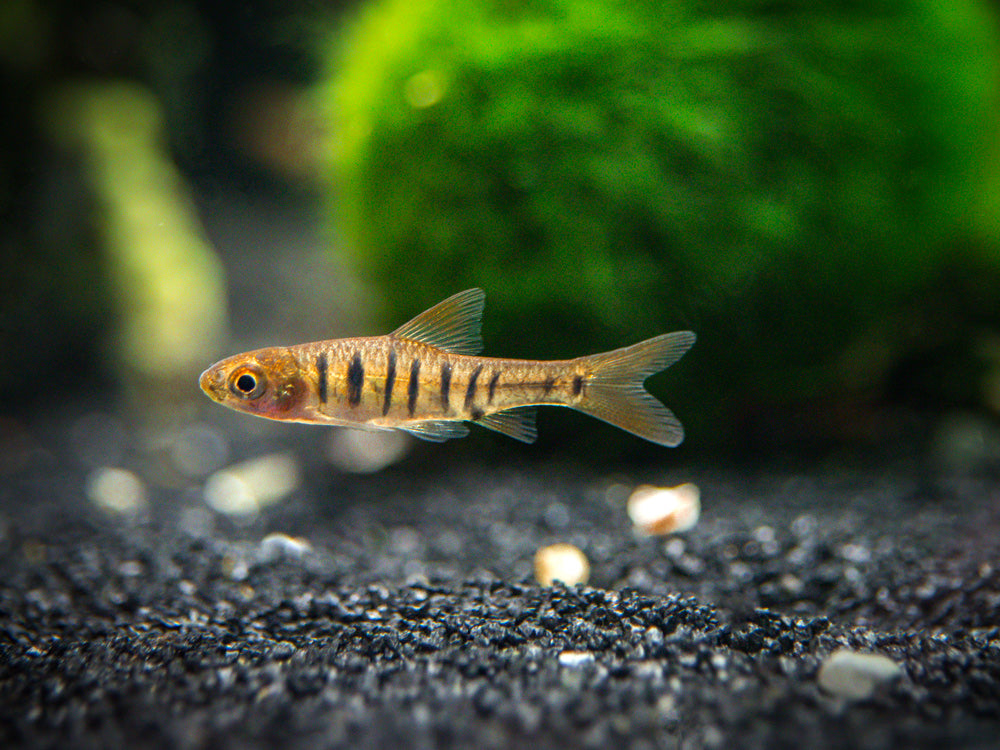
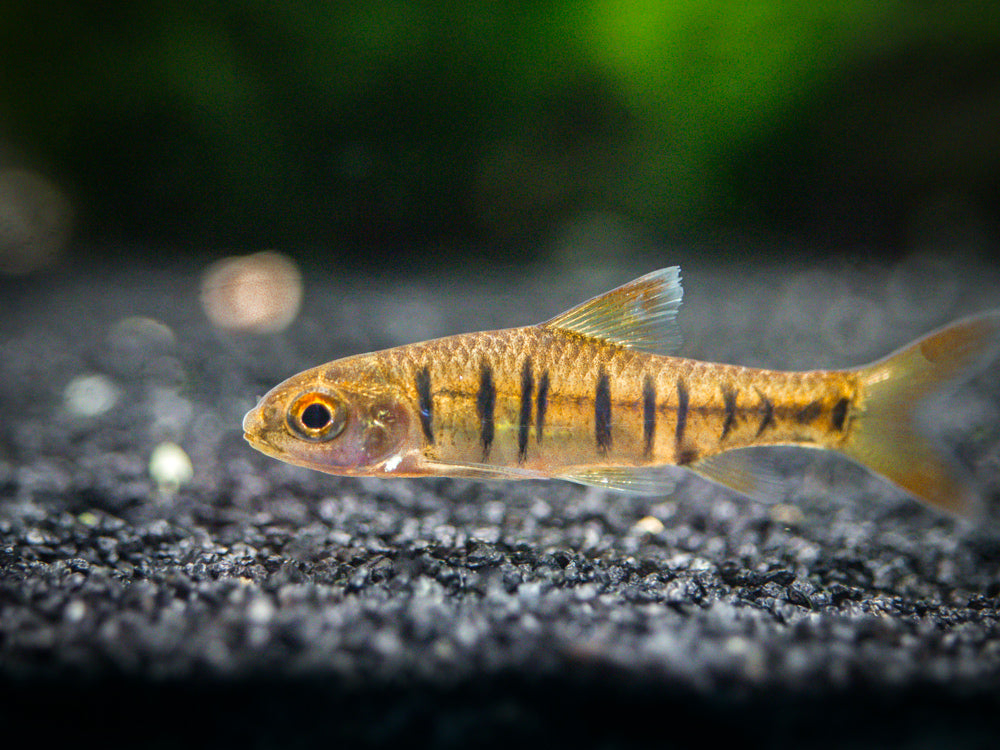
African Banded Barb (Barbus fasciolatus) - Tank-Bred
- Low stock - 6 items left
- Backordered, shipping soon
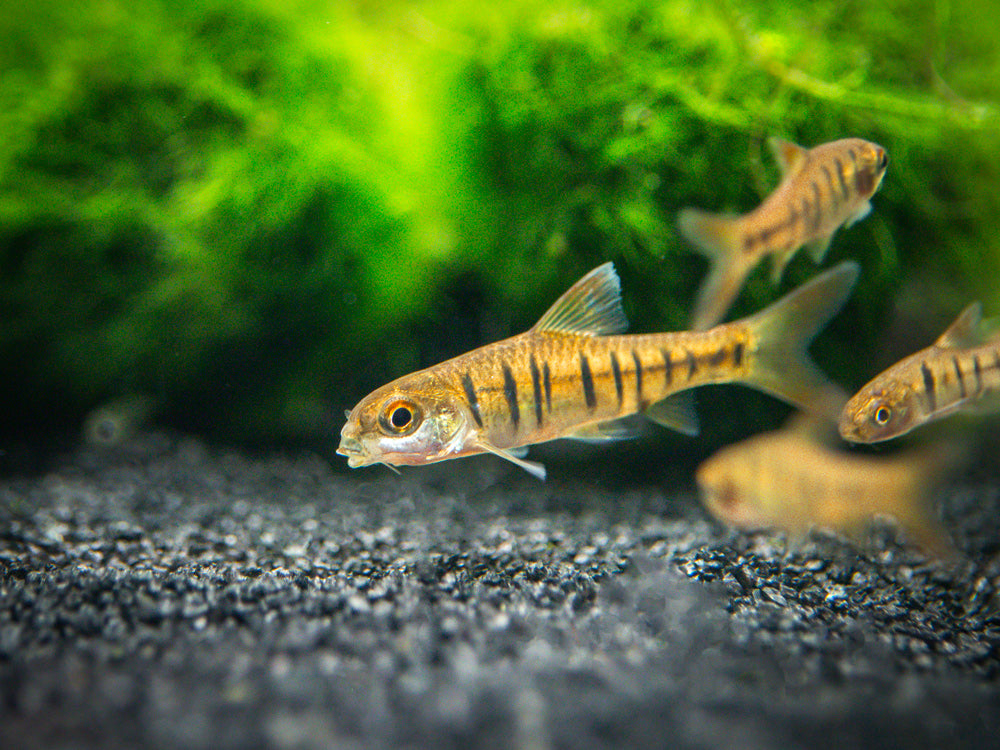
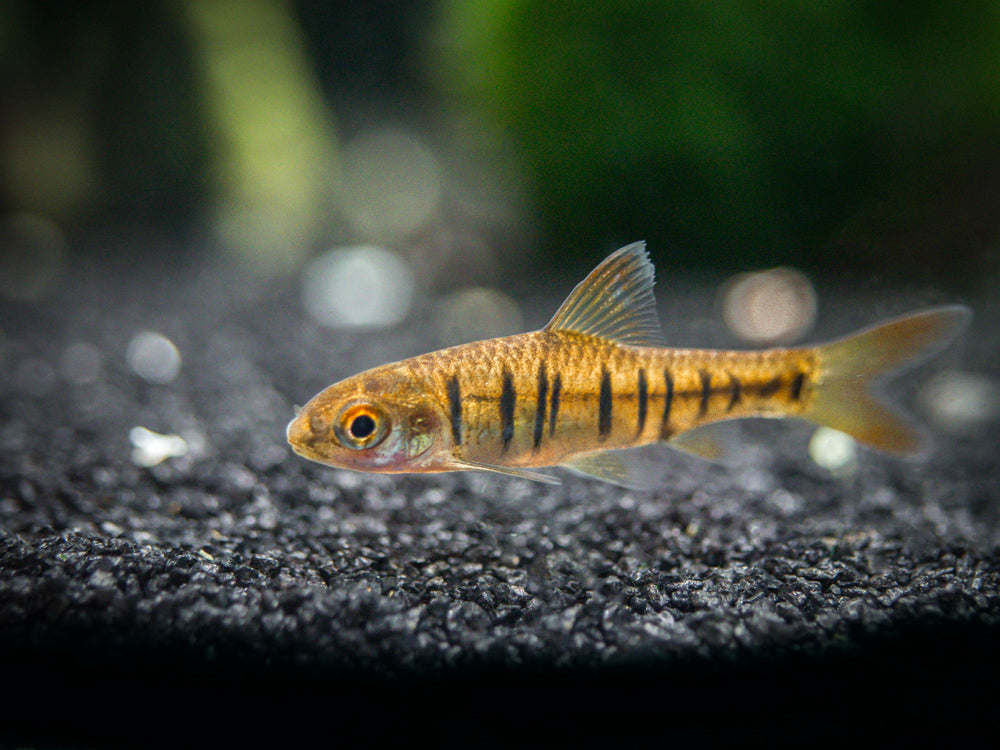
The African Banded Barb is an underrated gem for the planted community aquarium. Native to slow-moving waterways in Central Africa, this elegant species displays shimmering golden bronze coloration accented by bold vertical black banding that gives the fish a striking, almost tiger-like appearance. Their active schooling behavior, peaceful temperament, and ability to thrive in heavily planted aquariums make them an excellent choice for hobbyists looking for something unique beyond the typical tetra or rasbora.
Our specimens are carefully raised in captivity and adapt exceptionally well to aquarium life. In a well-maintained planted aquarium with darker substrate and natural décor, their contrast and iridescence become even more vivid as they mature.
What We Love About This Fish
• Beautiful vertical black banding creates a bold, high-contrast appearance
• Peaceful schooling fish ideal for planted community aquariums
• Constantly active and engaging without being overly aggressive
• Tank-bred specimens adapt very well to aquarium life and prepared foods
• Excellent alternative to more common tetra and rasbora species
Quick Care Guide
• Care Level: Easy to Moderate beginner-friendly schooling barb for planted aquariums
• Temperament: Peaceful active community fish best kept in groups
• Diet: Omnivore that readily accepts flakes pellets frozen foods and live foods
• Average Adult Size: 2 - 2.5 inches (5 - 6.4 cm)
• Average Purchase Size: 0.75 - 1.25 inches (1.9 - 3.2 cm)
• Activity Level: Active midwater schooling fish with constant movement
• Group Size: Best kept in groups of 6 or more for natural behavior
• Tank Level: Midwater swimmer that utilizes open schooling space
• Shrimp Compatibility: Caution with baby shrimp but generally peaceful with adult Neocaridina and Amano shrimp in planted tanks
Recommended Tank Parameters
• Temperature: 72° - 79° F (22° - 26° C)
• pH: 6.2 - 7.5
• KH: 2 - 10 dKH
• Minimum Tank Size: 20 gallons
All Aquatic Arts brand plants and animals come with a 100% live arrival guarantee, plus free email support!
The original African Banded Barb (Barbus fasciolatus) was first documented from slow-moving streams, flooded forest zones, and vegetated waterways throughout portions of Central Africa, particularly in the Congo Basin region. These environments are typically filled with submerged roots, driftwood, leaf litter, and dense marginal vegetation.
The water in these habitats is often lightly tannin-stained with subdued lighting caused by overhead tree cover. African Banded Barbs naturally school through calm waters while feeding on small insects, plant matter, algae, and microfauna.
African Banded Barbs truly shine in natural-style planted aquariums with darker substrates and layered hardscape. Their bold vertical striping contrasts beautifully against green aquatic plants and shadowed aquascapes.
For a lush Central African-inspired setup, combine driftwood branches with rounded river stone, scattered leaf litter, and patches of aquatic plants that create both open swimming lanes and sheltered areas. Background plants like Vallisneria and Water Wisteria pair beautifully with midground groups of Cryptocoryne and Anubias attached to driftwood.
Adding Aquatic Arts botanicals such as Indian Almond Leaves, alder cones, and seed pods helps recreate the softer, tannin-rich environment these fish naturally inhabit while also encouraging biofilm and microfauna growth throughout the aquarium ecosystem.
African Banded Barbs are opportunistic omnivores with healthy appetites and are not difficult feeders. They eagerly accept high-quality tropical flakes, nano pellets, and micro granules as a staple diet.
For best coloration and overall health, we recommend supplementing their diet regularly with frozen or live foods such as brine shrimp, daphnia, bloodworms, and Moina. Occasional vegetable-based foods or spirulina blends can also help maintain balanced nutrition.
Feeding smaller portions multiple times daily tends to bring out their most active schooling behavior.
This species is an excellent community fish for peaceful planted aquariums. African Banded Barbs coexist well with similarly sized tetras, rasboras, Corydoras, peaceful gouramis, rainbowfish, and smaller peaceful cichlids.
Because they are active schooling fish, they should always be maintained in groups of at least six individuals, though larger groups create more natural behavior and reduce stress.
Avoid housing them with highly aggressive fish or large predatory species that may intimidate or consume them.
Adult African Banded Barbs are generally compatible with larger ornamental shrimp species such as Amano Shrimp and adult Neocaridina in heavily planted aquariums. However, like many omnivorous community fish, they may opportunistically consume very small shrimp fry if given the opportunity.
Dense moss, floating plants, and biofilm-rich surfaces can significantly improve shrimp survival rates in mixed community setups.
African Banded Barbs are egg scatterers that may spawn in mature aquariums under ideal conditions. Conditioning adults with live and frozen foods alongside regular water changes often helps encourage breeding behavior.
Females become noticeably fuller when carrying eggs, while males may intensify slightly in coloration during courtship. Spawning usually occurs among fine-leaved plants or spawning mops where adhesive eggs are deposited.
Adults do not provide parental care and may consume eggs if left in the breeding aquarium.
Are African Banded Barbs aggressive?
No. African Banded Barbs are considered peaceful community fish. They are active and energetic, but they generally do not harass tank mates when kept in proper group sizes.
How many African Banded Barbs should be kept together?
We strongly recommend keeping at least 6 individuals together. Larger schools create more natural behavior, improve coloration, and reduce stress.
Are African Banded Barbs beginner friendly?
Yes. Tank-bred African Banded Barbs are hardy and adaptable, making them a great choice for aquarists with some basic freshwater aquarium experience.
Can African Banded Barbs live with shrimp?
They usually coexist well with adult shrimp in planted aquariums, though baby shrimp may occasionally be preyed upon.
Do African Banded Barbs need plants?
They are much more comfortable and visually impressive in planted aquariums with shaded areas, cover, and open swimming space.
What do African Banded Barbs eat?
They accept most prepared tropical fish foods and enjoy frozen and live foods like brine shrimp and daphnia.
How large do African Banded Barbs get?
Most adults reach around 2 to 2.5 inches in length when fully mature.
Do African Banded Barbs nip fins?
They are generally not considered fin nippers, especially when maintained in proper groups and spacious aquariums.
What water conditions do African Banded Barbs prefer?
They thrive in stable tropical freshwater conditions with moderate softness, clean water, and temperatures in the low-to-mid 70s.
Why are my African Banded Barbs pale?
Stress, poor water quality, lack of group size, or overly bright aquariums without cover can temporarily wash out their coloration. Dark substrate, plants, and stable conditions help bring out their best appearance.
For the safety of our animals, we only ship live fish, crabs, and select other inverts exclusively via UPS 1 Day Air. If your order contains this item, you will only see UPS 1 Day Air as a shipping option during checkout. If other items are in your cart that can ship with 2 day or standard shipping options the only shipping method you can still select is UPS 1 Day Air.
UPS 1 Day is a description of the duration of time a shipment will spend in transit once it has been shipped. This does not guarantee the package will be shipped the same or next day from which the order was placed.
Shipping Schedule for this service
Current Handling Time:
1-9 business days
Here at Aquatic Arts, we consider the welfare of the live animals we are shipping to be of the foremost importance. This process is much more involved than simply creating a shipping label and affixing it to a box. Depending on the order, it takes from 4 to 7 people to complete this process properly. We check the weather conditions here where they fly out of the Indianapolis UPS facility and the destination for each shipment. We start early each morning and go through a multi-step process to have the day's shipments prepared in time for the UPS pickup. The volume of orders in our system also affects the processing time. Therefore our stated handling time is 1-9 business days.
Shipping Rate
Pricing is by size of package needed to fill entire order and distance it must travel. It will be calculated at checkout.


