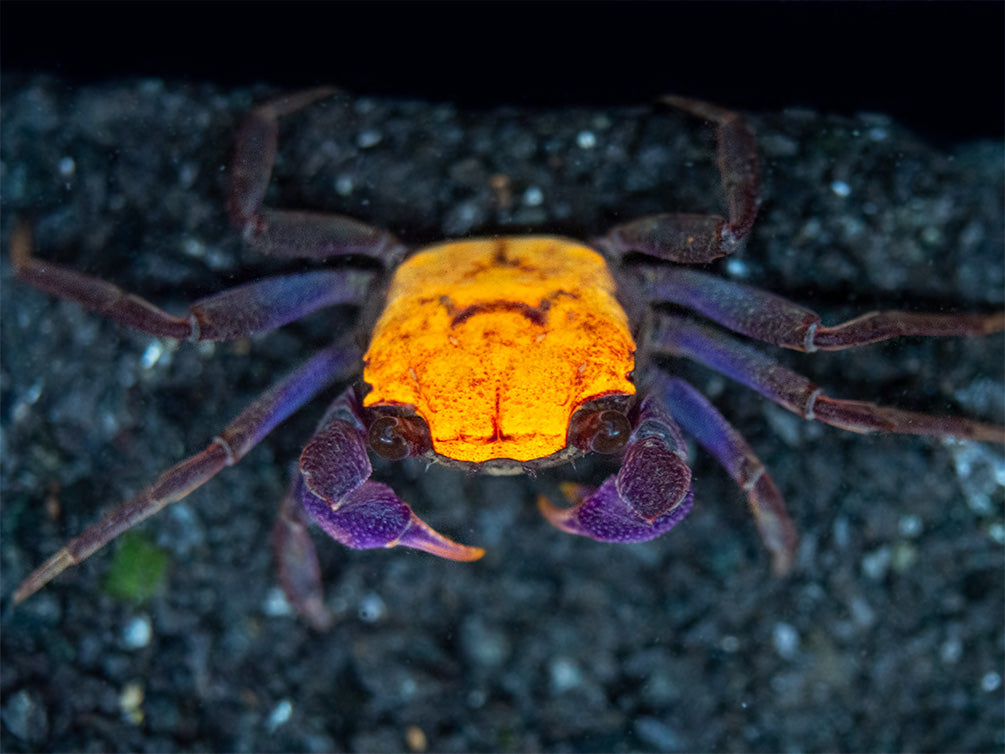
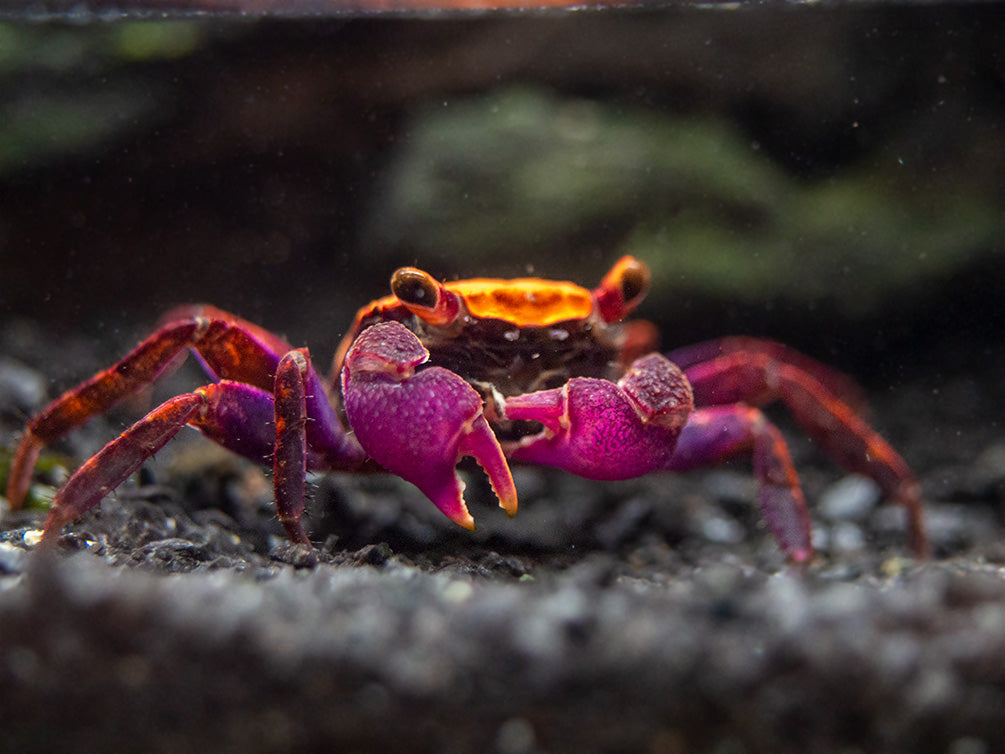
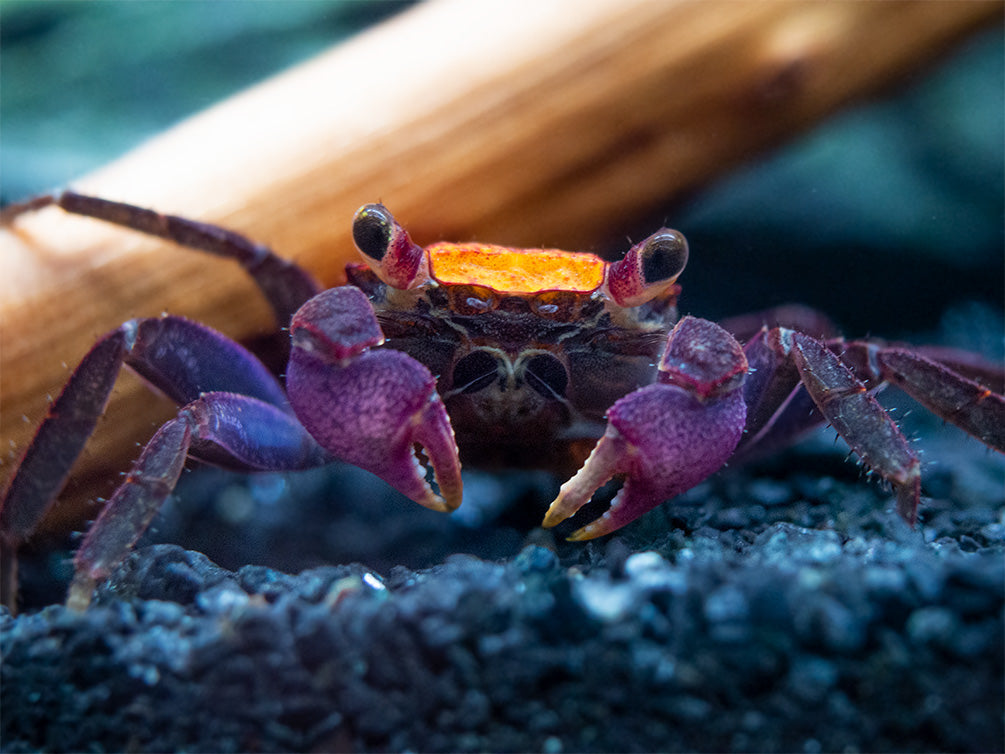
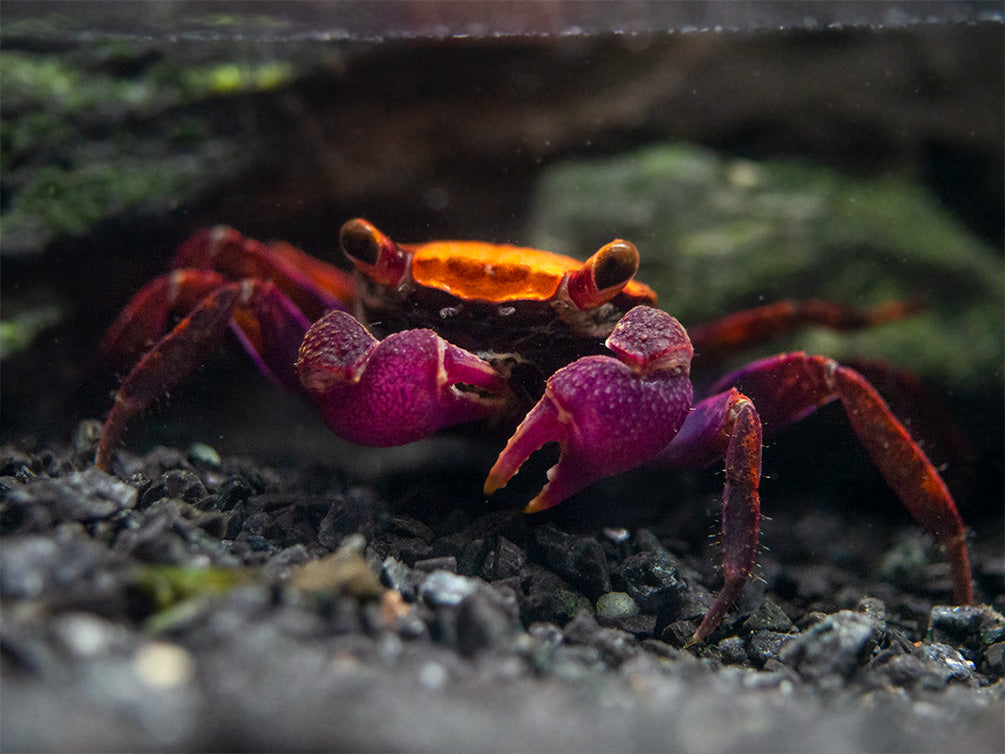


Halloween Vampire Crab (Geosesarma bicolor)
- In stock, ready to ship
- Backordered, shipping soon
IMPORTANT: State Shipping Restrictions
Due to state regulations, Vampire Crabs cannot be shipped to Maine.
IMPORTANT: Vampire Crab Habitat Requirements
Vampire Crabs are semi-terrestrial animals and are NOT fully aquatic. They require a paludarium with both land and freshwater areas and should not be maintained in a traditional aquarium. We also recommend keeping only a single Vampire Crab species per enclosure.
Species Overview
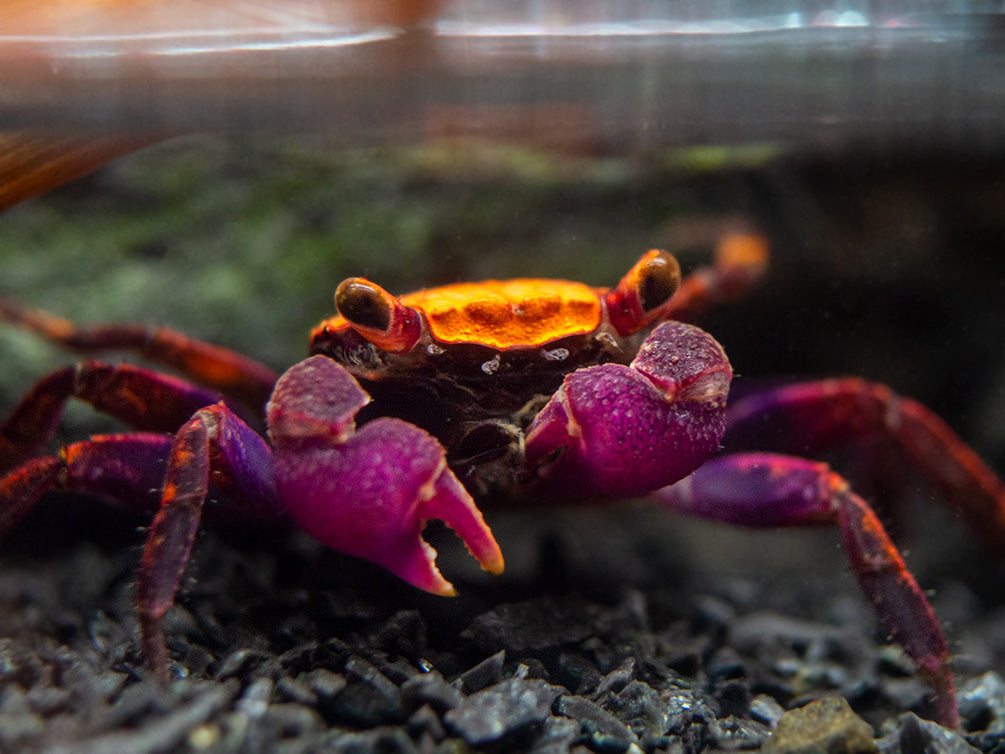
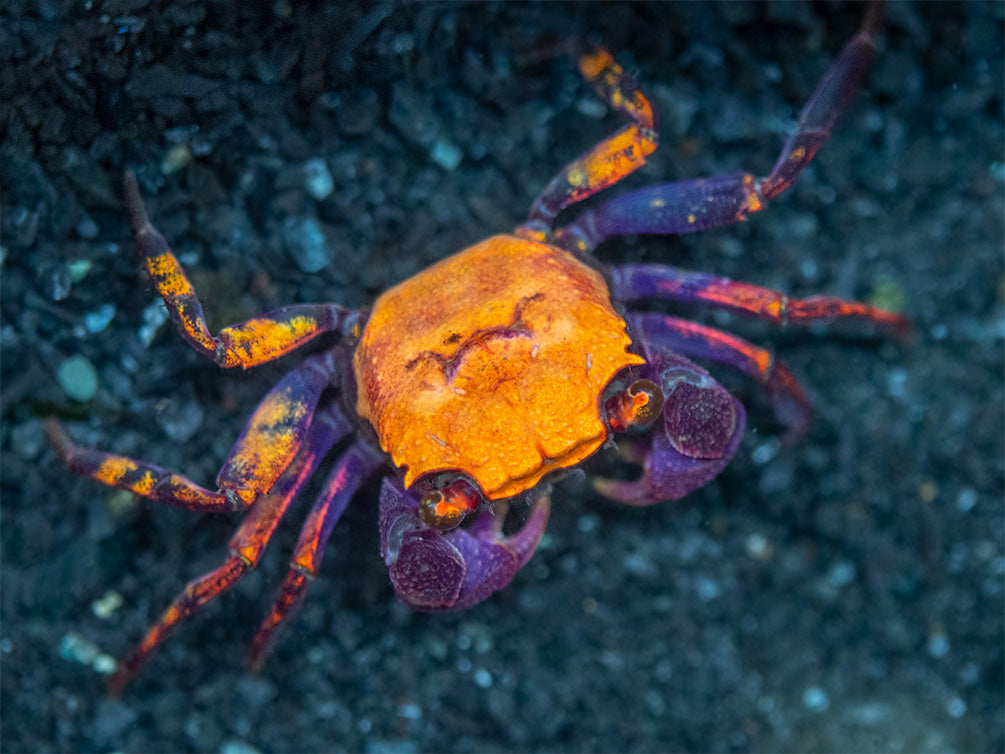
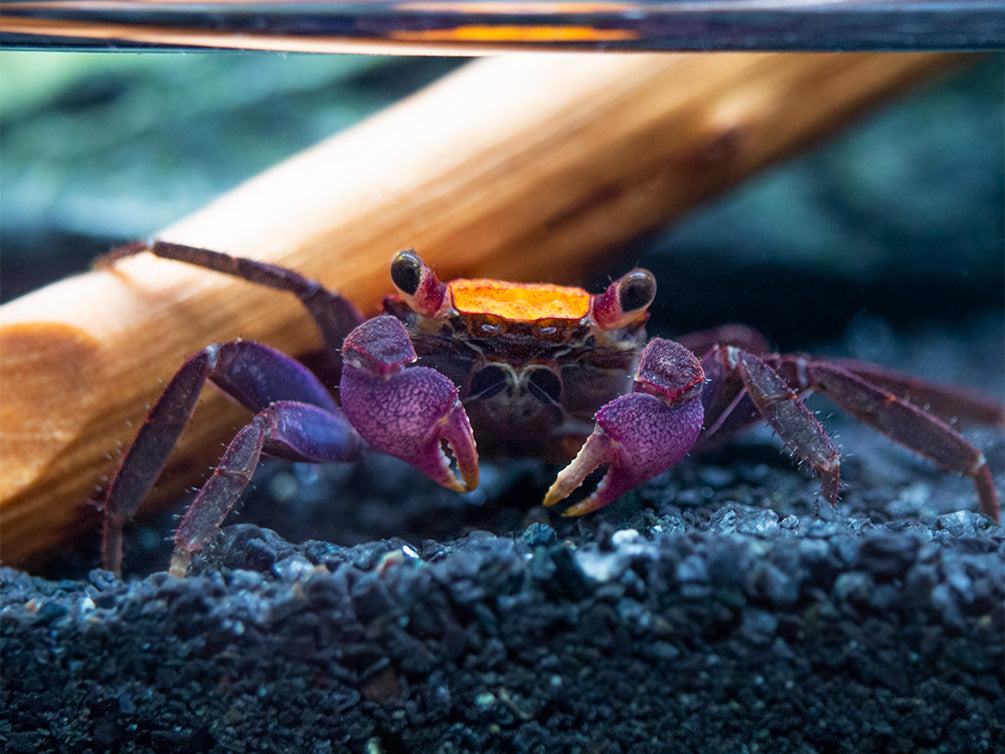
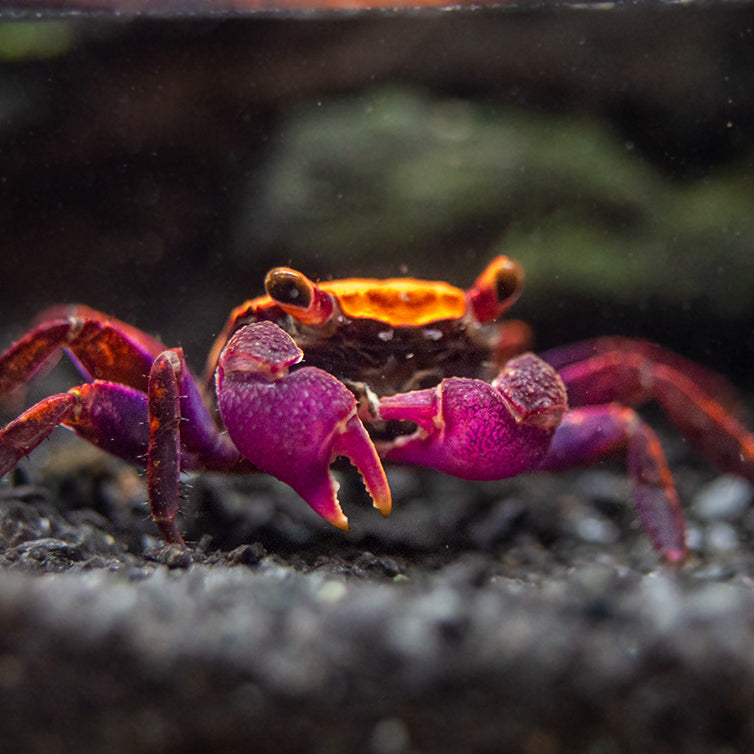
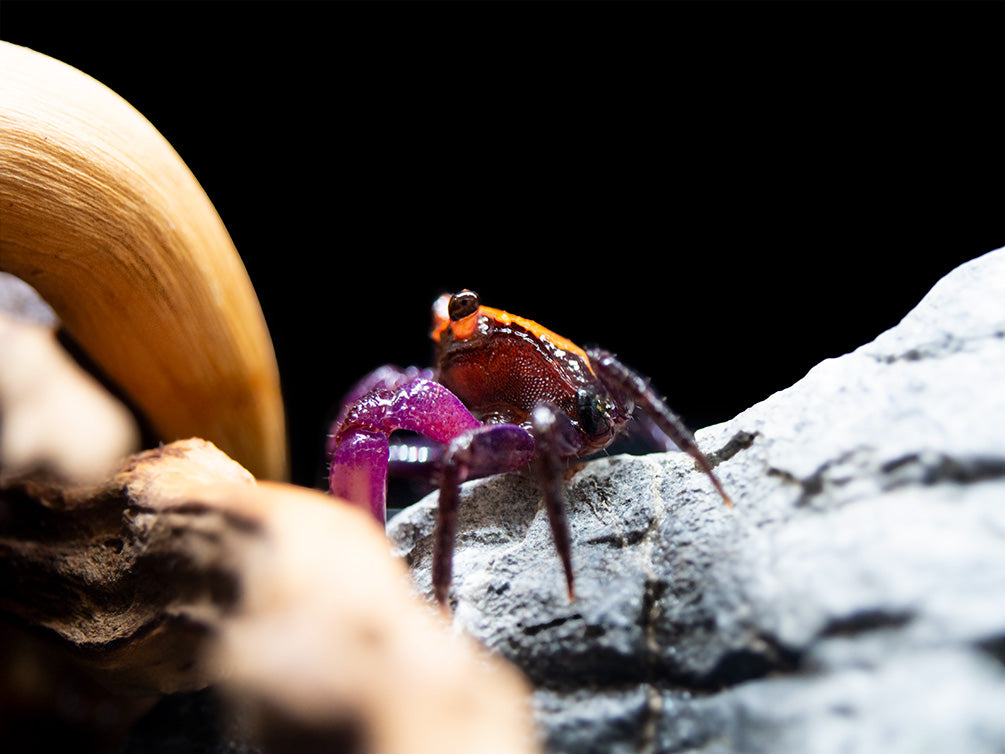
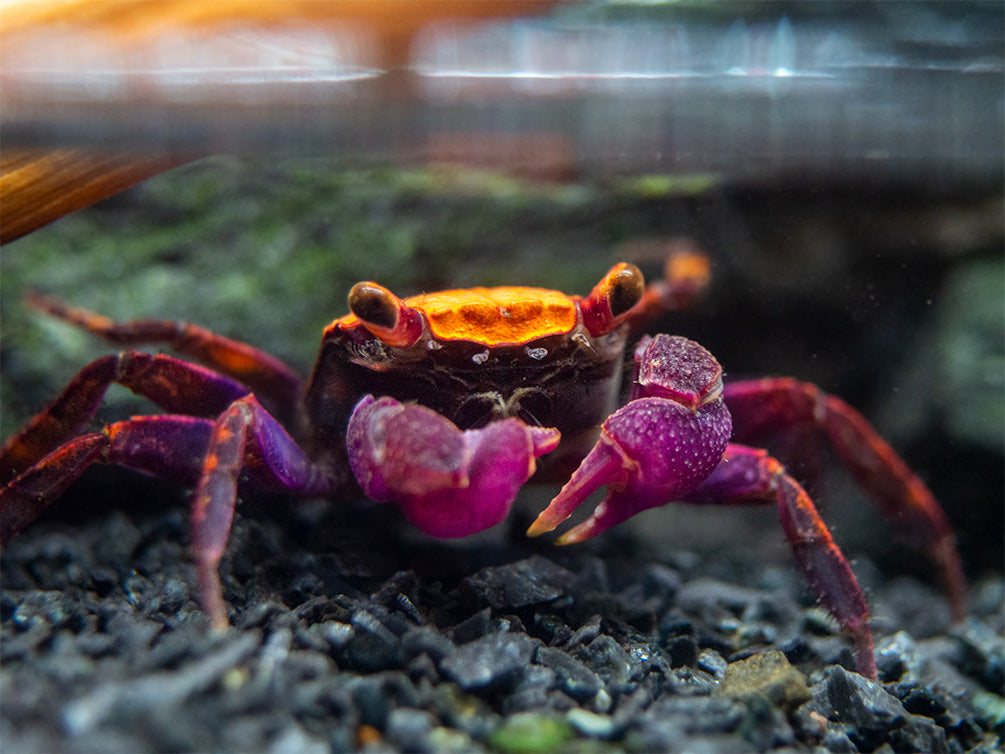
The Halloween Vampire Crab is one of the most recognizable and visually striking members of the Geosesarma genus. Its vivid orange body coloration is beautifully contrasted by darker legs, purple claws, and black eyes, creating a dramatic appearance that immediately stands out in planted paludariums and tropical vivariums. This bold color combination is responsible for the common name "Halloween Vampire Crab" and has made this species a favorite among hobbyists seeking a truly eye-catching display animal.
At Aquatic Arts, we especially appreciate Halloween Vampire Crabs for their active personalities and curious nature. These fascinating crabs spend much of their time climbing, exploring, foraging, and interacting with their environment. Their bright colors create an incredible contrast against tropical plants, driftwood, mosses, and leaf litter, making them exceptional inhabitants for bioactive paludariums and naturalistic terrarium displays.
Like many Vampire Crabs, coloration can vary somewhat between individuals based on age, sex, genetics, molt cycle, and environmental conditions. Many hobbyists observe increasingly vibrant coloration as these crabs mature and complete additional molts within a stable enclosure.
What We Love About This Crab
• Brilliant orange coloration with black eyes
• Active and entertaining behavior
• Excellent choice for bioactive paludariums
• Can be maintained in small social groups
Quick Care Guide
• Care Level: Moderate
• Temperament: Generally Peaceful
• Diet: Omnivorous Scavenger
• Origin: Indonesia
• Adult Size: Approximately 1–1.5 Inches (2.5–3.8 cm)
• Average Purchase Size: Approximately 0.75–1 Inch (1.9–2.5 cm)
• Lifespan: Typically 2–3 Years or Longer
• Activity Level: Most Active During Morning, Evening, and Nighttime Hours
• Social Behavior: Best Kept in Groups
• Recommended Group Size: 3–6 Individuals
Tank Parameters
• Habitat Type: Semi-Terrestrial Paludarium
• Minimum Enclosure Size: 10 Gallons
• Temperature Range: 72–82°F (22–28°C)
• Humidity Range: 75–90%
• pH Range: 6.5–8.0
• Water Type: Freshwater
• Recommended Land Area: 70–80%
• Recommended Water Area: 20–30%
Natural Habitat
Halloween Vampire Crabs originate from tropical regions of Indonesia where they inhabit humid forest environments near streams, springs, seepage zones, and other freshwater sources. These habitats are rich in mosses, roots, leaf litter, fallen branches, and dense vegetation that provide cover and maintain stable humidity.
Unlike fully aquatic freshwater crabs, Halloween Vampire Crabs spend most of their lives on land while remaining closely associated with shallow freshwater areas. Their natural habitat provides abundant opportunities for climbing, hiding, foraging, and breeding among forest debris and vegetation.
Halloween Vampire Crabs thrive in heavily planted paludariums that emphasize land area, humidity, and environmental complexity. A naturalistic enclosure not only enhances the appearance of these colorful crabs but also encourages natural behaviors such as climbing, foraging, and exploring.
We recommend incorporating cork bark, driftwood, rocks, roots, and deep leaf litter to create visual barriers and secure hiding places throughout the enclosure. These features help reduce territorial disputes while providing molting and retreat areas.
Plants such as Pothos (Epipremnum aureum), Creeping Fig (Ficus pumila), Java Moss (Taxiphyllum barbieri), Bucephalandra species, and tropical ferns thrive in vampire crab habitats while helping maintain humidity.
Halloween Vampire Crabs are especially well-suited for bioactive tropical paludariums featuring springtails, isopods, botanicals, mosses, and abundant hardscape.
Diet and Feeding
Halloween Vampire Crabs are opportunistic omnivorous scavengers that consume a wide variety of foods in nature. Their diet may include plant matter, fallen fruit, worms, insect larvae, small invertebrates, carrion, and other organic materials.
In captivity, they readily accept quality sinking foods, invertebrate diets, frozen foods, bloodworms, blackworms, vegetables, and occasional protein-rich treats. A varied diet supports healthy growth, successful molts, vibrant coloration, and long-term health.
Providing a rotation of foods throughout the week helps mimic their natural feeding habits while encouraging active foraging behavior.
Tank Mates and Compatibility
Halloween Vampire Crabs are generally peaceful and are often best maintained in small groups of their own species. Unlike many larger crab species, Vampire Crabs frequently thrive in colony-style setups when provided with adequate space, hiding places, and environmental complexity.
We generally recommend maintaining Halloween Vampire Crabs in groups whenever possible. Small colonies often display more natural behaviors, increased activity levels, and greater confidence than solitary individuals. A group of 3–6 crabs is often an excellent starting point for a properly sized enclosure.
Because Vampire Crabs establish small territories, every enclosure should include abundant hiding places, visual barriers, leaf litter, driftwood, mosses, and multiple feeding locations.
We strongly recommend keeping only a single Vampire Crab species per enclosure. While many species may appear similar, different Geosesarma species should not be mixed due to potential territorial conflicts, stress, and breeding complications.
Springtails and isopods are among our favorite companions because they occupy different ecological niches while helping maintain enclosure cleanliness and ecosystem stability.
Some hobbyists also maintain freshwater snails within the aquatic portion of larger paludariums. Freshwater shrimp may survive in heavily planted setups, but occasional predation should always be expected.
Most fish, frogs, reptiles, and other larger animals are not recommended due to differing environmental requirements and the potential for stress or predation.
Ecosystem Match
Halloween Vampire Crabs excel in tropical bioactive paludariums featuring tropical plants, mosses, leaf litter, driftwood, cork bark, springtails, isopods, snails, and botanical enrichment.
Shrimp Compatibility
Shrimp Safe: No
Halloween Vampire Crabs should not be considered shrimp safe. Small shrimp may be viewed as prey, particularly during nighttime hours when vampire crabs become most active.
For best results, this species should be maintained in a dedicated vampire crab enclosure or carefully planned species-focused paludarium.
Breeding
Halloween Vampire Crabs are among the most rewarding Geosesarma species to breed in captivity. Unlike many aquatic crab species that release free-swimming larvae, vampire crabs produce fully developed miniature crabs.
Successful breeding typically occurs when groups are maintained in stable, humid enclosures with abundant cover and high-quality nutrition. Females carry developing young beneath their abdomen until the juvenile crabs are ready to emerge.
One of the most exciting aspects of vampire crab keeping is discovering tiny juvenile crabs exploring the enclosure after a successful breeding event.
Frequently Asked Questions
Who is this species best suited for?
Halloween Vampire Crabs are ideal for hobbyists interested in paludariums, bioactive enclosures, tropical vivariums, and natural ecosystem displays.
Are Halloween Vampire Crabs good for beginners?
They can be a good beginner vampire crab species when provided with a properly designed paludarium.
What makes Halloween Vampire Crabs unique?
Their vivid orange coloration, dark contrasting legs, and bright yellow eyes create one of the most recognizable appearances in the Geosesarma genus.
Are Halloween Vampire Crabs rare?
They are among the most popular and recognizable vampire crab species in the hobby.
Are Halloween Vampire Crabs fully aquatic?
No. They require both land and water areas.
Can Halloween Vampire Crabs live in a traditional aquarium?
No. They require a semi-terrestrial enclosure.
How much land do they need?
Most successful setups provide approximately 70–80% land and 20–30% water.
Can they climb?
Yes. They are excellent climbers and benefit from wood, rockwork, mosses, and elevated structures.
Are Halloween Vampire Crabs social?
Yes. They generally do best in small groups.
How many Halloween Vampire Crabs should I keep?
Most hobbyists begin with groups of 3–6 individuals depending on enclosure size.
Can I keep different species of vampire crabs together?
We strongly recommend maintaining only one Geosesarma species per enclosure.
Are Halloween Vampire Crabs aggressive?
They are generally peaceful but may become territorial if resources are limited.
What plants work best with Halloween Vampire Crabs?
Pothos, Creeping Fig, tropical mosses, Selaginella, Mini Ferns, and Bucephalandra are excellent choices.
Can Halloween Vampire Crabs live in a bioactive enclosure?
Absolutely. They are among the best candidates for bioactive tropical paludariums.
What cleanup crew works best?
Springtails and tropical isopods are among the most popular options.
What is the best enclosure style for Halloween Vampire Crabs?
A tropical forest paludarium with abundant plants, wood, mosses, leaf litter, and hiding places.
Can they live with fish?
No. Species-focused setups are recommended.
Can they live with shrimp?
No. Shrimp may be viewed as prey.
Can they live with snails?
Some hobbyists successfully maintain snails within the aquatic portions of larger paludariums.
What do Halloween Vampire Crabs eat?
They are omnivorous scavengers that consume a wide variety of prepared and natural foods.
How often should they be fed?
Most adults do well with several small feedings per week.
Do Halloween Vampire Crabs molt?
Yes. Like all crabs, they periodically molt as they grow.
Why is humidity important?
Proper humidity supports successful molting, natural behavior, and long-term health.
Can Halloween Vampire Crabs breed in captivity?
Yes. They frequently reproduce in properly maintained enclosures.
Are Halloween Vampire Crabs difficult to breed?
Many hobbyists report successful breeding when enclosure conditions are optimized.
Do vampire crabs have larval stages?
No. Juveniles emerge as miniature versions of the adults.
What is the lifespan of a Halloween Vampire Crab?
With proper care, many individuals live several years in captivity.
Should I choose Halloween Vampire Crabs or Purple Vampire Crabs?
Halloween Vampire Crabs are known for their bold orange coloration, while Purple Vampire Crabs display rich purple tones.
Should I choose Halloween Vampire Crabs or Purple Haze Vampire Crabs?
Halloween Vampire Crabs provide brighter, more vibrant coloration, while Purple Haze Vampire Crabs offer darker graphite and violet tones.
Should I choose Halloween Vampire Crabs or White Mandarin Vampire Crabs?
Halloween Vampire Crabs display vivid orange coloration, while White Mandarin Vampire Crabs offer cream and orange contrasts.
Why do Aquatic Arts customers love Halloween Vampire Crabs?
Their brilliant coloration, engaging behavior, and suitability for bioactive tropical displays make them one of the most popular vampire crab species available.
For the safety of our animals, we only ship live fish, crabs, and select other inverts exclusively via UPS 1 Day Air. If your order contains this item, you will only see UPS 1 Day Air as a shipping option during checkout. If other items are in your cart that can ship with 2 day or standard shipping options the only shipping method you can still select is UPS 1 Day Air.
UPS 1 Day is a description of the duration of time a shipment will spend in transit once it has been shipped. This does not guarantee the package will be shipped the same or next day from which the order was placed.
Shipping Schedule for this service
Current Handling Time:
1-9 business days
Here at Aquatic Arts, we consider the welfare of the live animals we are shipping to be of the foremost importance. This process is much more involved than simply creating a shipping label and affixing it to a box. Depending on the order, it takes from 4 to 7 people to complete this process properly. We check the weather conditions here where they fly out of the Indianapolis UPS facility and the destination for each shipment. We start early each morning and go through a multi-step process to have the day's shipments prepared in time for the UPS pickup. The volume of orders in our system also affects the processing time. Therefore our stated handling time is 1-9 business days.
Shipping Rate
Pricing is by size of package needed to fill entire order and distance it must travel. It will be calculated at checkout.
Live Arrival Guarantee
We stand behind the health and quality of every crab we ship. Each Halloween Vampire Crab is carefully quarantined, observed, and conditioned before leaving our facility to help ensure it arrives healthy and ready to thrive in its new home.
Every order is backed by our 100% Live Arrival Guarantee. In the unlikely event that an issue occurs during transit, simply contact our team and we will work quickly to help resolve the situation.
When your crabs arrive, we recommend introducing them promptly into a properly established paludarium or vampire crab enclosure that provides both land and water areas. Halloween Vampire Crabs thrive when maintained in a humid environment with stable temperatures, abundant hiding places, and access to both terrestrial and aquatic zones.
In addition to our Live Arrival Guarantee, every purchase includes access to our experienced support team. Whether you have questions about enclosure design, feeding, compatibility, breeding, humidity requirements, or general husbandry, we are here to help you get the most from your vampire crab keeping experience.
For assistance with your order or livestock care questions, please contact us at info@aquaticarts.com.
For complete details about our Live Arrival Guarantee, please visit:
https://aquaticarts.com/policies/refund-policy
