


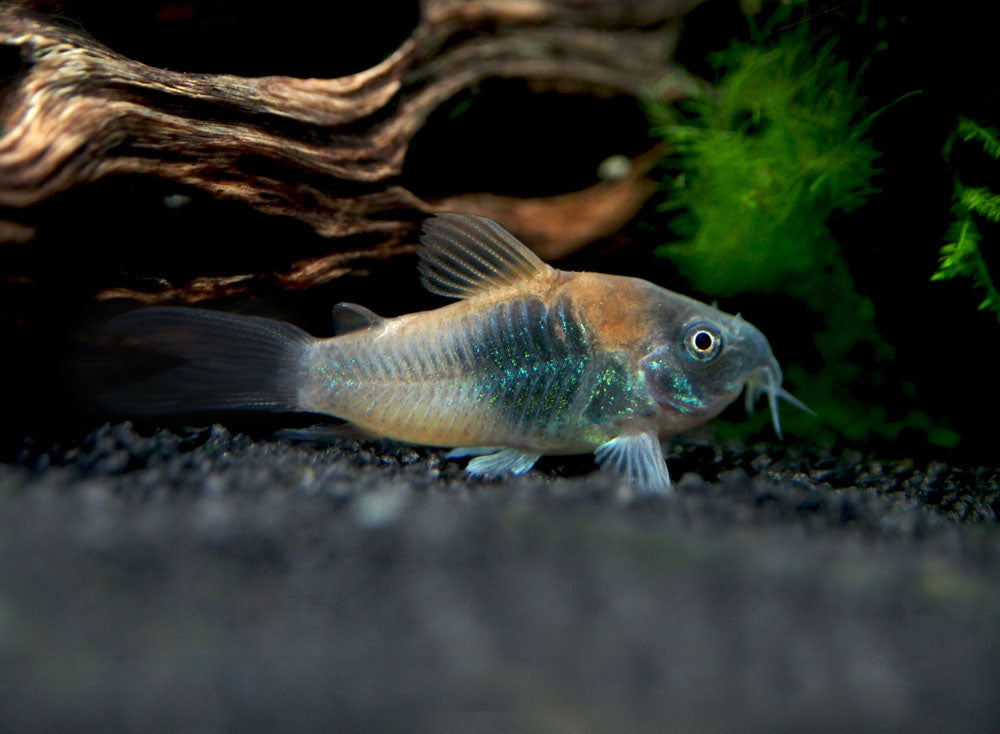

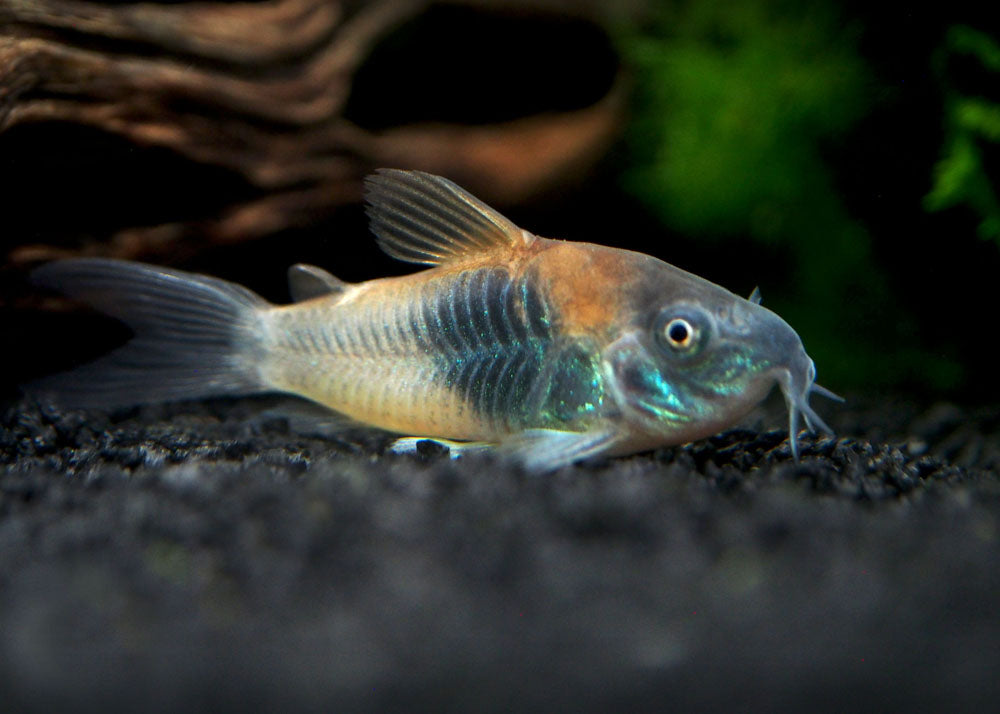

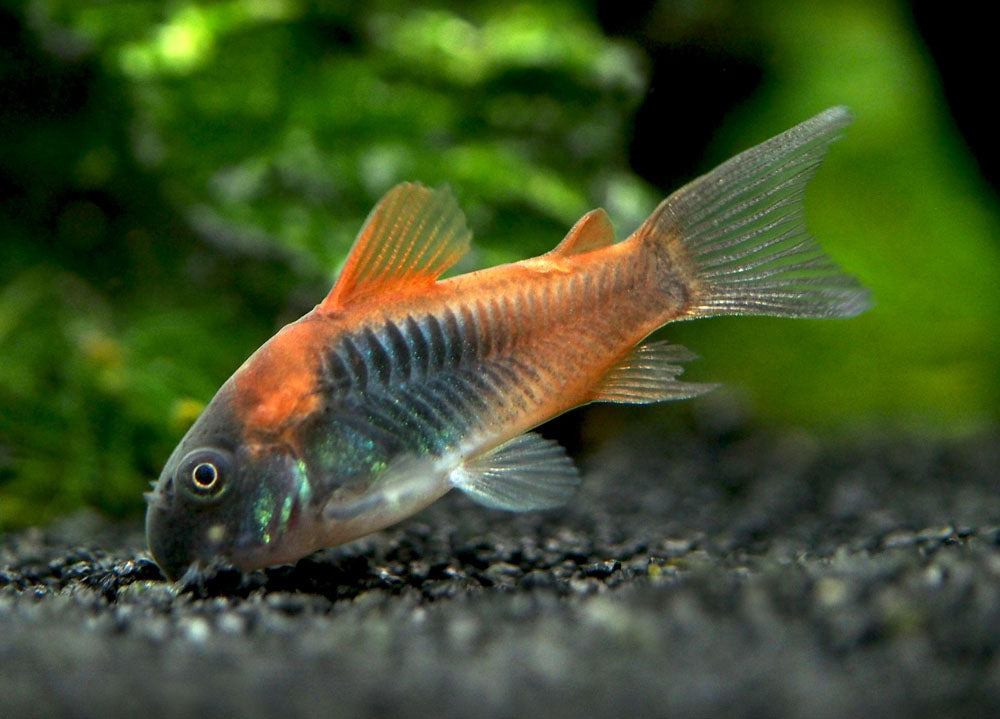
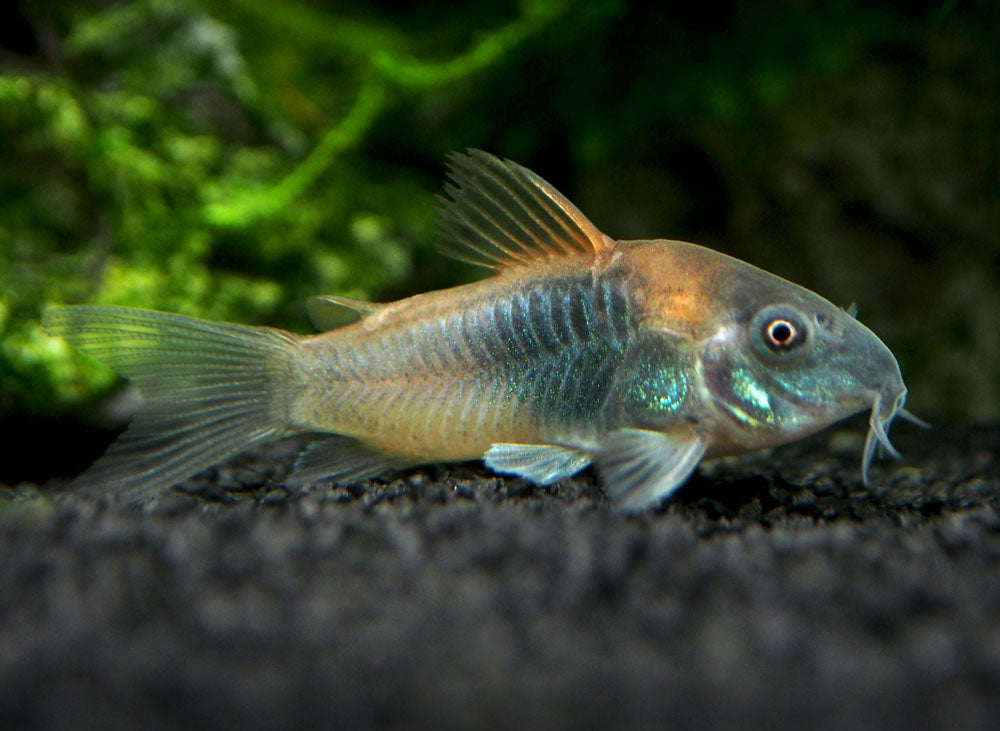
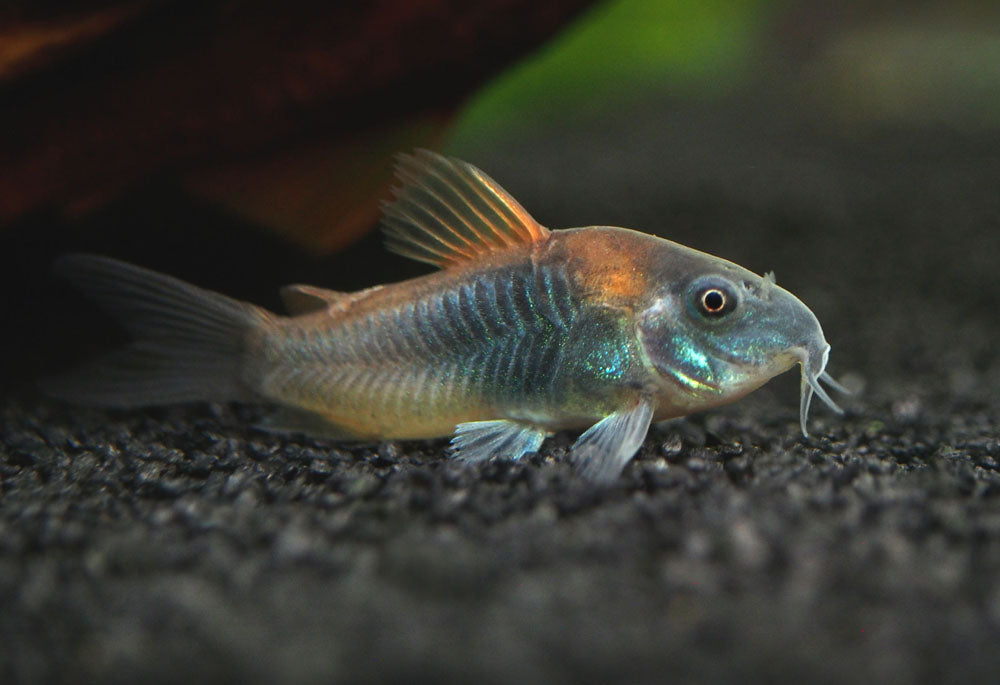
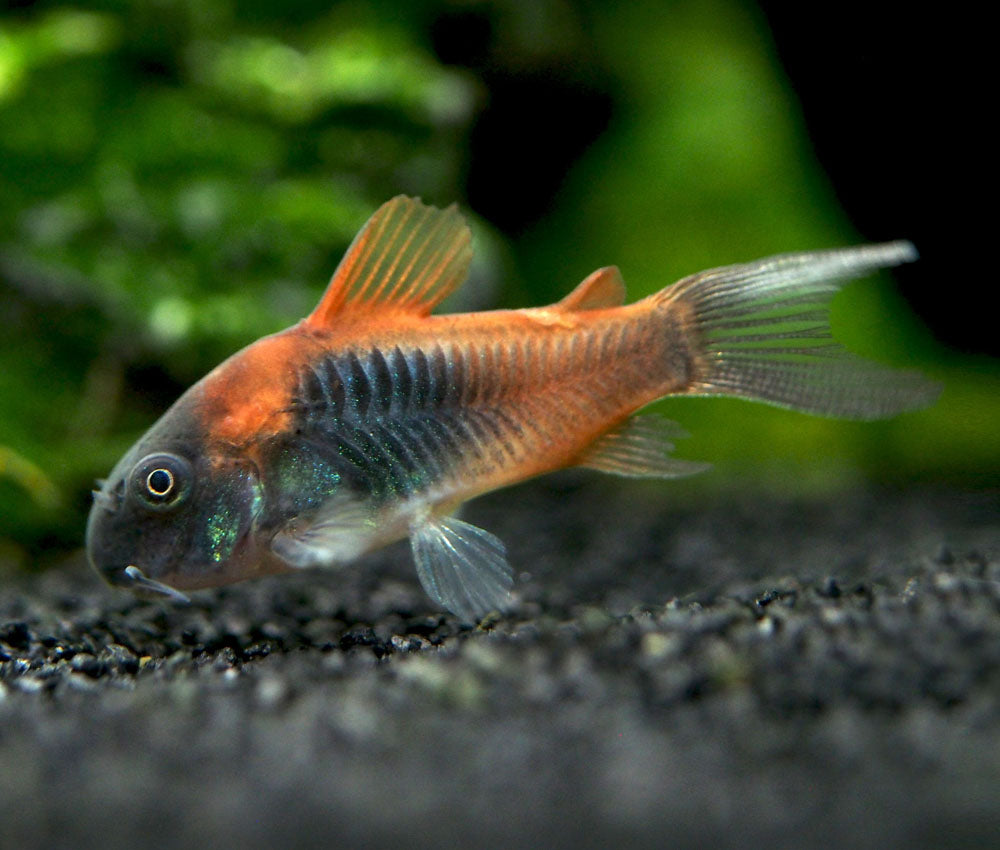
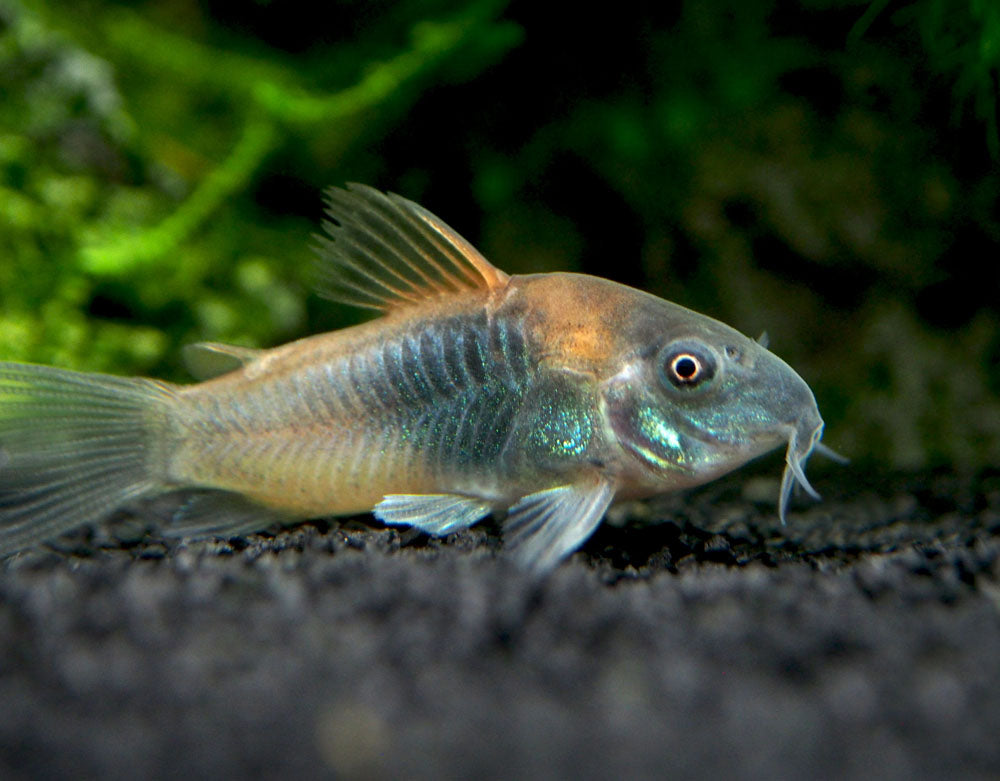
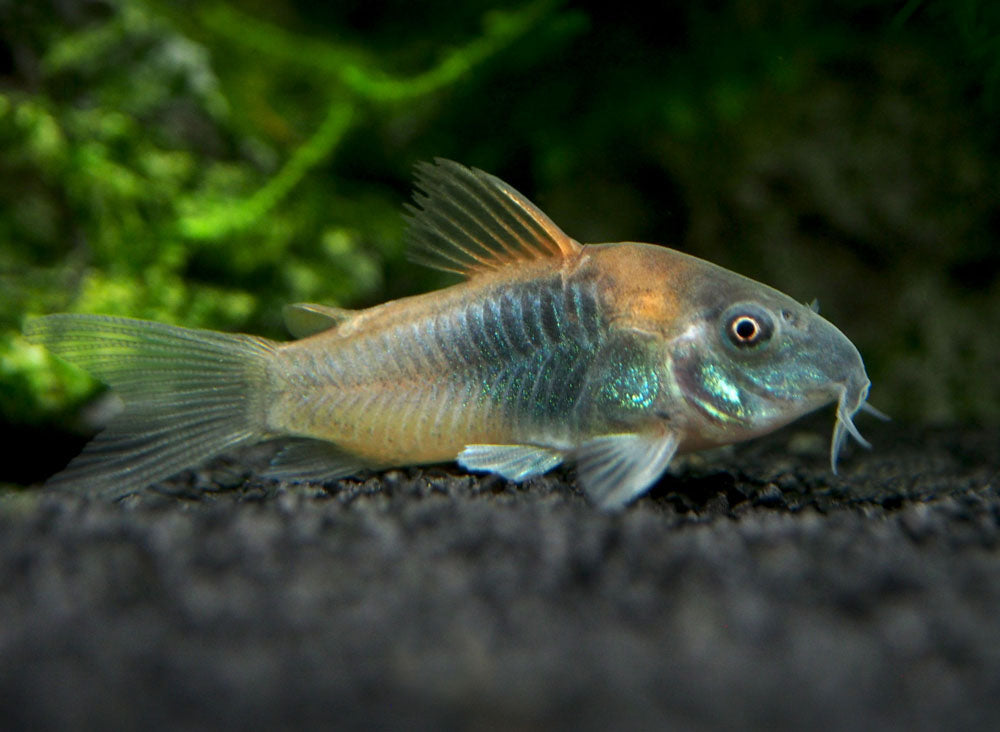
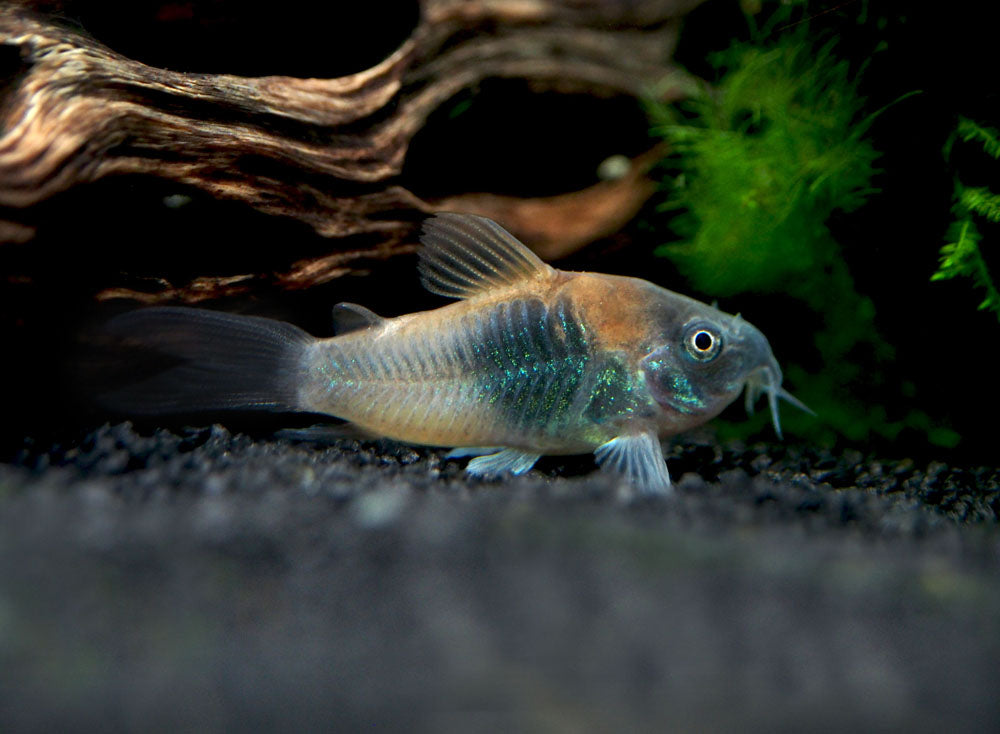
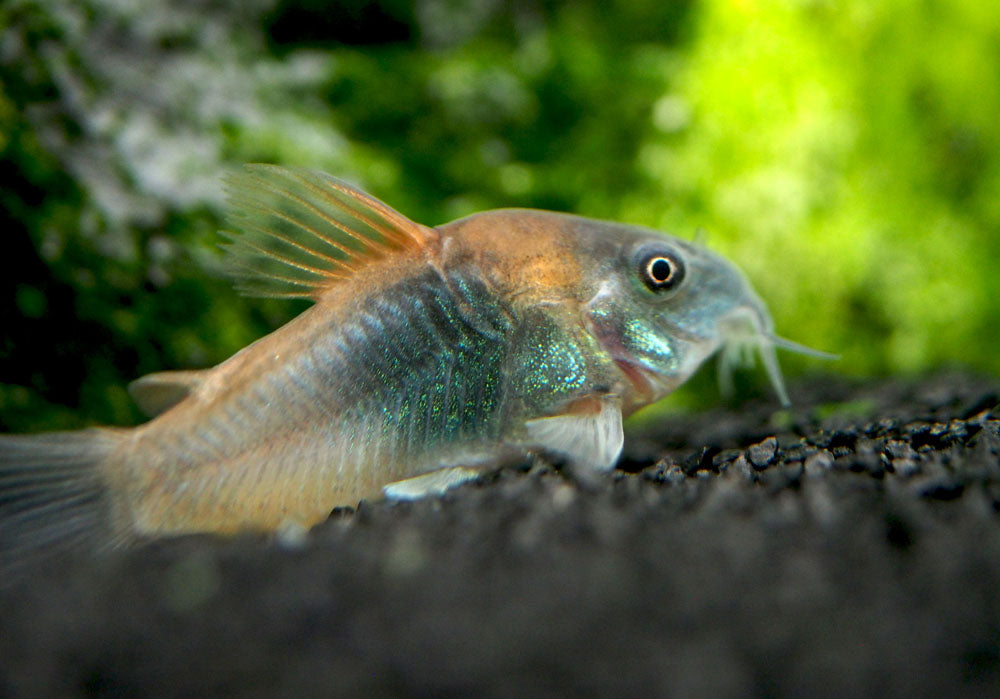
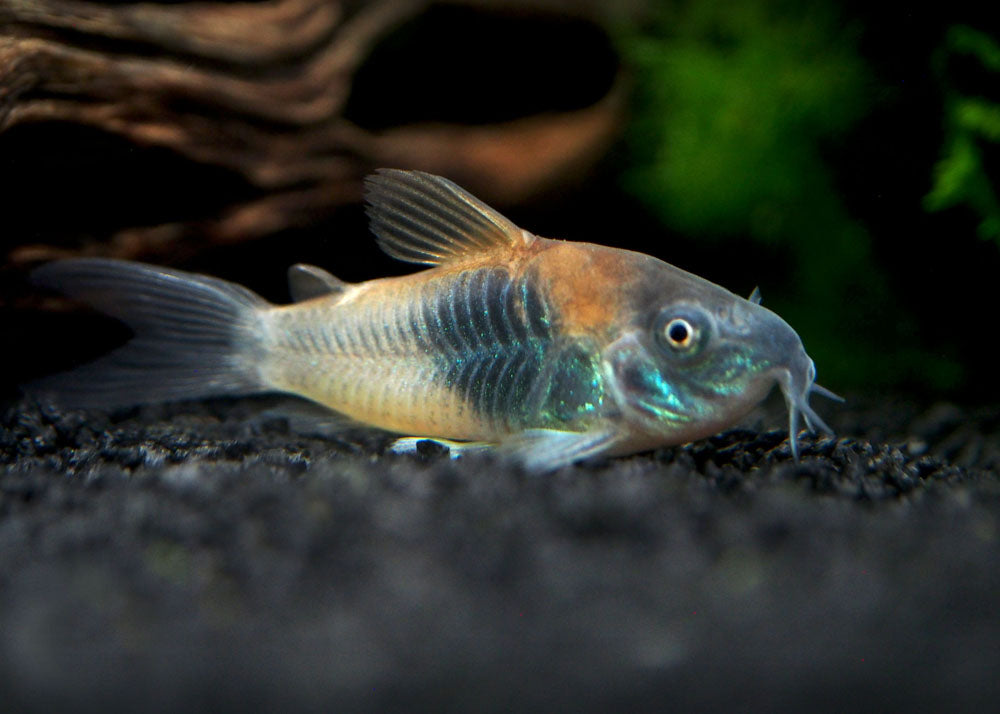
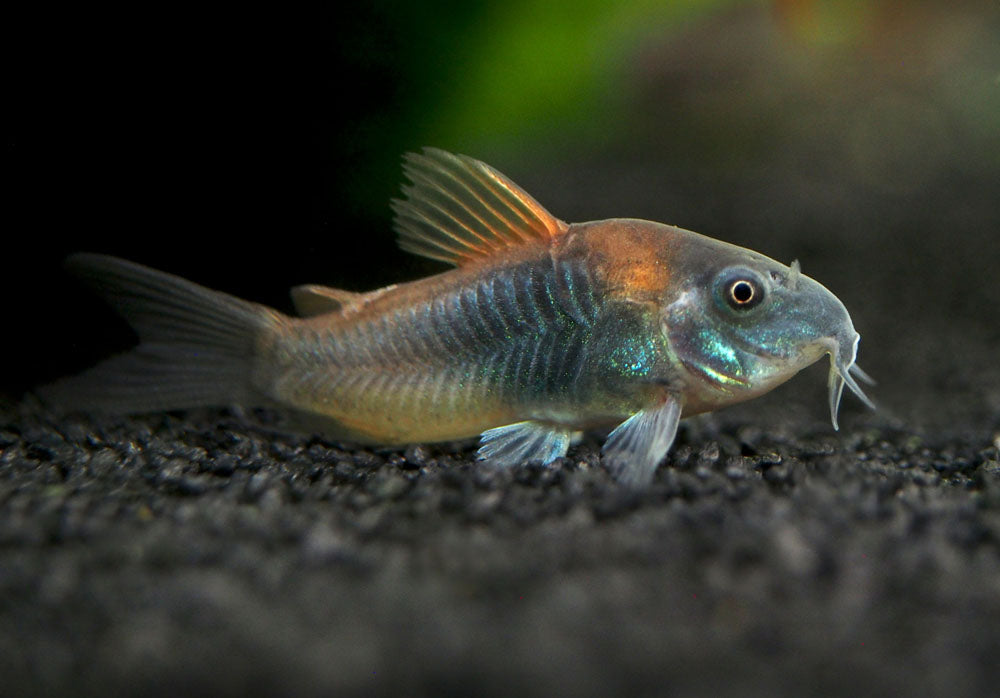
Orange Venezuelan Cory Catfish (Corydoras aeneus "Venezuela"), Tank-Bred
- In stock, ready to ship
- Backordered, shipping soon
Species Overview
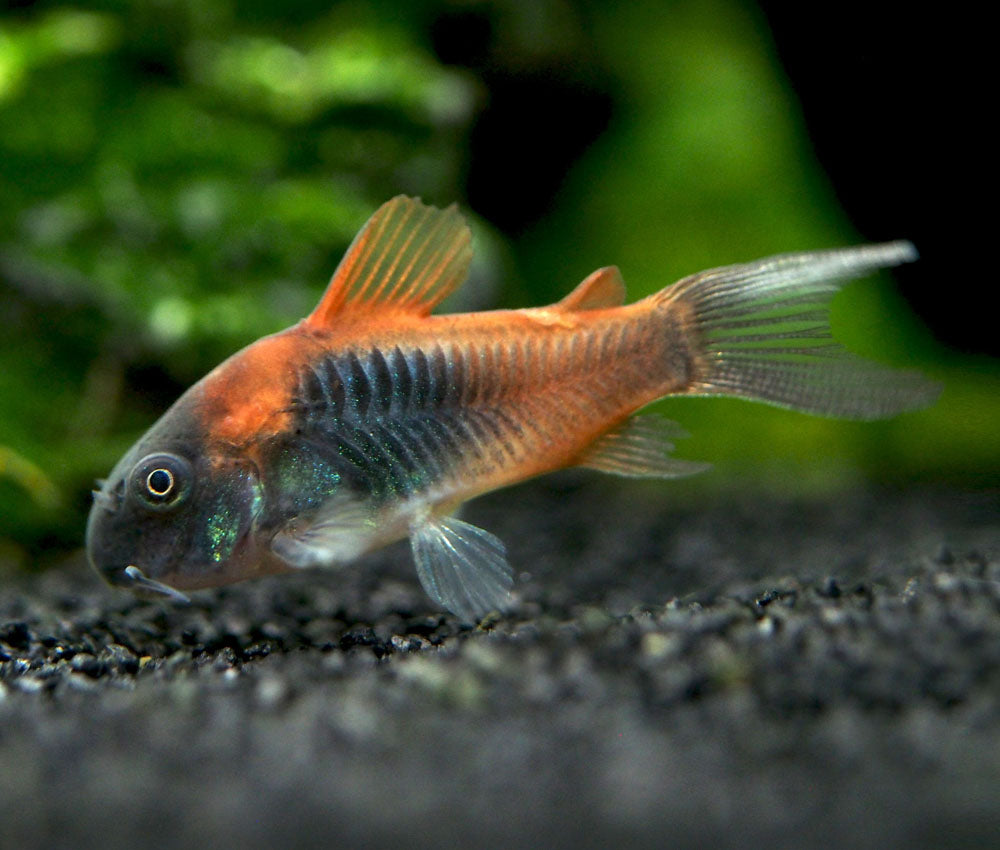
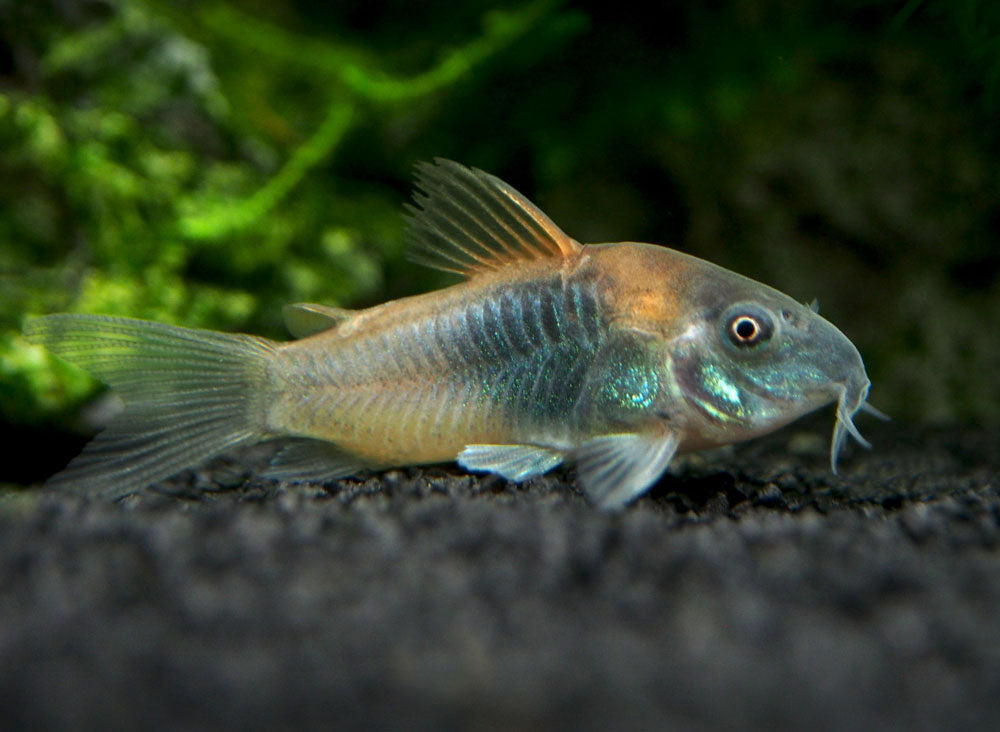
The Orange Venezuelan Cory Catfish (Corydoras aeneus "Venezuela") is one of the most striking and sought-after Corydoras available to freshwater aquarists. Combining the peaceful personality that has made Bronze Corys a longtime favorite with brilliant orange to copper body coloration and an iridescent blue-green saddle across the back, this beautiful South American catfish brings constant activity and vibrant color to the bottom of the aquarium.
At Aquatic Arts, we offer both our classic Tank-Bred Regular Fin Orange Venezuelan Corys and our beautiful Locally Bred Longfin variety. The longfin form features elegantly extended dorsal, pectoral, and caudal fins that flow gracefully as the fish glide across the substrate, while the regular-fin variety closely resembles the natural body shape found in wild populations. Both variants share the same peaceful temperament, hardiness, and fascinating social behavior that make this species one of the best Corydoras for community aquariums.
Unlike many bottom-dwelling fish that spend most of their time hiding, Orange Venezuelan Cory Catfish remain active throughout the day. They constantly patrol the aquarium floor in coordinated groups, sifting through sand with their sensitive barbels in search of tiny food particles while occasionally darting to the surface for a quick gulp of atmospheric air—a completely normal behavior unique to Corydoras catfish.
Whether you're building your first peaceful community aquarium or adding another beautiful Corydoras species to an established collection, Orange Venezuelan Cory Catfish provide endless activity, gentle personalities, and stunning coloration that continues to improve as they mature in a healthy planted aquarium.
What We Love About This Fish
- Brilliant orange body highlighted by an iridescent blue-green saddle
- Available in both classic regular-fin and elegant locally bred longfin varieties
- Constantly active during daylight hours
- Peaceful community fish that thrives in groups
- Excellent choice for planted aquariums and nature-inspired aquascapes
- Hardy, beginner-friendly, and rewarding for experienced hobbyists alike
- Fun to watch as they forage together across the aquarium floor
Quick Care Guide
Care Level: Easy
Temperament: Peaceful
Adult Size: 2.5–3 Inches
Diet: Omnivore (Sinking Pellets, Frozen Foods, Live Foods, Repashy)
Minimum Tank Size: 20 Gallons
Swimming Zone: Bottom
Group Size: 6 or More (They are highly social schooling catfish that become more confident, active, and display more natural behaviors when maintained in groups.)
Schooling: Yes — Orange Venezuelan Cory Catfish naturally live in groups and rely on companionship for security. Keeping them in schools encourages synchronized foraging, reduces stress, and brings out their most engaging behavior.
Source:
- Tank-Bred (Regular Fin)
- Locally Bred (Longfin)
Average Purchase Size: 0.75–1.25 Inches
Recommended Water Parameters
Temperature: 72°–78°F (22°–26°C)
pH: 6.5–7.8
GH: 4–12 dGH
KH: 2–8 dKH
Ammonia/Nitrite: 0 ppm
Nitrate: Below 20 ppm
This species appreciates clean, well-oxygenated water with stable parameters and gentle water movement. Frequent water changes and mature biological filtration help maintain healthy barbels and vibrant coloration.
The Orange Venezuelan Cory Catfish (Corydoras aeneus "Venezuela") is believed to originate from the slow-moving tributaries and floodplain waters of Venezuela within the Orinoco River basin. These tropical waterways are typically shallow and lined with dense aquatic vegetation, submerged roots, fallen branches, and layers of decomposing leaves that create a rich, biologically active environment.
The substrate consists primarily of fine sand and soft sediments where Corydoras spend their days using their highly sensitive barbels to locate insect larvae, worms, small crustaceans, and other tiny invertebrates hidden beneath the surface. Seasonal flooding expands their habitat into flooded forests and grassy margins, providing abundant feeding opportunities and shelter from predators.
Unlike many catfish that remain hidden during daylight hours, Orange Venezuelan Cory Catfish are naturally social and active throughout the day, traveling together in loose schools while constantly exploring the bottom in search of food. Their ability to supplement oxygen intake by occasionally gulping atmospheric air allows them to thrive in habitats where dissolved oxygen levels naturally fluctuate.
Orange Venezuelan Cory Catfish are at their best in aquariums that recreate the calm, plant-filled streams and flooded forests of northern South America. Their vibrant orange coloration stands out beautifully against dark substrates, lush greenery, and natural driftwood, creating one of the most eye-catching displays among peaceful community fish.
A soft sand substrate is highly recommended to protect their delicate barbels while allowing them to sift naturally through the bottom in search of food. Fine rounded gravel can also be used, but coarse or sharp substrates should be avoided whenever possible.
Dense plantings of Amazon Swords, Cryptocorynes, Vallisneria, Water Sprite, Anubias, Java Fern, and floating plants provide shaded areas where these Corydoras feel secure while leaving plenty of open swimming space across the substrate for group foraging.
Pieces of driftwood, rounded river stones, and small caves create additional shelter without interrupting their schooling behavior. Adding Aquatic Arts Botanical Combo Packs or Indian Almond Leaves helps recreate the appearance of a natural forest stream while supporting biofilm, beneficial microorganisms, and a more natural environment. Although this species does not require blackwater conditions, light botanical use creates a beautiful, natural-looking aquarium that encourages relaxed behavior.
Watching a school of Orange Venezuelan Cory Catfish glide together through plants before spreading out across the substrate in synchronized foraging is one of the most enjoyable sights in a peaceful freshwater aquarium.
Orange Venezuelan Cory Catfish are opportunistic omnivores that spend much of their day searching the substrate for small invertebrates and organic matter. In the aquarium, they thrive on a varied diet that combines high-quality prepared foods with frozen and live treats.
A quality sinking pellet or wafer should serve as the foundation of their diet. Supplement regularly with frozen Bloodworms, Blackworms, Brine Shrimp, Daphnia, Tubifex, and other protein-rich foods to encourage healthy growth, vibrant coloration, and breeding condition. They also readily accept Repashy gel foods and other premium community fish diets.
Although they constantly forage along the bottom, Corydoras should never be expected to survive solely on leftover food from other fish. Purposefully feeding sinking foods ensures every member of the school receives proper nutrition.
Offering a varied diet once or twice daily while avoiding overfeeding helps maintain excellent water quality and keeps these active catfish healthy for many years.
Orange Venezuelan Cory Catfish are exceptionally peaceful bottom-dwelling community fish that rarely show aggression toward other aquarium inhabitants. Because they spend most of their time gently foraging across the substrate, they are ideal companions for species that occupy the middle and upper levels of the aquarium. Their calm nature and constant activity make them one of the easiest Corydoras species to incorporate into a peaceful freshwater community.
Peaceful Schooling Fish
Cardinal Tetras – Share similar water parameters and create beautiful movement in the middle of the aquarium while the Corydoras remain active below.
Rummy Nose Tetras – Excellent companions that appreciate clean, well-oxygenated water and naturally school above the Corydoras.
Ember Tetras – Their bright orange coloration complements the warm colors of Orange Venezuelan Cory Catfish while their peaceful temperament makes them ideal community fish.
Harlequin Rasboras – Calm midwater swimmers that leave the substrate undisturbed, allowing the Corydoras to forage naturally.
Chili Rasboras – Tiny, peaceful schooling fish that add activity to the upper portion of planted aquariums without competing for space or food.
Celestial Pearl Danios – Share a gentle disposition and create a beautiful contrast between the lower and middle portions of the aquarium.
Peaceful Centerpiece Fish
German Blue Rams – Enjoy similar tropical water conditions and generally ignore Corydoras while occupying small territories near driftwood and plants.
Bolivian Rams – One of the best dwarf cichlid companions thanks to their peaceful temperament and compatibility with active Corydoras schools.
Apistogramma – Can coexist successfully in larger, well-structured aquariums where caves and visual barriers allow both species to establish their own spaces.
Honey Gouramis – Gentle, slow-moving fish that occupy the upper half of the aquarium and pair beautifully with active Corydoras below.
Peaceful Angelfish – In larger planted aquariums, mature Angelfish generally ignore adult Corydoras while creating an impressive South American community display.
Other Bottom Dwellers
Bristlenose Plecos – Occupy driftwood and hardscape while Corydoras focus on open substrate, allowing both species to utilize different areas of the aquarium.
Otocinclus – Specialized algae grazers that complement Corydoras by feeding on plant leaves and glass rather than the substrate.
Kuhli Loaches – Peaceful nocturnal bottom dwellers that readily coexist with Corydoras in soft substrates and heavily planted aquariums.
Ecosystem Match
Orange Venezuelan Cory Catfish are particularly well suited for:
Planted Community Aquariums — Their peaceful nature allows them to thrive alongside a wide variety of plants and community fish while adding constant activity across the substrate.
South American Aquariums — Naturally complements South American tetras, dwarf cichlids, plecos, and other species from similar habitats.
Freshwater Shrimp Aquariums — Adult shrimp are generally ignored, making Corydoras one of the safest catfish choices for mixed invertebrate communities.
Nature Aquariums — Their constant group foraging creates natural movement that brings planted aquascapes to life.
Blackwater Aquariums — They readily adapt to lightly tannin-stained aquariums where leaf litter, driftwood, and botanicals recreate their native environment.
Species to Avoid
Avoid aggressive cichlids, large predatory fish, and highly territorial bottom dwellers that may intimidate Corydoras or prevent them from feeding. Orange Venezuelan Cory Catfish are peaceful schooling fish and thrive best in calm community aquariums where they can forage together without competition.
Yes
Orange Venezuelan Cory Catfish are considered one of the safest fish to keep with freshwater shrimp. Their attention is focused on gently foraging through the substrate for tiny food particles rather than actively hunting tank mates.
Adult Neocaridina Shrimp, Caridina Shrimp, Amano Shrimp, Bamboo Shrimp, and Vampire Shrimp typically coexist extremely well with this species. As with nearly every community fish, newly hatched shrimplets may occasionally become an opportunistic snack if they venture into open feeding areas, but healthy adult shrimp are rarely bothered.
Providing dense mosses, live plants, driftwood, and botanicals creates excellent refuge for juvenile shrimp while supporting biofilm that benefits both shrimp and Corydoras.
Breeding Difficulty: Easy to Moderate
Reproduction Type: Egg Scatterer
Orange Venezuelan Cory Catfish readily breed under favorable conditions and are considered one of the more approachable Corydoras species for hobbyists interested in spawning egg-laying catfish. Mature groups often initiate spawning following large water changes that simulate seasonal rainfall, particularly when conditioned with a varied diet of frozen and live foods.
During courtship, males actively pursue receptive females before the pair assumes the classic Corydoras "T-position." The female collects a small number of fertilized eggs between her pelvic fins before carefully attaching them to aquarium glass, plant leaves, driftwood, or other smooth surfaces. This process is repeated many times until dozens or even hundreds of adhesive eggs have been deposited throughout the aquarium.
The adults provide no parental care and may consume eggs if given the opportunity, so many breeders choose to remove either the eggs or the adults after spawning. Eggs typically hatch within several days depending on temperature, and the fry begin accepting freshly hatched Baby Brine Shrimp, microworms, powdered fry foods, and other appropriately sized foods once their yolk sacs have been absorbed.
The Locally Bred Longfin variety follows the same breeding behavior as the regular-fin form and can produce longfin offspring when bred with other longfin individuals. A clean aquarium, excellent water quality, and a protein-rich conditioning diet greatly improve spawning success and fry survival.
Are Orange Venezuelan Cory Catfish good for beginners?
Yes. Orange Venezuelan Cory Catfish (Corydoras aeneus "Venezuela") are one of the best Corydoras species for beginners. They are hardy, peaceful, easy to feed, and adapt well to established freshwater community aquariums with stable water conditions.
How many Orange Venezuelan Cory Catfish should I keep together?
Orange Venezuelan Cory Catfish are schooling fish and should be kept in groups of at least six individuals. Larger schools encourage natural foraging behavior, increase confidence, and reduce stress.
Can Orange Venezuelan Cory Catfish live alone?
While a single Orange Venezuelan Cory Catfish may survive, it will not display its natural social behavior. Keeping them in groups allows them to interact, forage together, and feel more secure.
What is the difference between the Regular Fin and Longfin Orange Venezuelan Cory Catfish?
Both are the same species with identical care requirements and personalities. The Tank-Bred Regular Fin variety displays the classic Corydoras body shape, while the Locally Bred Longfin variety has beautifully elongated dorsal, pectoral, and tail fins that create a more elegant appearance.
Do Longfin Orange Venezuelan Cory Catfish require different care?
No. Longfin and regular-fin Orange Venezuelan Cory Catfish require the same aquarium conditions, diet, and water parameters. The only noticeable difference is the longer finnage of the longfin variety.
How large do Orange Venezuelan Cory Catfish get?
Adult Orange Venezuelan Cory Catfish typically reach between 2.5 and 3 inches in length.
What do Orange Venezuelan Cory Catfish eat?
Orange Venezuelan Cory Catfish are omnivores that thrive on quality sinking pellets, frozen Bloodworms, Blackworms, Brine Shrimp, Daphnia, Repashy foods, and other protein-rich prepared foods.
Do Orange Venezuelan Cory Catfish eat algae?
No. While they may occasionally graze on biofilm or leftover food, Orange Venezuelan Cory Catfish should not be considered algae eaters. They require a balanced omnivorous diet.
Will Orange Venezuelan Cory Catfish clean my aquarium?
No. Orange Venezuelan Cory Catfish help consume uneaten food, but they are not "cleanup fish." They should always receive their own dedicated feedings to remain healthy.
Why do Orange Venezuelan Cory Catfish swim to the surface?
Orange Venezuelan Cory Catfish occasionally swim to the surface to gulp atmospheric air. This is completely normal behavior and is one of the unique characteristics of Corydoras catfish.
What substrate is best for Orange Venezuelan Cory Catfish?
Fine sand is the ideal substrate because it protects their sensitive barbels and allows them to forage naturally. Smooth, rounded gravel is also acceptable, while sharp gravel should be avoided.
Can Orange Venezuelan Cory Catfish live with shrimp?
Yes. Orange Venezuelan Cory Catfish are among the safest fish to keep with adult Neocaridina, Caridina, Amano, Bamboo, and Vampire Shrimp. Very small shrimplets may occasionally be eaten, but healthy adult shrimp are rarely disturbed.
Can Orange Venezuelan Cory Catfish live with snails?
Absolutely. Nerite Snails, Mystery Snails, Rabbit Snails, Ramshorn Snails, and most other peaceful freshwater snails make excellent companions.
What are the best tank mates for Orange Venezuelan Cory Catfish?
Peaceful tetras, rasboras, rainbowfish, dwarf cichlids, Honey Gouramis, Otocinclus, Bristlenose Plecos, and Kuhli Loaches all make excellent companions because they occupy different areas of the aquarium and share similar water requirements.
Are Orange Venezuelan Cory Catfish aggressive?
No. Orange Venezuelan Cory Catfish are extremely peaceful and rarely show aggression toward other fish.
Do Orange Venezuelan Cory Catfish need live plants?
Live plants are not required, but they greatly benefit Orange Venezuelan Cory Catfish by creating a more natural environment with additional cover and shaded resting areas.
Can Orange Venezuelan Cory Catfish breed in a community aquarium?
Yes. Mature Orange Venezuelan Cory Catfish occasionally spawn in peaceful community aquariums, although the eggs are often eaten unless removed for separate incubation.
How do Orange Venezuelan Cory Catfish reproduce?
Orange Venezuelan Cory Catfish are egg-scattering fish. Females attach adhesive eggs to aquarium glass, plant leaves, driftwood, and other smooth surfaces after spawning.
How long do Orange Venezuelan Cory Catfish live?
With proper care, Orange Venezuelan Cory Catfish commonly live between 5 and 10 years.
Are Orange Venezuelan Cory Catfish nocturnal?
No. Unlike many catfish, Orange Venezuelan Cory Catfish remain active throughout the day and spend much of their time foraging across the substrate in groups.
Can Orange Venezuelan Cory Catfish live in a planted aquarium?
Yes. In fact, planted aquariums are one of the best environments for Orange Venezuelan Cory Catfish. Plants provide security while leaving open areas where the school can forage together.
Do Orange Venezuelan Cory Catfish need an air stone?
An air stone is not required, but they appreciate well-oxygenated water. Good filtration, gentle water movement, and adequate surface agitation all help keep them healthy.
Are Orange Venezuelan Cory Catfish compatible with Angelfish?
Yes. Peaceful adult Angelfish generally coexist very well with Orange Venezuelan Cory Catfish in larger planted aquariums because each species occupies different areas of the tank.
Are Orange Venezuelan Cory Catfish compatible with German Blue Rams?
Yes. German Blue Rams and Orange Venezuelan Cory Catfish are one of the most popular South American community combinations. Their peaceful temperaments and similar water requirements make them excellent companions.
Why should I choose Tank-Bred Orange Venezuelan Cory Catfish?
Tank-bred fish are well adapted to aquarium life, readily accept prepared foods, and help reduce collection pressure on wild populations.
Why should I choose the Locally Bred Longfin Orange Venezuelan Cory Catfish?
Our Locally Bred Longfin Orange Venezuelan Cory Catfish offer the same wonderful personality as the regular-fin variety while showcasing graceful flowing fins. Purchasing locally bred fish also supports domestic aquaculture and provides fish already acclimated to aquarium conditions.
Why buy Orange Venezuelan Cory Catfish from Aquatic Arts?
Every Orange Venezuelan Cory Catfish at Aquatic Arts is carefully quarantined, observed, and conditioned before shipment. Whether you choose our Tank-Bred Regular Fin or Locally Bred Longfin variety, you'll receive healthy, active fish backed by our 100% Live Arrival Guarantee and supported by a team of experienced aquarists who are always happy to help.
For the safety of our animals, we only ship live fish, crabs, and select other inverts exclusively via UPS 1 Day Air. If your order contains this item, you will only see UPS 1 Day Air as a shipping option during checkout. If other items are in your cart that can ship with 2 day or standard shipping options the only shipping method you can still select is UPS 1 Day Air.
UPS 1 Day is a description of the duration of time a shipment will spend in transit once it has been shipped. This does not guarantee the package will be shipped the same or next day from which the order was placed.
Shipping Schedule for this service
Current Handling Time:
1-9 business days
Here at Aquatic Arts, we consider the welfare of the live animals we are shipping to be of the foremost importance. This process is much more involved than simply creating a shipping label and affixing it to a box. Depending on the order, it takes from 4 to 7 people to complete this process properly. We check the weather conditions here where they fly out of the Indianapolis UPS facility and the destination for each shipment. We start early each morning and go through a multi-step process to have the day's shipments prepared in time for the UPS pickup. The volume of orders in our system also affects the processing time. Therefore our stated handling time is 1-9 business days.
Shipping Rate
Pricing is by size of package needed to fill entire order and distance it must travel. It will be calculated at checkout.
Live Arrival Guarantee
We stand behind the health and quality of every Orange Venezuelan Cory Catfish we ship. Each fish is carefully quarantined, observed, and conditioned before leaving our facility to help ensure it arrives healthy, active, and ready to thrive in its new aquarium.
Every order is backed by our 100% Live Arrival Guarantee. In the unlikely event that an issue occurs during transit, simply contact our team and we will work quickly to resolve the situation.
When your Orange Venezuelan Cory Catfish arrive, we recommend introducing them promptly into a fully cycled aquarium with stable water parameters, a soft sand or smooth gravel substrate, and plenty of hiding places among plants, driftwood, and rocks. Because Corydoras are highly social fish, they thrive when kept in schools of six or more where they can display their natural group foraging behavior and feel secure in their environment.
In addition to our Live Arrival Guarantee, every purchase includes access to our experienced support team. Whether you have questions about acclimation, schooling behavior, compatibility, breeding, aquascaping, or long-term care, we’re here to help you create a thriving aquarium for your Orange Venezuelan Cory Catfish.
If you experience an issue with your order, please email clear photos along with your order information to info@aquaticarts.com so our team can assist you as quickly as possible.
For complete details about our Live Arrival Guarantee, please visit:
https://aquaticarts.com/policies/refund-policy
Best Fishes,
The Aquatic Arts Team


