

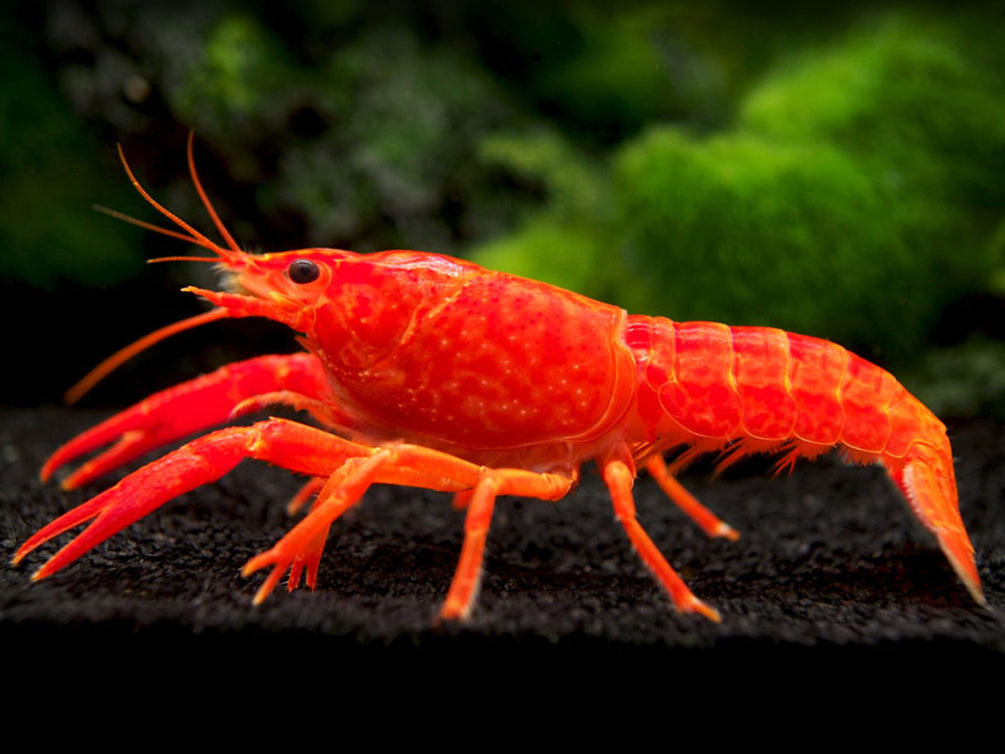
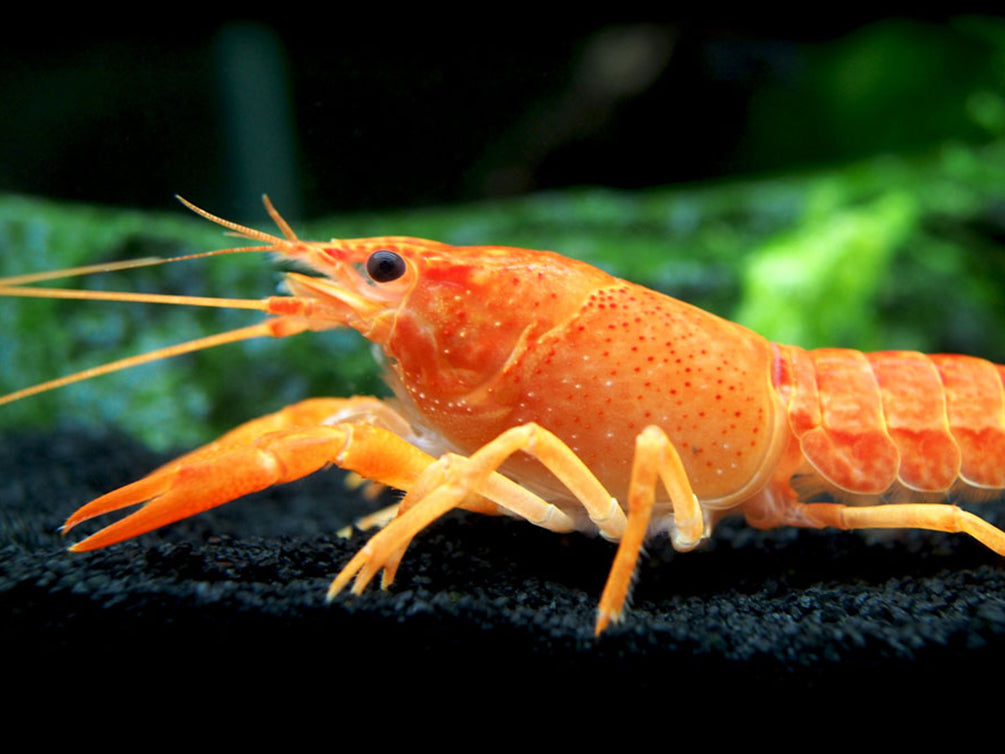
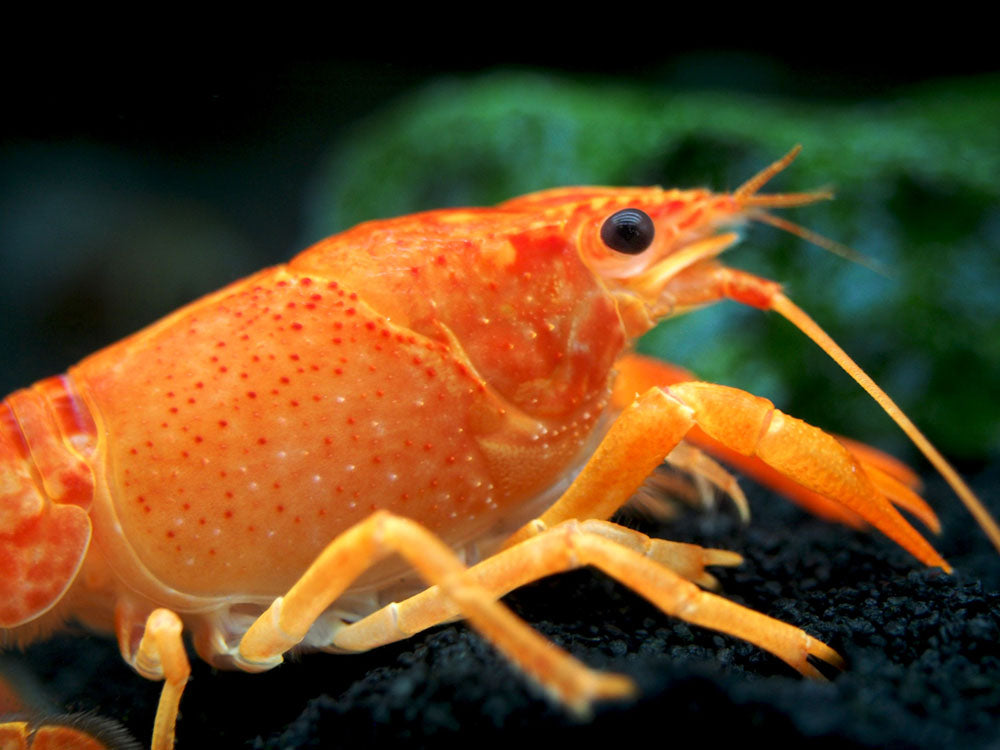
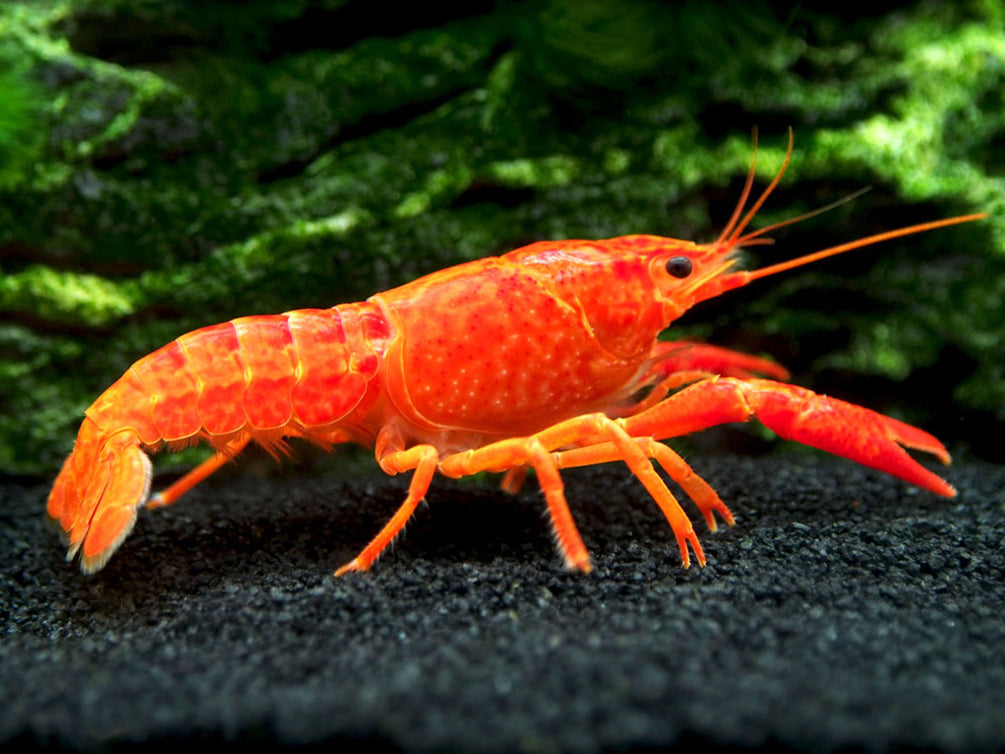
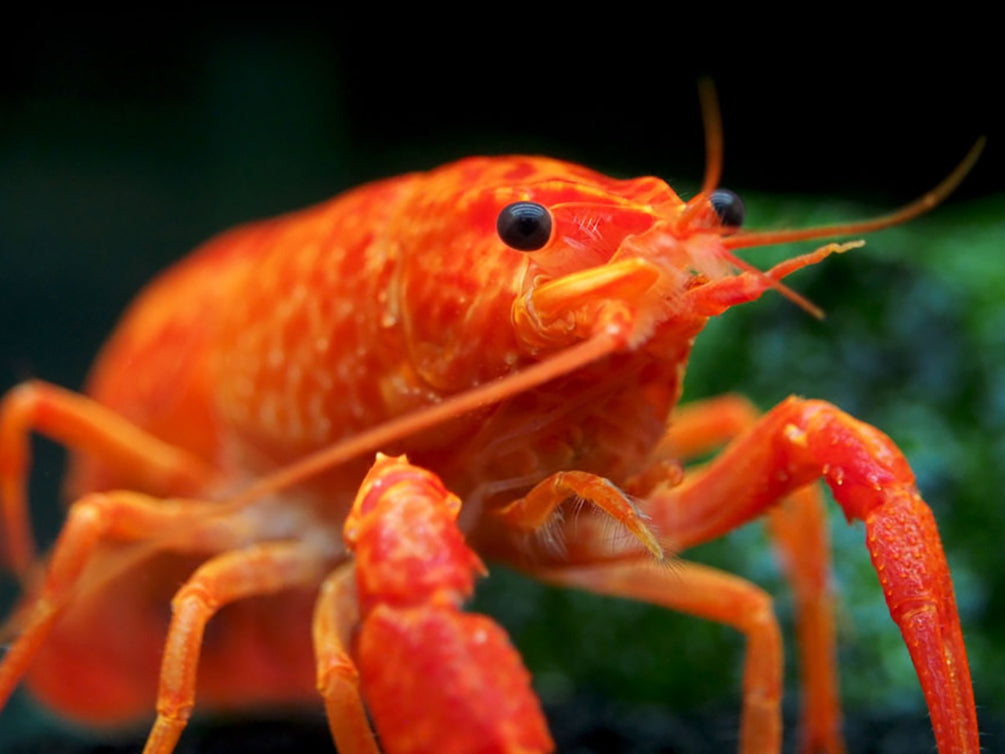
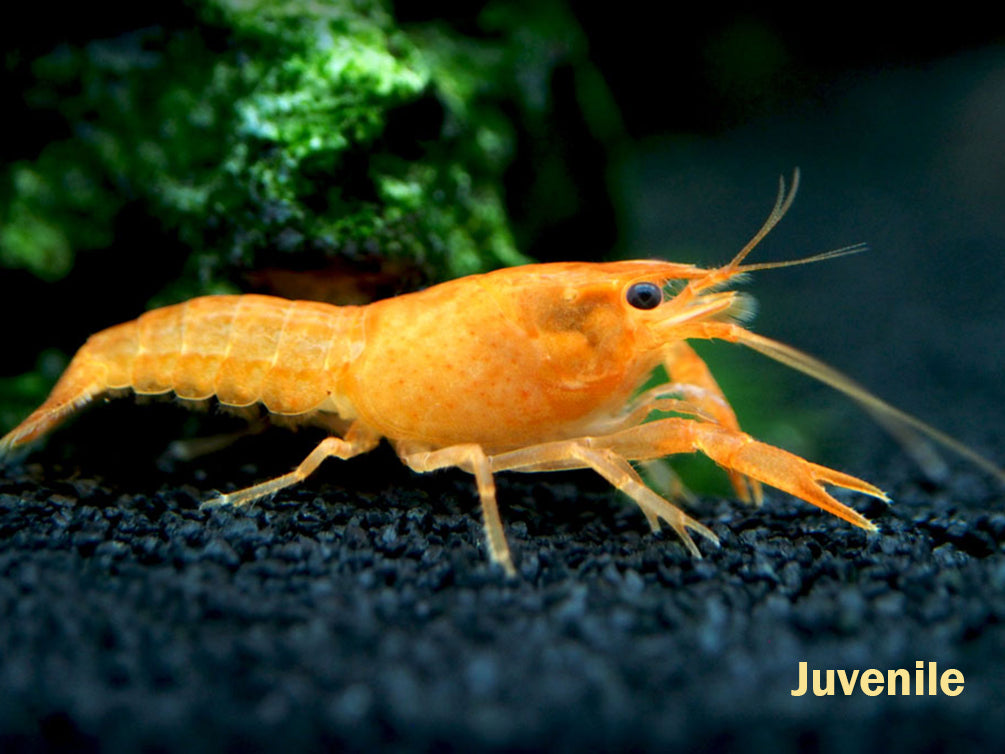
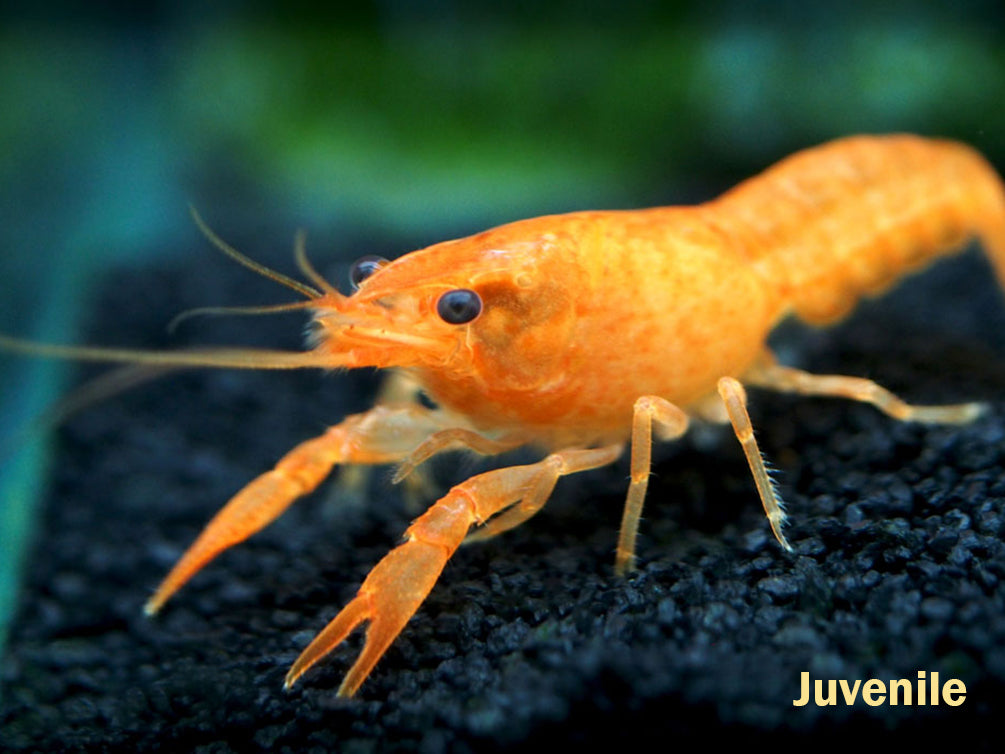
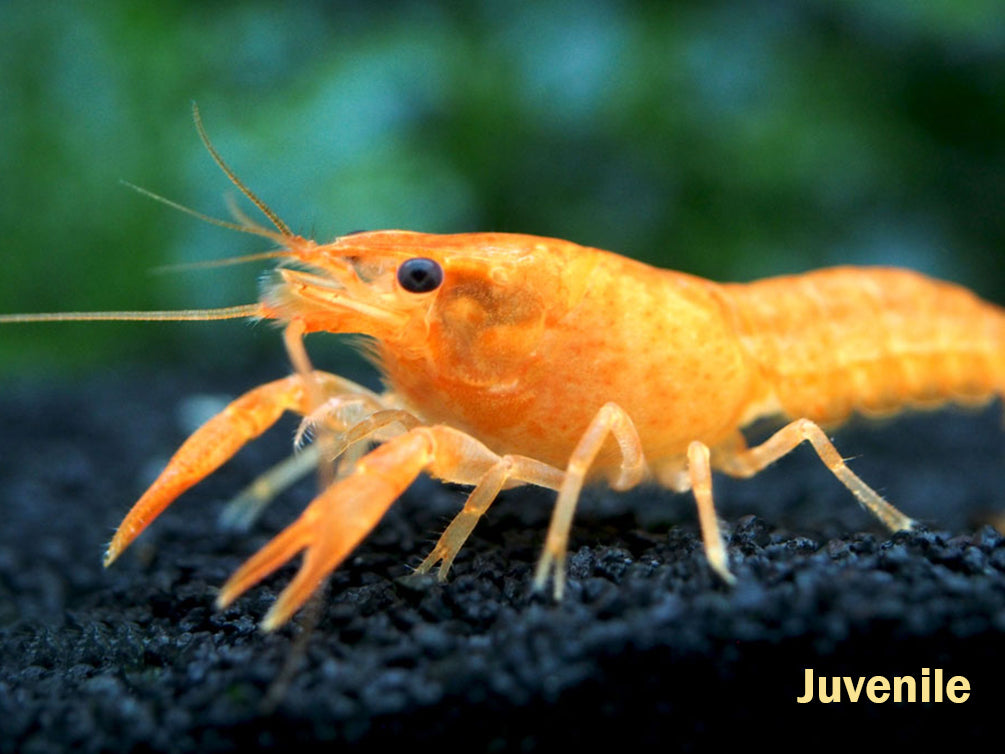

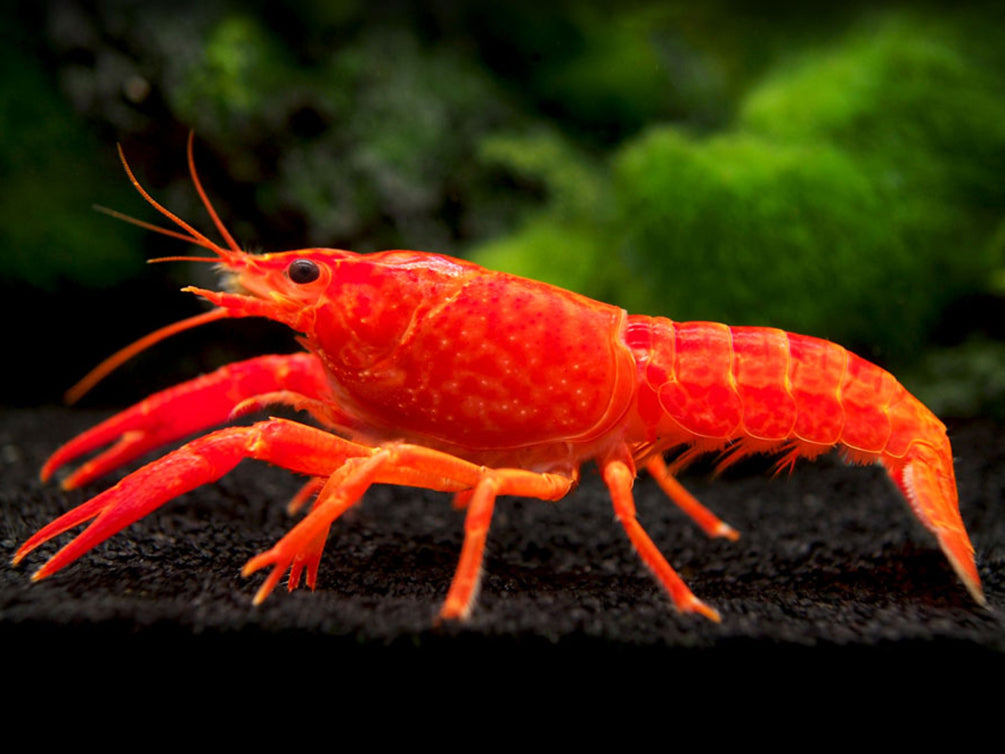
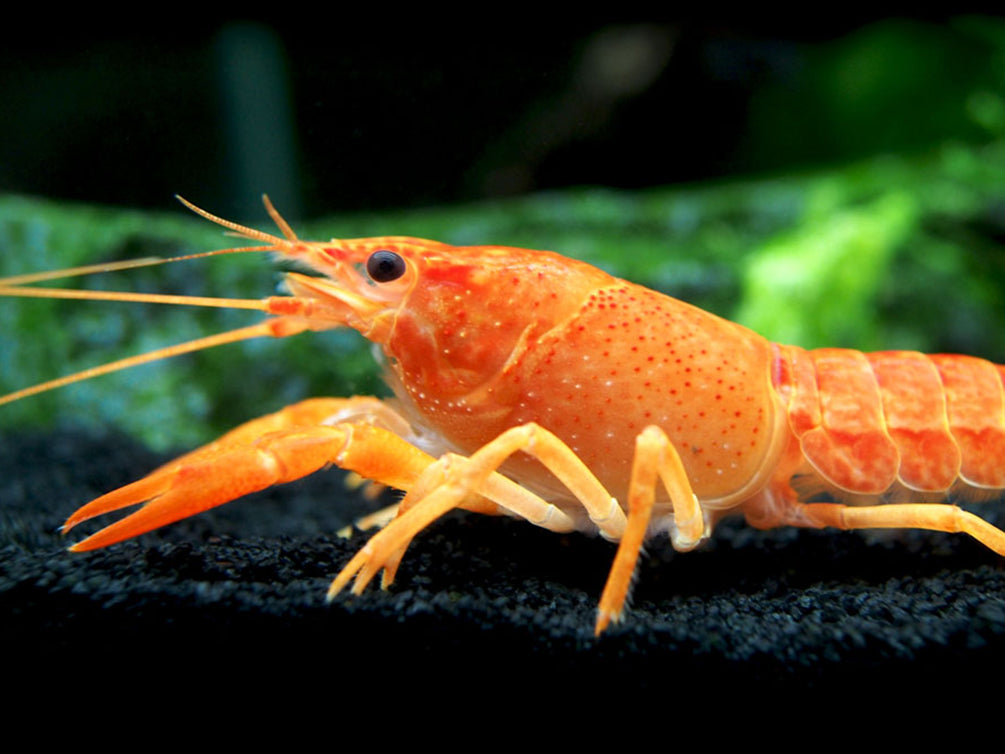
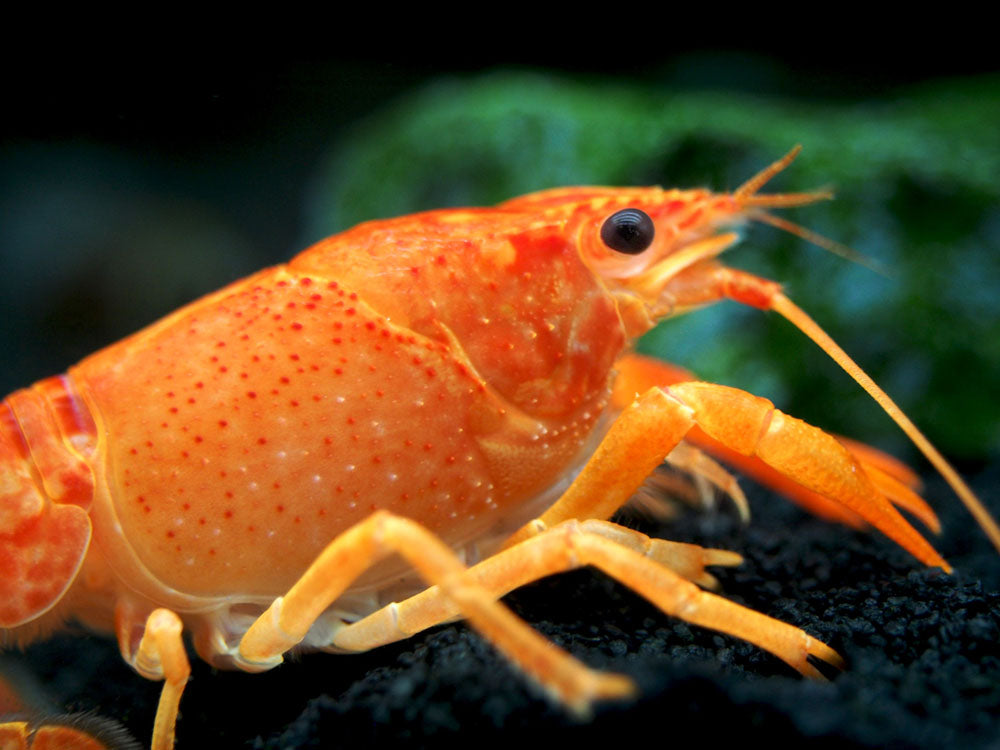
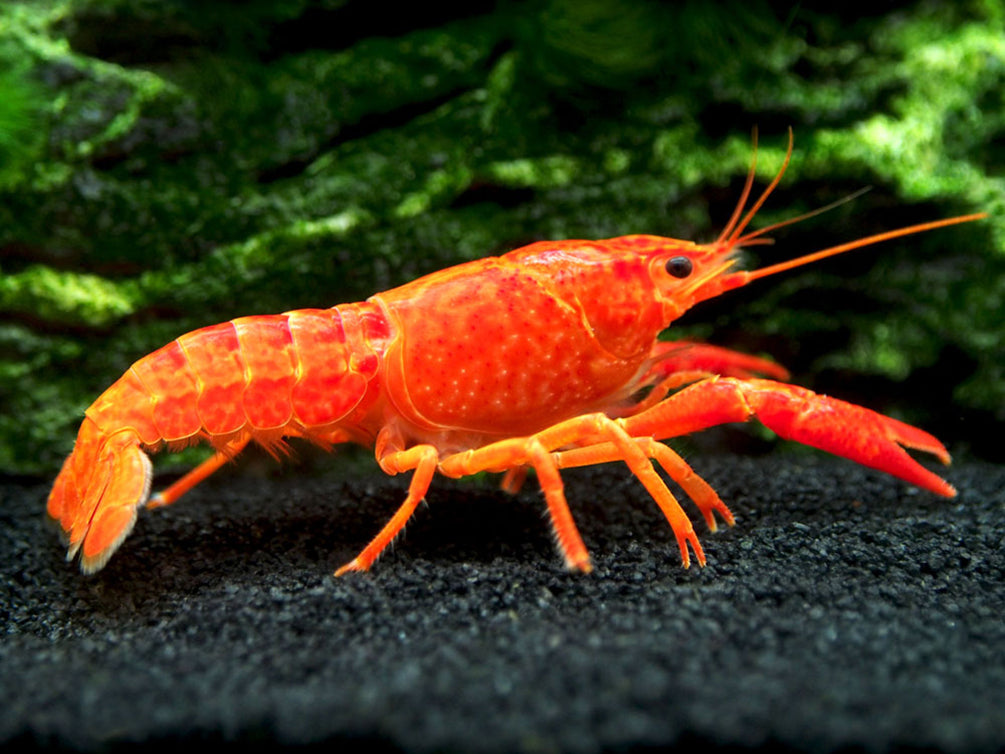
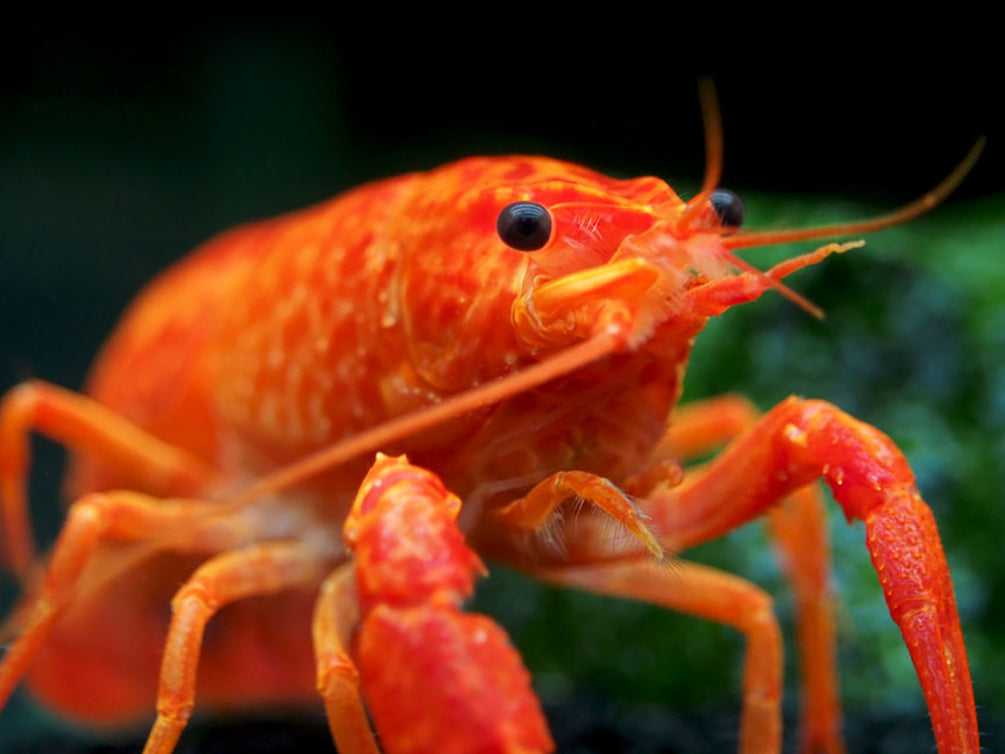
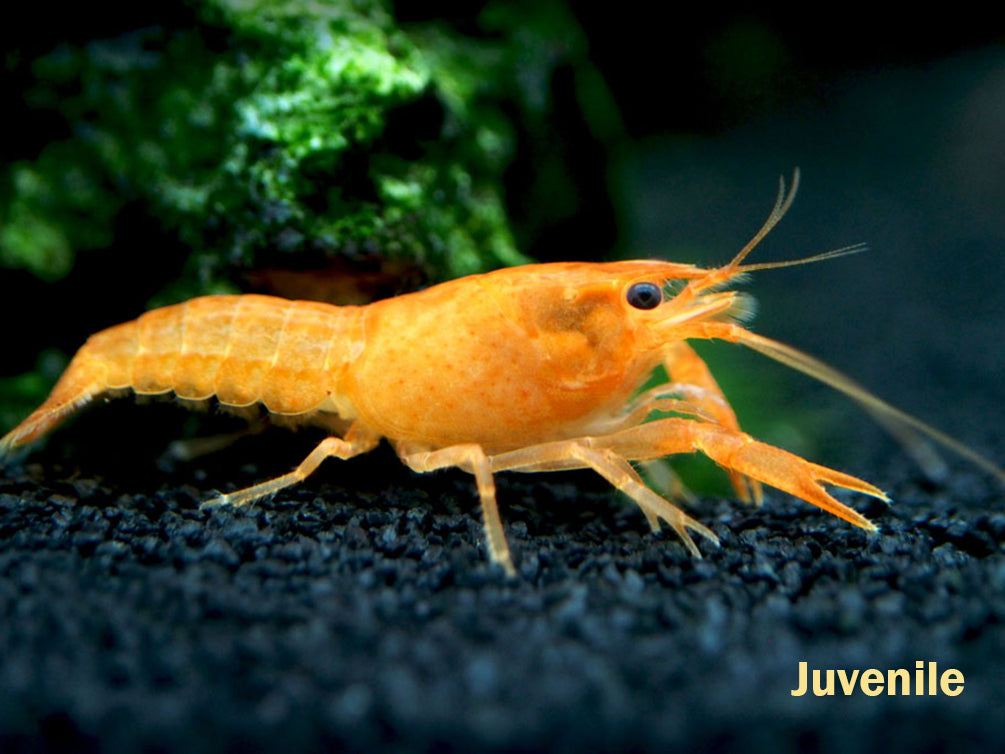
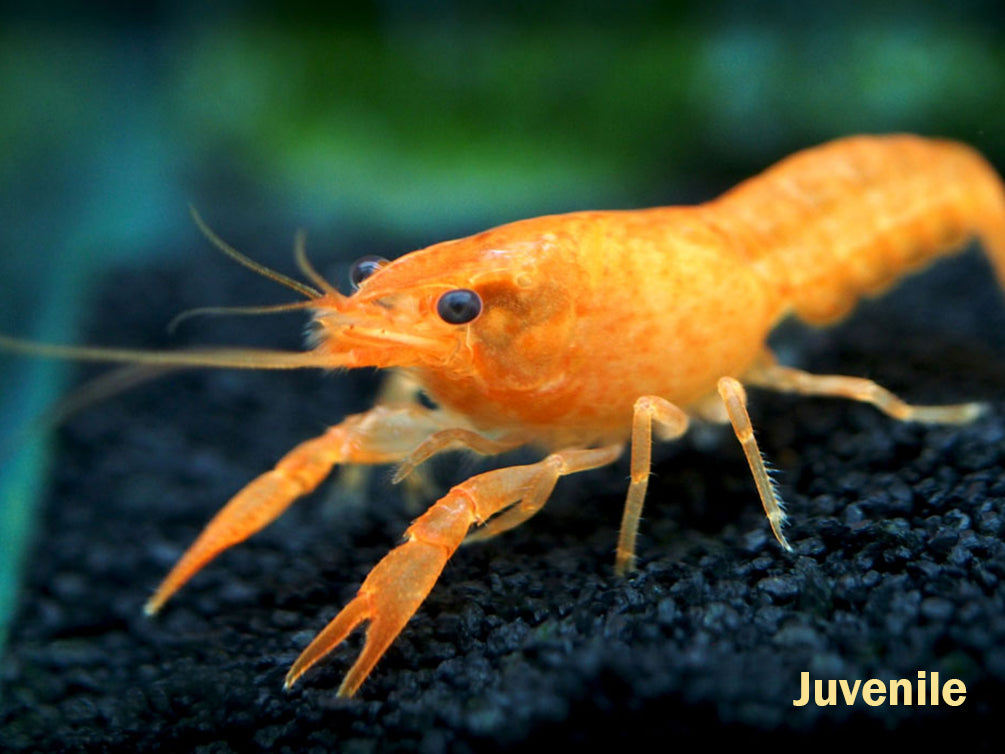
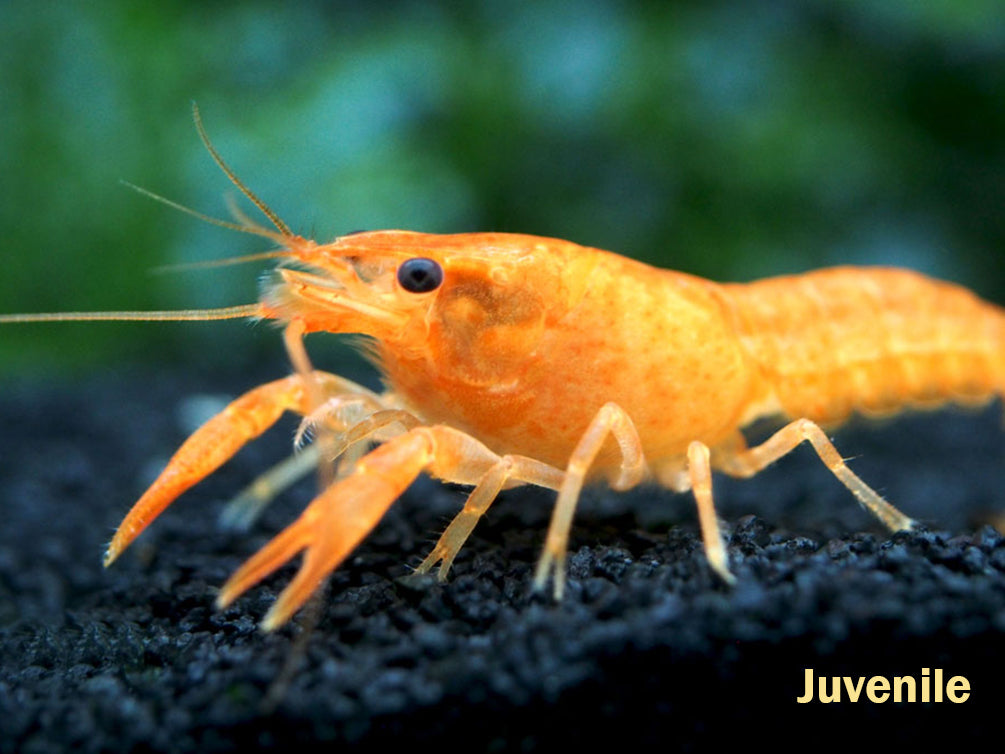

Neon Red Crayfish (Procambarus clarkii) aka Orange/Tangerine Crayfish - Tank Bred!
- Low stock - 1 item left
- Backordered, shipping soon
⚠️ Important Legal Note: Procambarus clarkii crayfish are considered an invasive species in several U.S. states and is illegal to possess in any form or sell in: Alaska, Arizona, Colorado, Hawaii, Illinois, Maine, Maryland, Michigan, Minnesota, Nebraska, New Hampshire, Nevada, Ohio, Oregon, Pennsylvania, Virginia, Washington, and Wisconsin. Please check your local regulations before purchasing. We are unable to ship this species to these states. If you reside in one of the above states and try to checkout with this crayfish in your cart you will be unable to checkout and receive an error message until the crayfish is removed from the cart.
The Neon Red/Orange Tangerine Crayfish's bright red/orange coloring is sure to make this beautiful animal the centerpiece of your aquarium! This crayfish is a vividly colorful variant of the similar species of the Electric Blue Crayfish (Procambarus alleni). This crayfish is also commonly known as the Orange or Tangerine Lobster, though true lobsters do not exist in freshwater. This species originates from the Southeastern United States but all of our specimens are tank-raised. Like most Procambarus species, the Neon Red Crayfish reaches maturity very quickly and breeds easily in the aquarium. In fact, many of our specimens have bred in our tanks at our facility!
Though most crayfish are often reclusive by nature, this particular crayfish is very active by comparison and spends plenty of time exploring the floor of the aquarium in search of food. The Neon Red Crayfish is an omnivorous scavenger and will eat most any meaty or plant-based foods. This crayfish should not be kept with ornamental live plants as it will eat them at a surprising rate. It is a skilled climber, so extra care must be taken to ensure that it does not escape its enclosure.
As it reaches adulthood, the Neon Red Crayfish will become relatively territorial, so it may behave aggressively towards other animals in the tank. It is important that ample hiding places such as rockwork, driftwood, or PVC pipes be provided. This is even more crucial when housing multiple crayfish in the same tank. Due to the size and waste production of this crayfish, a minimum 30-gallon, well-filtered aquarium is necessary for one adult. A larger aquarium can house multiple adults of similar size. This is a very hardy animal, but regular water changes are vital to its optimal health. Other bottom-dwelling invertebrates and fish should not be kept with large crayfish. It is possible to keep mid- and upper-level, fast-swimming fish with the Neon Red Crayfish, but crayfish are opportunistic feeders and will generally eat whatever they can catch.
As with all of our crayfish, the coloration of the Neon Red Crayfish is EXTREMELY high quality - much higher quality than others on the market. This crayfish may TEMPORARILY change color and hide more than usual after molting, which may occur during shipping. If your crayfish is faded in color and you find a molt in the bag or in your aquarium, do not worry; this is normal and the bright color will return in 2 weeks or less.
This is the red/orange variant of this species, with blue and white specimens also being available.
- 1 Neon Red Crayfish - 2 to 3+ inch Young Adult (No sex specified. Most popular option)
- 1 Female Neon Red Crayfish - 2 to 3+ inches (We guarantee a very high-quality, breeding age young adult female crayfish for this listing).
- 1 Male/Female Pair of Neon Red Crayfish - 2 to 3+ inches (We guarantee a very high-quality, breeding age young adult male/female crayfish pair for this listing).
- 1 B-Grade Neon Red Crayfish - 2 to 3+ inch Young Adult (All of our “B-Grade” crayfish are simply specimens that are missing 2 or more legs and or 1 claw. Loss of appendages is not permanent and happens commonly with crustaceans. They are completely healthy with excellent coloration and will completely regenerate lost appendages within 1 to 2 molts (about 2 to 3 months).
- 1 Juvenile Neon Red Crayfish - 1/2 inch + (A younger and smaller variant of Electric Blue Crayfish at a lower price than our young adult specimens. This is a particularly fast-growing, hardy species and will usually grow well into adult size and coloration within 1 to 3 months. In the meantime, any customers who choose to go with a juvenile specimen can save some money and experience the excitement of watching their little crayfish grow!)
- Bold orange coloration that makes for a wonderful centerpiece to the aquarium
- Much more active than many crayfish species
- Extremely hardy and adaptable
- Excellent scavenger
- Temperature: 65°- 76° F (18° - 24° C)
- pH: 6.5 - 7.5
- KH: 6 - 15 dKH
- Minimum tank size: 30 gallons
- Diet: Omnivorous. High-quality sinking pellets, plants, and freeze-dried or frozen meaty foods will be readily accepted. Cuttlebone should be added to the aquarium to supplement calcium, which will aid in exoskeleton production.
- Social behavior: Can be aggressive/territorial with its own kind. Crayfish will typically eat whatever they can catch, but since they are slow-moving, they are not often able to harm fast-moving fish.
- Origin: Tank-bred, but indigenous to Southeastern United States
- Average adult size: 4 - 5 inches (10 - 12.7 cm) body length, minus claws
- Average purchase size: 2 - 4 inches (5 - 7.6 cm)
- Recommended Aquatic Arts tank mates: Fast-moving fish (such as Celestial Pearl Danios, Rasboras, Guppies, etc.). While dwarf shrimp can be kept succesfully with these crayfish, caution should be exercised, as the crayfish have been known to catch and eat slow, sick, or particularly small shrimp. Cichlids can be aggressive toward crayfish and should not be kept in the same tank. Bottom-dwelling tankmates should definitely be avoided.
What makes the Neon Red (Orange/Tangerine) Crayfish stand out?
It’s the color and confidence. These crayfish display bright red to orange tones that are bold and unmistakable, paired with the classic, assertive behavior Procambarus species are known for.
Are Neon Red Crayfish tank bred?
Yes. These are tank-bred crayfish, meaning they’re already adapted to aquarium life and typically acclimate better than wild-caught individuals.
How big do Neon Red Crayfish get?
They can grow to around 4–6 inches as adults. Their size and strength mean they need adequate space and sturdy décor.
Are Neon Red Crayfish aggressive?
They can be. This species is territorial and opportunistic. They will defend their space and may grab slow-moving or bottom-dwelling tank mates.
Can Neon Red Crayfish live in community tanks?
Generally no. They’re best kept in species-only setups or with very fast, upper-level fish where risks are clearly understood. They are not community-safe in the traditional sense.
Are Neon Red Crayfish shrimp safe?
No. Shrimp will almost certainly be eaten if given the opportunity.
Do Neon Red Crayfish dig or rearrange the tank?
Yes. Digging, moving substrate, and redecorating are normal behaviors. Secure hardscape and durable décor are important.
What do Neon Red Crayfish eat?
They’re omnivores. Sinking pellets, algae wafers, frozen foods, and blanched vegetables all work well. A varied diet supports healthy growth and strong molts.
Do Neon Red Crayfish molt often?
Yes. Molting is a normal part of growth. During molts they may hide more and should not be disturbed.
Who are Neon Red Crayfish best suited for?
They’re best for hobbyists who want a bold, interactive invertebrate and are comfortable with a species-focused tank. If you enjoy strong personality and don’t mind tank rearranging, this crayfish is very engaging.
Shipping, Arrival & Acclimation
How are Neon Red Crayfish shipped?
They’re packed individually and securely to prevent injury during transit, with insulation and temperature control used as needed. Shipping methods prioritize animal health over speed.
What should I do as soon as my crayfish arrives?
Open the box promptly and inspect the crayfish while it’s still in the bag. It’s common for crayfish to appear inactive or tucked in after shipping.
Is there a live arrival guarantee?
Yes. Neon Red Crayfish are covered by Aquatic Arts’ live arrival guarantee when delivery guidelines are followed.
How should I acclimate a Neon Red Crayfish?
Slow acclimation works best. Gradually introduce tank water to the bag water so the crayfish can adjust to temperature and water chemistry differences.
Is drip acclimation recommended?
Yes. Drip acclimation helps reduce stress and lowers the risk of molting issues caused by sudden parameter changes.
Should I add the crayfish directly to the tank after acclimation?
Yes. Once acclimated, gently transfer the crayfish into the aquarium. Avoid adding bag water to the tank.
Is it normal if the crayfish hides right away?
Completely normal. Newly arrived crayfish often hide for the first few hours or days while they adjust. Providing caves and cover helps them settle faster.
What if my crayfish molts shortly after arrival?
This can happen and is usually a good sign. Molting after shipping often means the crayfish is adjusting to its new environment.
Should I feed right away after arrival?
It’s best to wait 12–24 hours. Once the crayfish starts exploring, offer a small amount of food. Overfeeding too soon can foul the water.
What tanks are best for newly arrived Neon Red Crayfish?
Established, fully cycled tanks with stable parameters and plenty of hiding spots are ideal. Avoid newly set-up tanks or aggressive tank mates.
Shell Care & Calcium (Important for All Invertebrates)
Once acclimation is complete, long-term success depends on shell and mineral support. This applies to all snails, shrimp, crabs, and crayfish.
Why is calcium important for invertebrates?
Calcium and trace minerals are required to build and maintain shells and exoskeletons. Without proper mineral support, shells can thin, crack, or fail to harden properly after molting.
Which animals need calcium and mineral support?
All invertebrates do. If it has a shell or exoskeleton, minerals matter.
What problems are caused by low minerals?
Common issues include soft shells, failed molts, cracking, erosion, and post-molt weakness — especially after shipping or water changes.
Is it normal to see molts after arrival?
Yes. Clear molts from crayfish are a good sign and mean the animal is growing — not dying.
Should molts or shed shells be removed from the tank?
No. Leaving molts in the tank allows crayfish to reclaim calcium naturally. They’re often consumed within a day.
Can shell damage be repaired?
Old damage won’t disappear, but new growth can improve significantly once mineral balance, diet, and stability are corrected.
Does water hardness affect shell health?
Yes. Extremely soft or acidic water can contribute to shell weakness over time. Supplemental calcium becomes especially important in these conditions.
What’s the easiest way to add calcium?
Cuttlebone is a simple, low-maintenance option that slowly releases calcium and can remain in the tank continuously.
Does diet affect shell and molt health?
Absolutely. In addition to natural grazing, offering quality invertebrate foods helps provide consistent mineral intake. Dedicated foods from Kats Aquatics are an easy way to support shell strength and successful molts.
What helps most after acclimation?
Stable parameters, available calcium, gentle feeding, and avoiding sudden changes. Consistency is the key to long-term success.
For the safety of our animals, we only ship live fish, crabs, and select other inverts exclusively via UPS 1 Day Air. If your order contains this item, you will only see UPS 1 Day Air as a shipping option during checkout. If other items are in your cart that can ship with 2 day or standard shipping options the only shipping method you can still select is UPS 1 Day Air.
UPS 1 Day is a description of the duration of time a shipment will spend in transit once it has been shipped. This does not guarantee the package will be shipped the same or next day from which the order was placed.
Shipping Schedule for this service
Current Handling Time:
1-9 business days
Here at Aquatic Arts, we consider the welfare of the live animals we are shipping to be of the foremost importance. This process is much more involved than simply creating a shipping label and affixing it to a box. Depending on the order, it takes from 4 to 7 people to complete this process properly. We check the weather conditions here where they fly out of the Indianapolis UPS facility and the destination for each shipment. We start early each morning and go through a multi-step process to have the day's shipments prepared in time for the UPS pickup. The volume of orders in our system also affects the processing time. Therefore our stated handling time is 1-9 business days.
Shipping Rate
Pricing is by size of package needed to fill entire order and distance it must travel. It will be calculated at checkout.
