
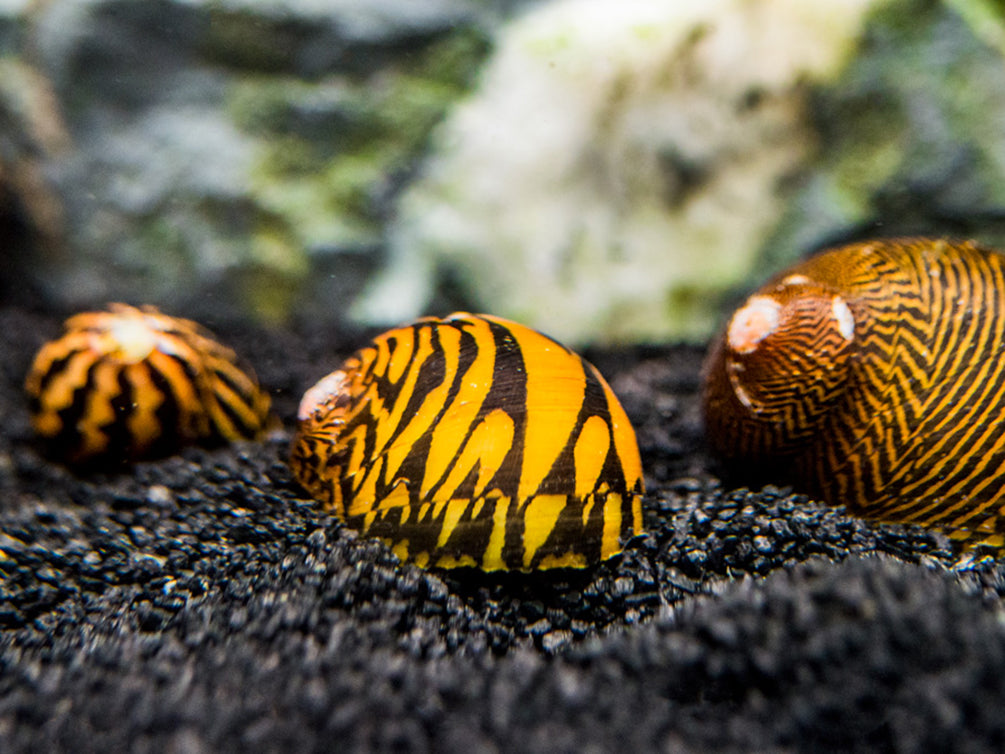
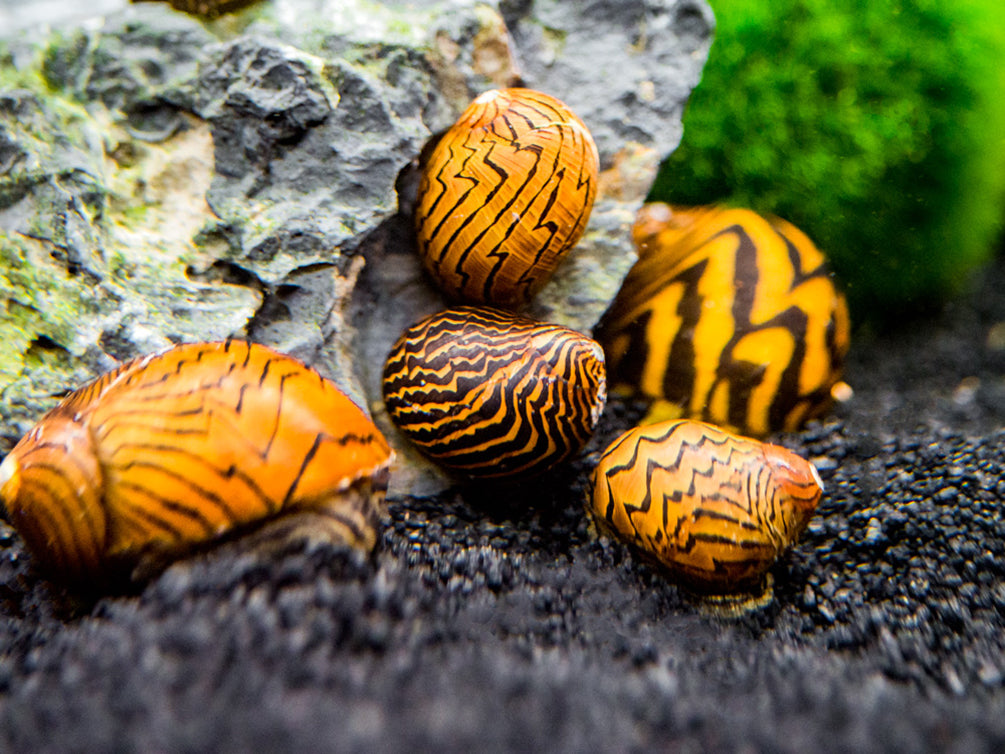
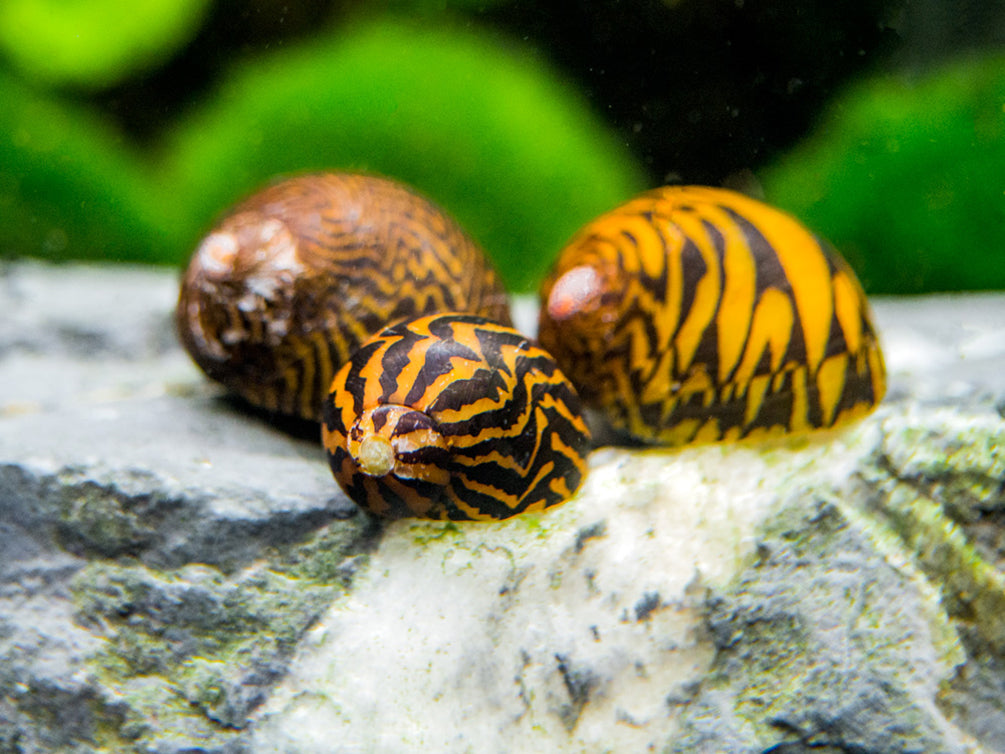
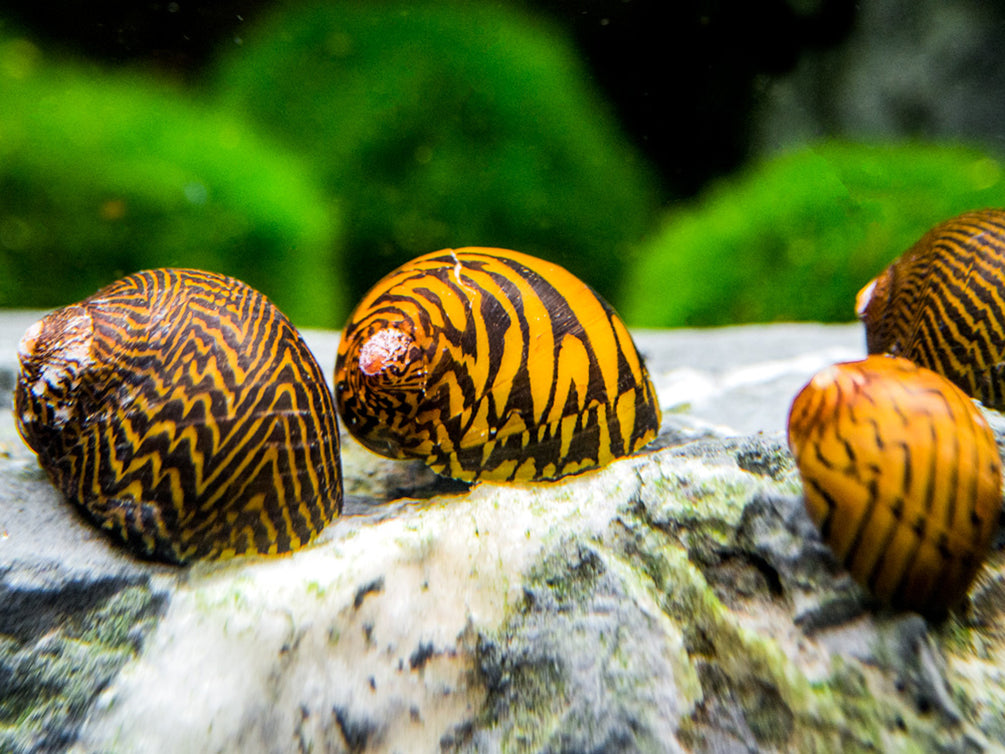
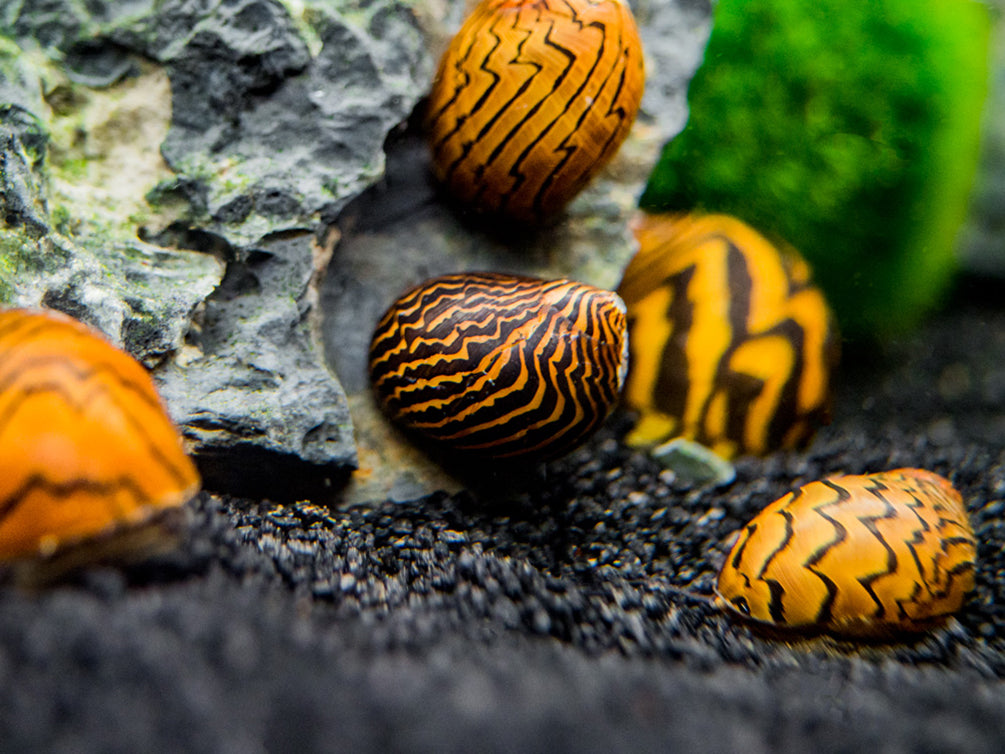

Lightning Bolt Nerite Snail (Neritodryas dubia)
- In stock, ready to ship
- Backordered, shipping soon
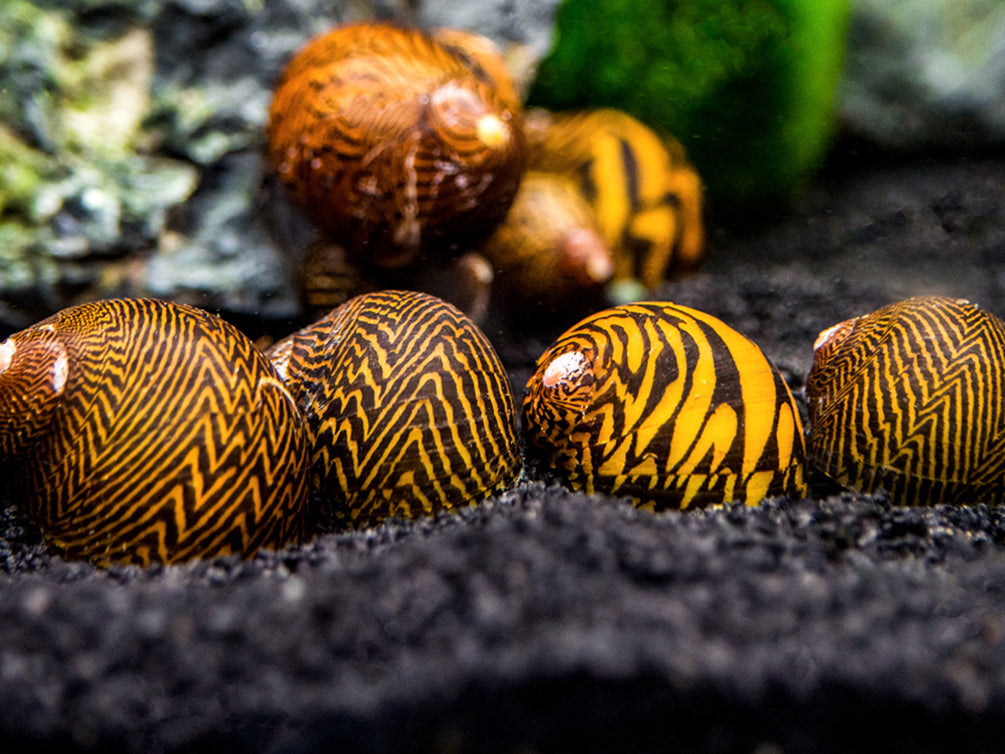
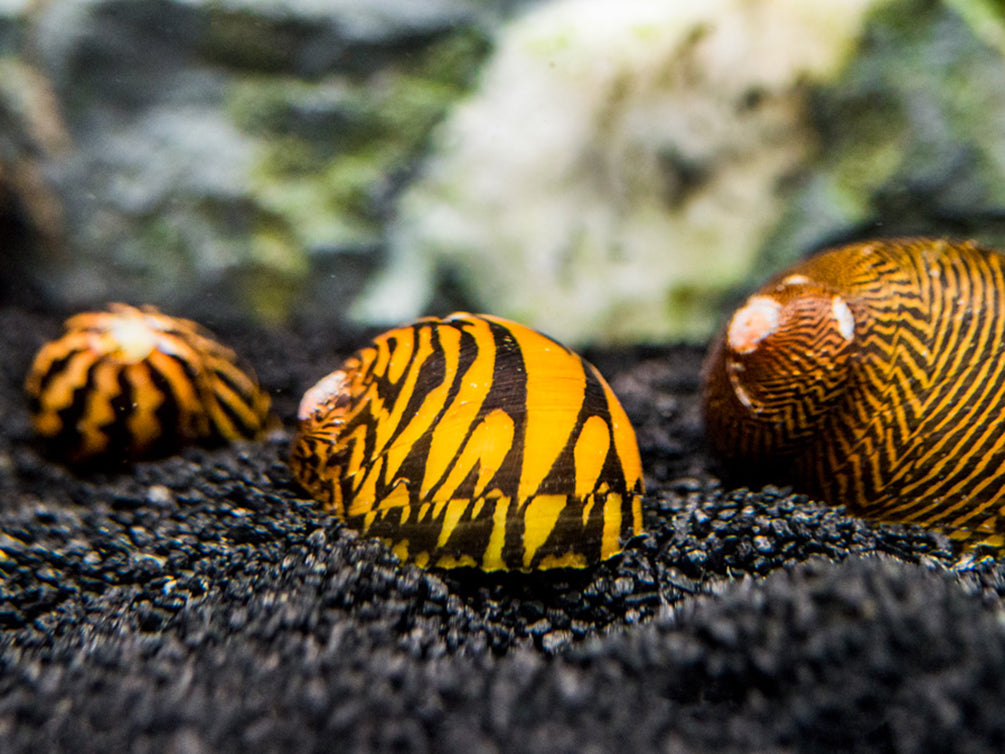
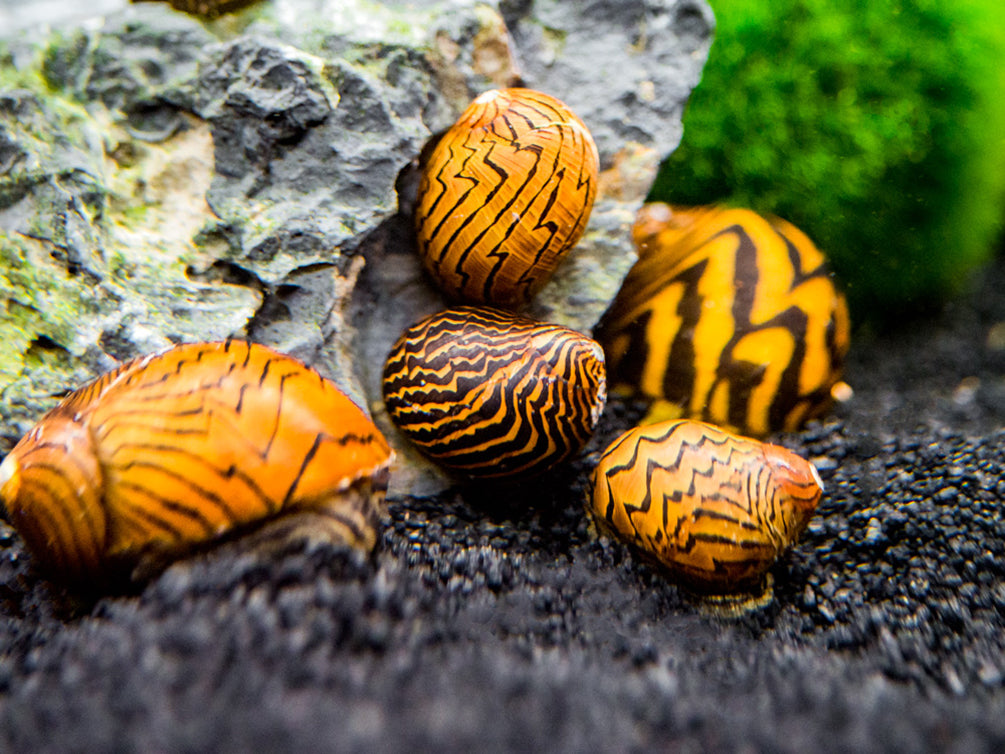
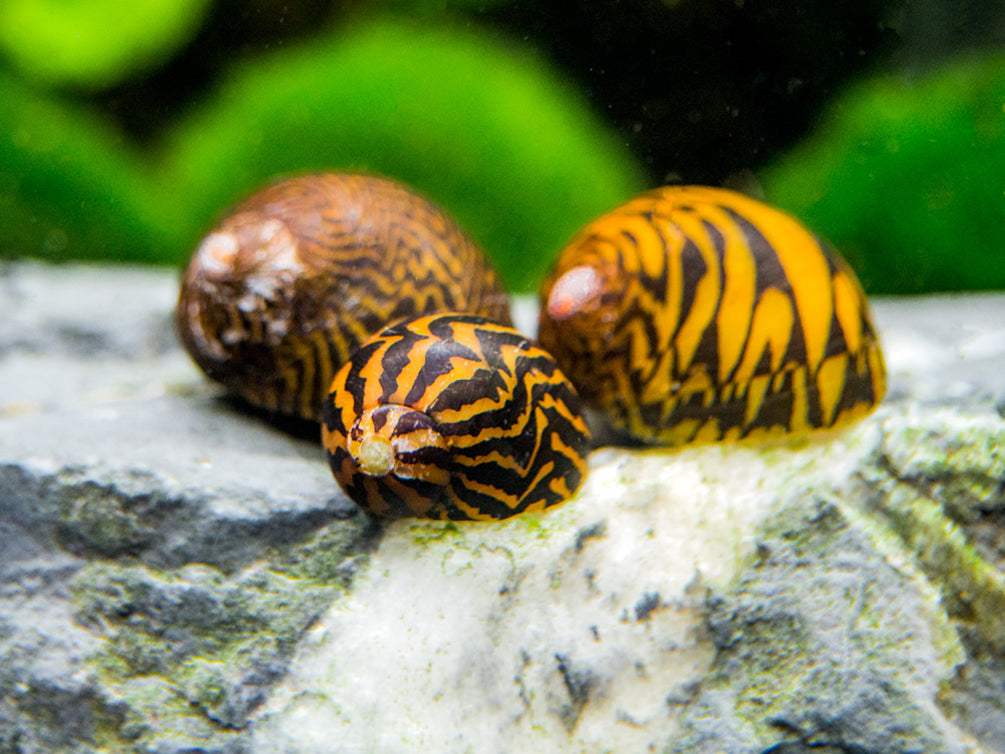
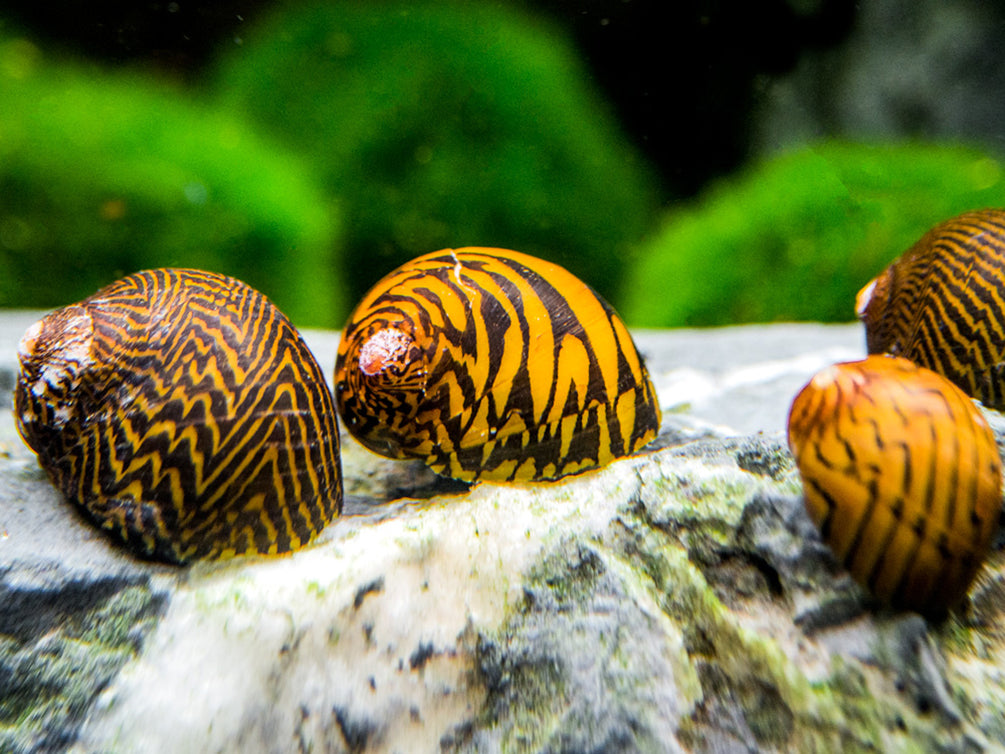
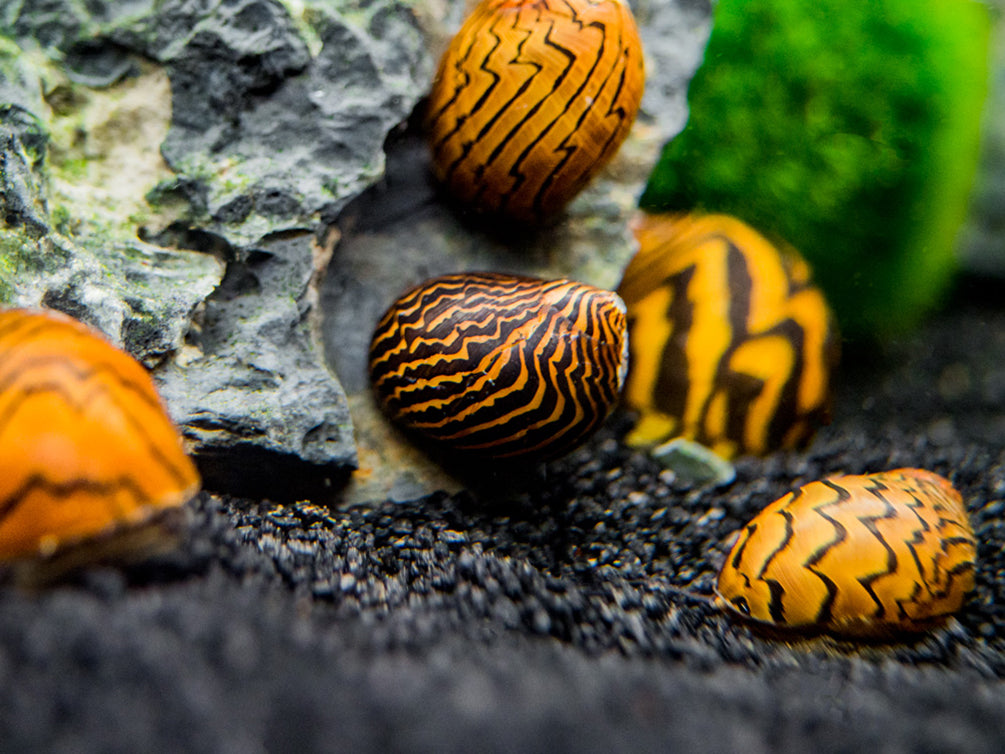
The Lightning Bolt Nerite Snail displays a beautiful, psychedelic gold and black shell pattern that is unrivaled, and this species is an exceptional algae eater that makes a wonderful addition to the planted or nano aquarium!
⚠️ Important Legal Note: All aquatic invertebrates are prohibited to possess in any form or sell in the state of Maine. Please check your local regulations before purchasing. We are unable to ship livestock from this listing to Maine. If you reside in Maine and try to checkout with this in your cart you will be unable to checkout and receive an error message until it is removed from the cart.
The Lightning Bolt Nerite Snail (Neritina sp.) is a very rare nerite species that is native to the Philippines and is known for its highly variable zigzag pattern of gold and black coloration. It can live for upwards of 4 years, so it is relatively long-lived among its relatives. Though it inhabits freshwater habitats as an adult, its fry require brackish or marine water to survive, so it will not proliferate in a freshwater aquarium and it is not known to have been bred commercially or otherwise.
Most of the nerite snails we offer have very similar care requirements and characteristics, and the Lightning Bolt Nerite Snail is no exception. It inhabits fresh and brackish water areas and cannot reproduce in freshwater. This snail is a very effective algae eater and will thrive in a mature aquarium that has plenty of algae and biofilm growth. Some nerite snails are initially finicky about eating dry foods, but most will come to accept them, especially with foods that are high in spirulina or other plant content. Fresh vegetables are typically accepted as well. Nerite snails are hardy in a mature, stable, well-maintained aquarium, but they are not as hardy as some other snail species in subpar setups. It is important to remember that scavengers such as snails do not consume as much oxygen as most fish, but they still contribute to the bioload of the aquarium and they should not be overstocked long-term.
It should also be noted that, while this snail can live in a wide variety of pH levels, it will live for much longer in alkaline water of over 7.0 pH. If it is kept in acidic water, it is more prone to experience shell erosion. Calcium supplementation (especially when using R/O water) is highly recommended for maintaining the quality of this snail’s magnificent shell.
What We Like About This Snail:
- Completely peaceful
- Striking black and gold-patterned shell that has unrivaled pattern variability
- Safe with all plants
- Excellent scavenger and algae eater
- Does not reproduce in freshwater
RECOMMENDED TANK PARAMETERS:
- Temperature: 71.6° - 87.8° F (22° - 28° C)
- pH: 6.5 – 8.0, although its lifespan will generally be longer in alkaline pH.
- KH: 2 - 12 dKH
- Minimum Tank Size: 5 gallons
CARE INFORMATION:
- Diet: Scavenger that feeds continually. Requires very little feeding in a well-established aquarium containing algae, biofilm, or decaying plant matter. In less mature aquariums, high quality dry foods with high plant content can be sparingly fed daily. Nerite snails are often more finicky with dry foods.
- Social Behavior: Peaceful
- Origin: Philippines
- Average Adult Size: 1.2 inches (3 cm)
- Average Purchase Size: .5 - 1 inches (1.3 – 2.5 cm)
What makes the Lightning Bolt Nerite Snail special?
Lightning Bolt Nerites are known for their dramatic, jagged striping that resembles lightning streaks across the shell. Each snail has a unique pattern, making them especially eye-catching on glass and hardscape.
Are Lightning Bolt Nerite Snails good algae eaters?
Yes. They’re excellent grazers and very effective at cleaning algae from glass, rocks, and décor. They’re particularly good at harder algae that many other snails won’t touch.
Do Lightning Bolt Nerite Snails eat live plants?
No. They are completely plant safe and will not damage healthy leaves. Their diet focuses on algae and biofilm only.
Are Lightning Bolt Nerite Snails safe with shrimp and fish?
Yes. They’re peaceful, shrimp safe, and compatible with community tanks.
How big do Lightning Bolt Nerite Snails get?
They typically reach around 1 inch in size. Their compact size makes them suitable for nano tanks as well as larger aquariums.
Are Lightning Bolt Nerite Snails active?
Very active once settled. You’ll often see them cruising the glass and décor throughout the day.
Do Lightning Bolt Nerite Snails reproduce in freshwater tanks?
They may lay small white eggs on hard surfaces, but the eggs will not hatch in freshwater. Overpopulation is not a concern.
Do Lightning Bolt Nerite Snails need algae to thrive?
Yes. They do best in established tanks with visible algae and biofilm. They’re not ideal for brand-new or ultra-clean systems.
Are Lightning Bolt Nerite Snails escape artists?
Yes — like most nerite snails, they can be adventurous climbers. A secure lid or covered openings are always recommended to prevent accidental escapes.
Who are Lightning Bolt Nerite Snails best suited for?
They’re ideal for aquarists who want powerful algae control, striking shell patterns, and a snail that stays active and visible.
Shipping, Arrival & Acclimation
How are Lightning Bolt Nerite Snails shipped?
They’re packed for live arrival with insulation and temperature control used as needed. Shipping methods prioritize animal health over speed.
What should I do when my snail arrives?
Open the box promptly and inspect the snail while it’s still sealed in the bag. Nerites commonly arrive inactive or tightly closed after shipping — this is normal.
How should I acclimate a Lightning Bolt Nerite Snail?
A slow acclimation works best. Gradually introduce tank water to the bag water so the snail can adjust to temperature and water chemistry differences.
Is drip acclimation recommended for nerite snails?
Yes. Drip acclimation helps reduce stress and supports healthy shell adjustment, especially if your tank parameters differ from the shipping water.
Should I expect immediate movement after adding the snail to the tank?
Not always. Some nerites begin grazing quickly, while others may take several hours to emerge. Both behaviors are normal.
How can I tell if the snail is alive after arrival?
If the operculum (trap door) is tightly closed, that’s usually a good sign. Once settled, most nerites will slowly emerge and begin grazing.
Should I feed Lightning Bolt Nerite Snails right away?
Usually not necessary. They’ll begin grazing on algae and biofilm naturally. Supplemental food can be offered later if algae levels are limited.
What tanks are best for newly arrived Lightning Bolt Nerite Snails?
Established, fully cycled tanks with visible algae, stable parameters, and a secure lid are ideal.
Shell Care & Calcium (Important for All Invertebrates)
Once acclimation is complete, long-term success depends on shell and mineral support. This applies to all snails, shrimp, crabs, and crayfish.
Why is calcium important for invertebrates?
Calcium and trace minerals are required to build and maintain shells and exoskeletons. Without proper mineral support, shells can thin, pit, crack, or erode over time.
Which animals need calcium and mineral support?
All invertebrates do. If it has a shell or exoskeleton, minerals matter.
What problems are caused by low minerals?
Common issues include shell erosion, pitting, cracking, soft shells, and failed molts — especially after shipping or water changes.
Is it normal to see shell changes after arrival?
Yes. New shell growth may look different from older sections, and this is normal as the snail adjusts to its new environment.
Can damaged shells be repaired?
Old damage won’t disappear, but new growth can improve significantly once mineral balance, diet, and stability are corrected.
Does water hardness affect shell health?
Yes. Extremely soft or acidic water can contribute to shell erosion over time. Supplemental calcium becomes especially important in these conditions.
What’s the easiest way to add calcium?
Cuttlebone is a simple, low-maintenance option that slowly releases calcium and can remain in the tank continuously.
Does diet affect shell health?
Absolutely. In addition to natural grazing, offering quality invertebrate foods helps provide consistent mineral intake. Dedicated foods from Kats Aquatics are an easy way to support shell strength and long-term health.
What helps most after acclimation?
Stable parameters, available calcium, gentle feeding, and avoiding sudden changes. Consistency is the biggest factor in success.
For the safety of our animals, we only ship live fish, crabs, and select other inverts exclusively via UPS 1 Day Air. If your order contains this item, you will only see UPS 1 Day Air as a shipping option during checkout. If other items are in your cart that can ship with 2 day or standard shipping options the only shipping method you can still select is UPS 1 Day Air.
UPS 1 Day is a description of the duration of time a shipment will spend in transit once it has been shipped. This does not guarantee the package will be shipped the same or next day from which the order was placed.
Shipping Schedule for this service
Current Handling Time:
1-9 business days
Here at Aquatic Arts, we consider the welfare of the live animals we are shipping to be of the foremost importance. This process is much more involved than simply creating a shipping label and affixing it to a box. Depending on the order, it takes from 4 to 7 people to complete this process properly. We check the weather conditions here where they fly out of the Indianapolis UPS facility and the destination for each shipment. We start early each morning and go through a multi-step process to have the day's shipments prepared in time for the UPS pickup. The volume of orders in our system also affects the processing time. Therefore our stated handling time is 1-9 business days.
Shipping Rate
Pricing is by size of package needed to fill entire order and distance it must travel. It will be calculated at checkout.
