

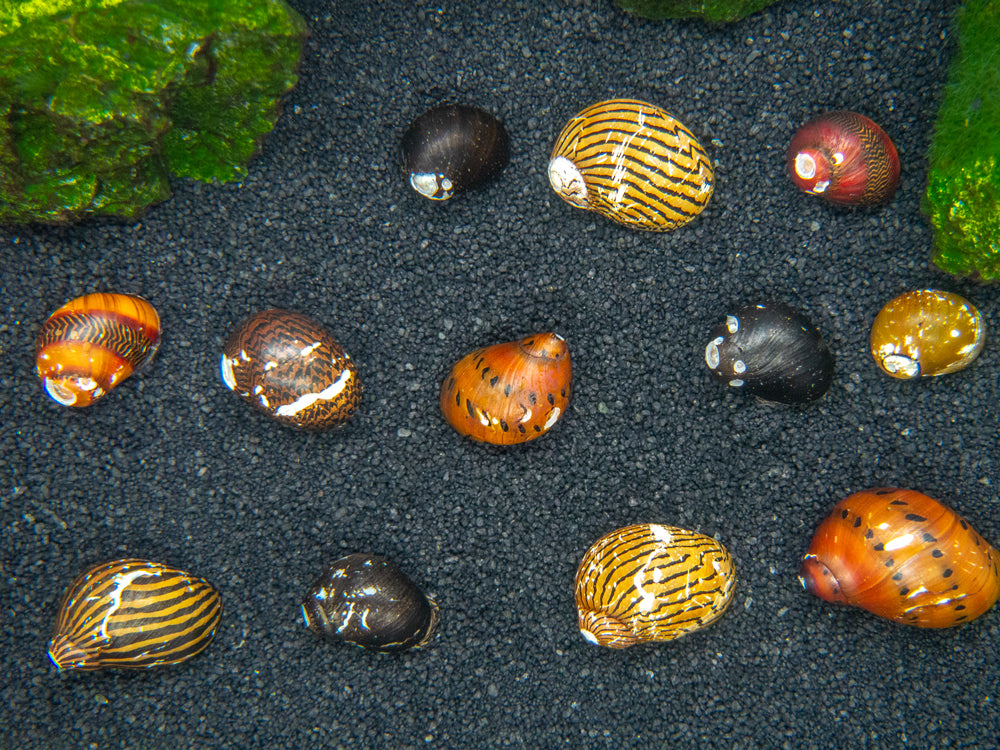
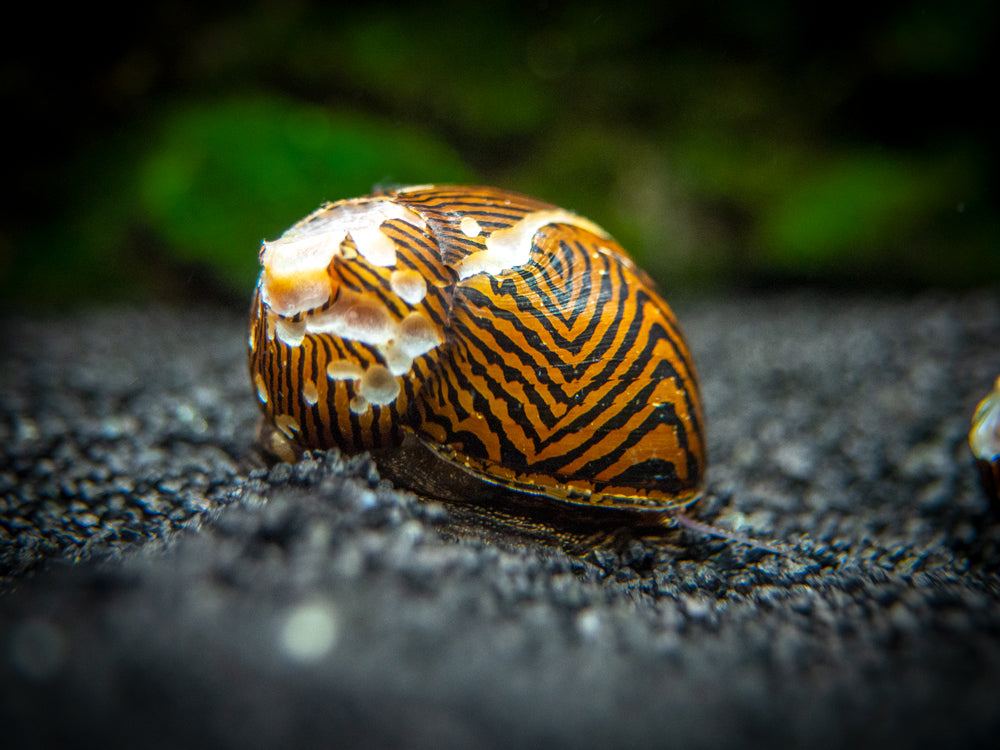
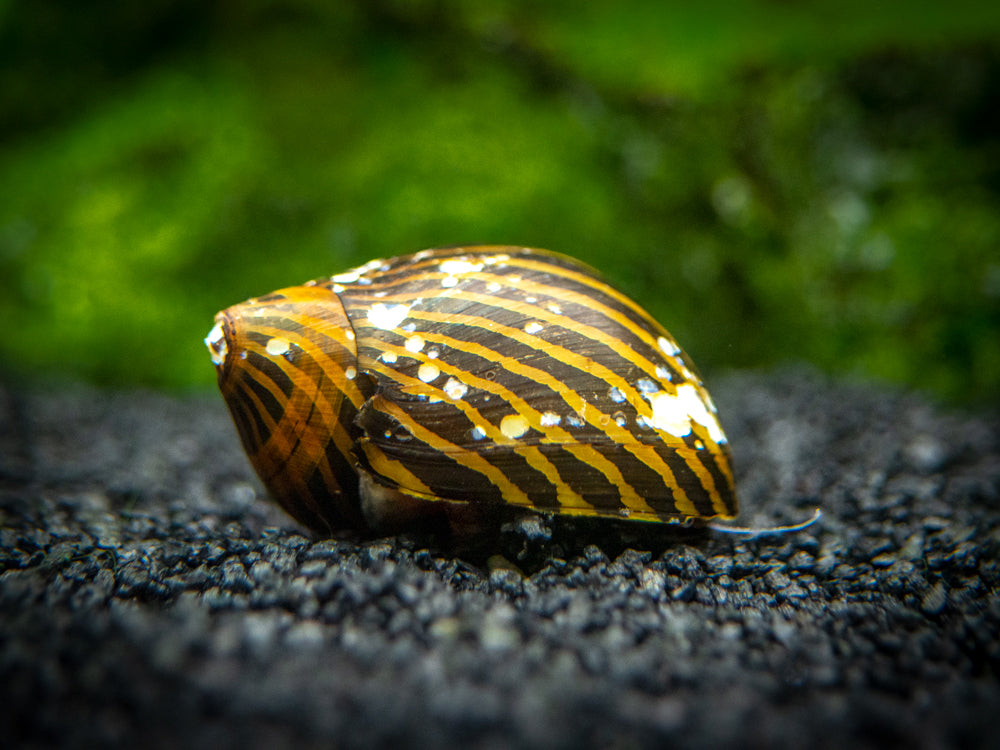
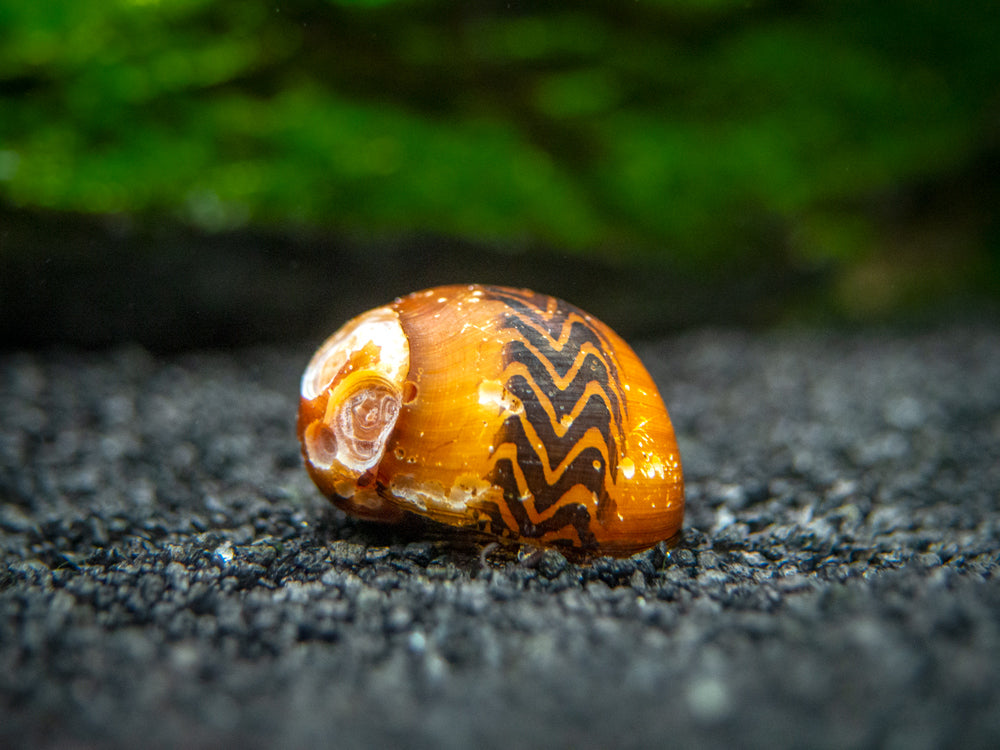


B-Grade Nerite Snails - Assorted Species, Colors, and Patterns!
- In stock, ready to ship
- Backordered, shipping soon
Nerite Snails are widely believed to be the best snail in the aquarium hobby for eating algae. They are totally safe with any fish, shrimp, or plants, and are completely peaceful. Nerite Snails require salt water to reproduce, so they will never overpopulate your aquarium (as some freshwater snails are known to do).
- Among the most voracious algae-eating snails
- Do not reproduce in freshwater
- Safe with plants
- Completely peaceful
- Temperature: 65° - 85° F (18° - 29° C)
- pH: 6.5 - 8.0
- KH: 5 - 12 dKH
- Minimum tank size: 2 gallons per snail
- Diet: Nerite Snails can subsist on algae if there is enough present in the aquarium. Their diet can be supplemented with algae wafers and/or blanched vegetables such as zucchini, kale, spinach, or cucumber.
- Social behavior: Peaceful and solitary; will not engage with tankmates.
- Origin: Northeast/East/South Africa (Zebra Nerite), India, Indo-Pacific (Tiger Nerite), Indo-Pacific (Sun Thorn, Zebra Thorn Nerite), Indo-Pacific, India, Africa (Black Racer Nerite), North/Central/South American Gulf Coast (Tiger Eye Nerite)
- Average adult size: .25 - 1.5 inches (.6 - 3.8 cm)
- Average purchase size: .25 - 1 inch (.6 - 2.5 cm)
What does “B-Grade” mean for Nerite Snails?
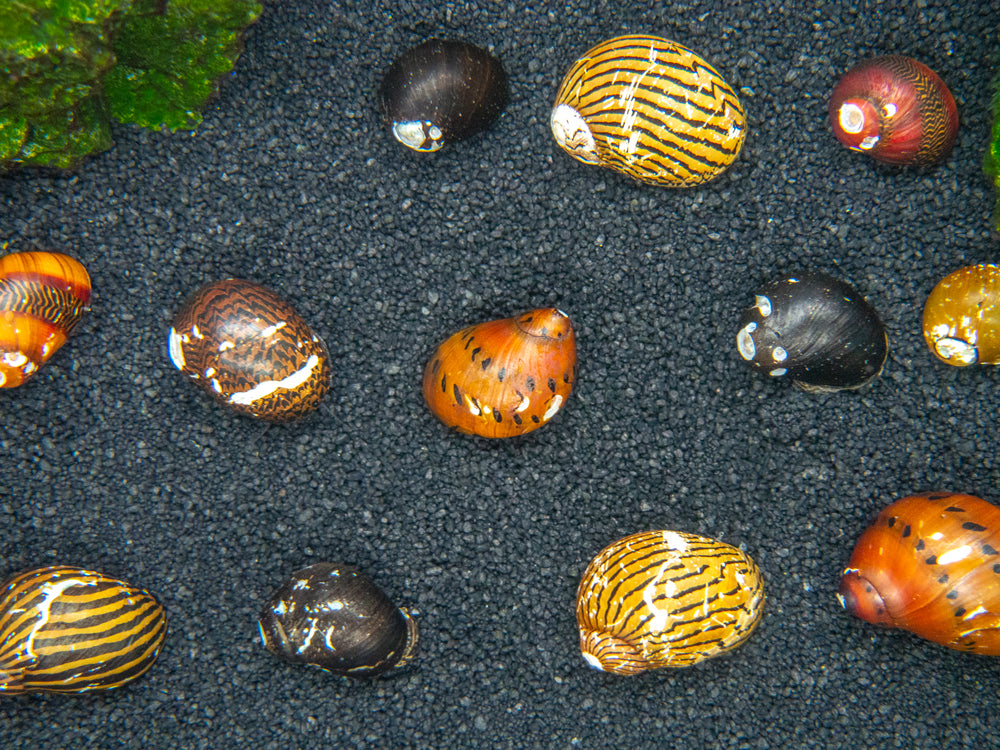
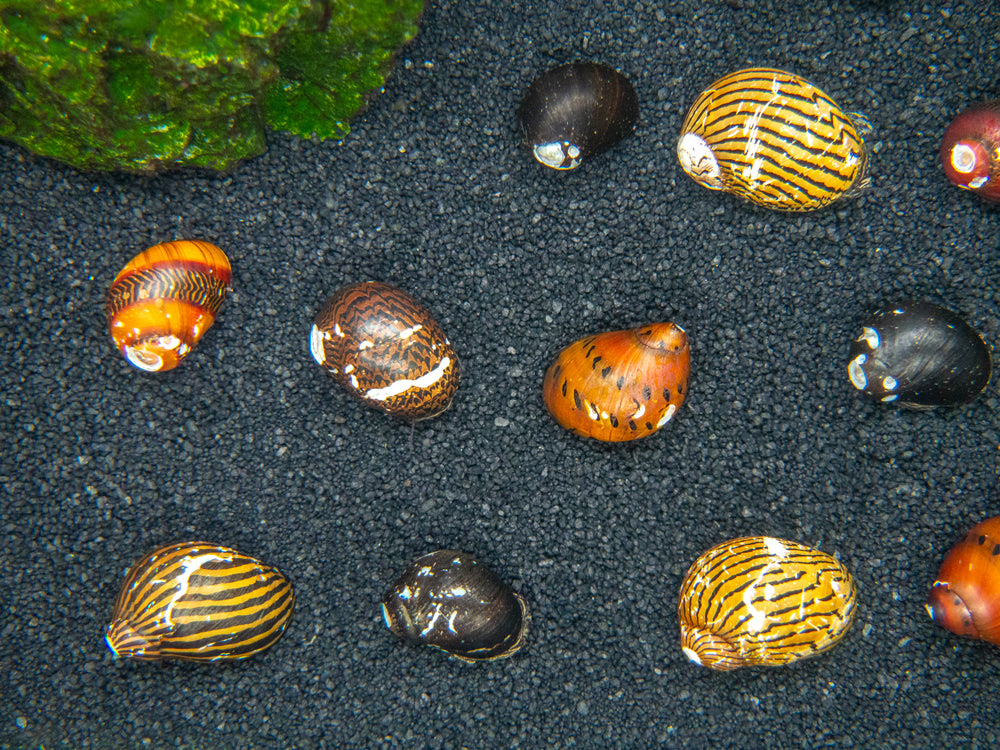
B-Grade nerites are healthy, active snails that don’t meet cosmetic standards for premium listings. This usually means shell scuffs, chips, worn tips, uneven coloration, or growth marks — not health issues.
Are B-Grade Nerite Snails healthy?
Yes. These snails are fully healthy and functional algae grazers. The grading is purely cosmetic and does not affect behavior, lifespan, or usefulness.
What kinds of nerite snails are included?
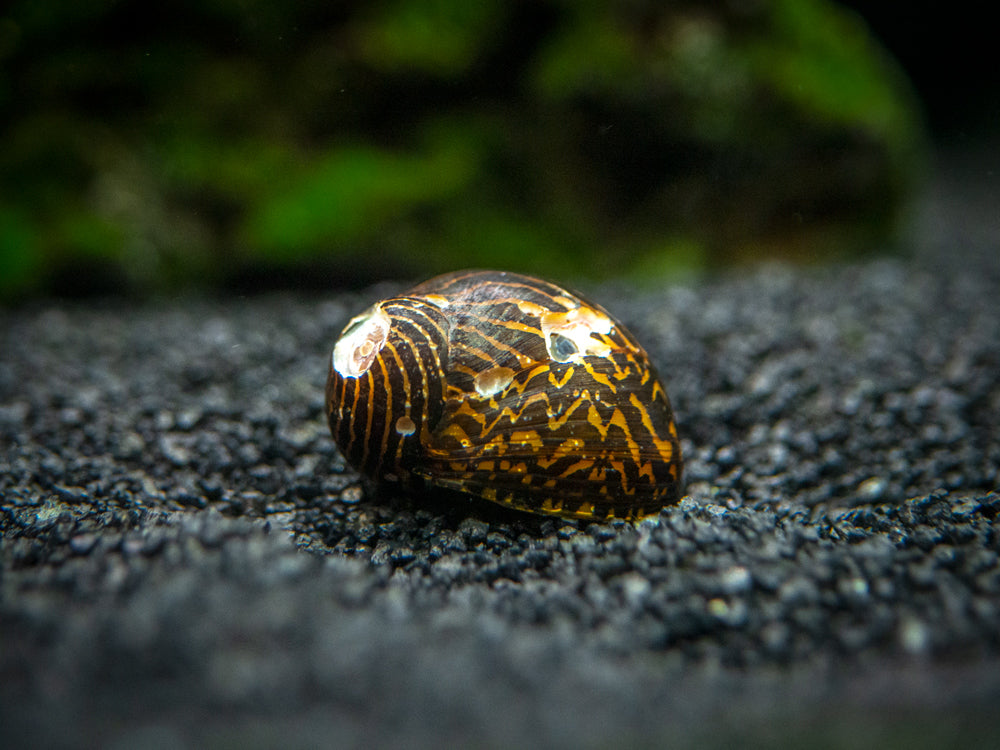
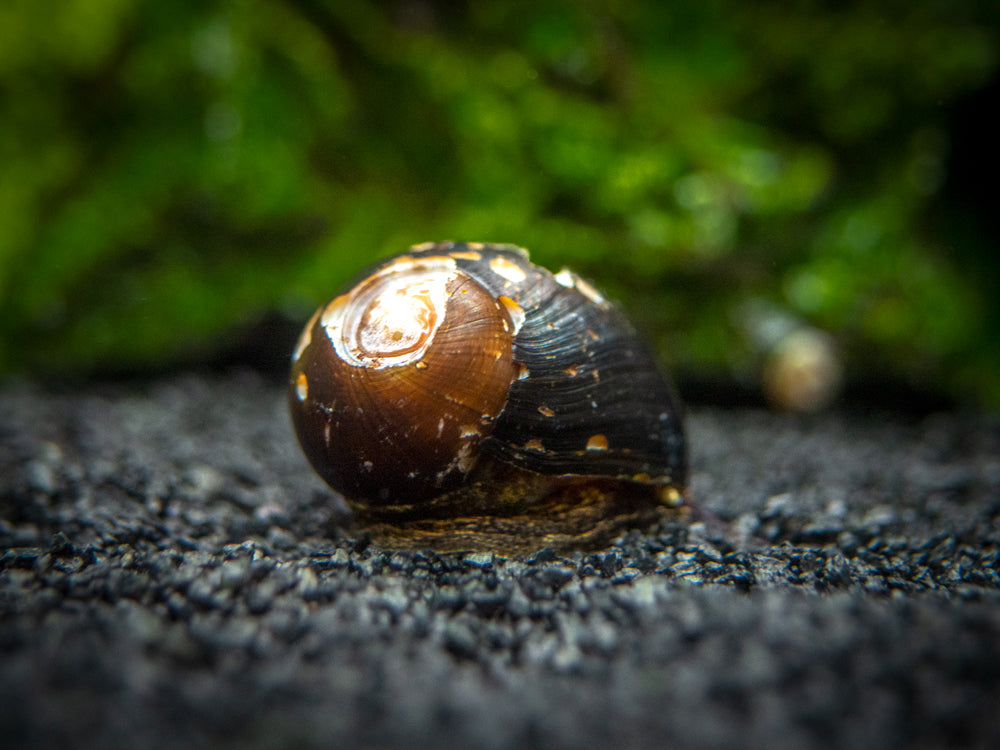
This is an assorted group and may include different nerite species, shell shapes, colors, and patterns. Striping, spotting, marbling, and solid shells are all possible.
Do B-Grade Nerite Snails behave differently than premium nerites?
No difference at all. They graze, move, and function exactly the same as higher-grade nerites.
Are B-Grade Nerite Snails good algae eaters?
Yes. Nerites are among the best algae-eating snails, especially on glass and hard surfaces. B-Grade snails are just as effective as premium ones.
Do B-Grade Nerite Snails eat plants?
No. Nerite snails are completely plant safe and will not damage healthy leaves.
Are B-Grade Nerite Snails safe with shrimp and fish?
Yes. They’re peaceful and shrimp safe. They won’t bother fish, shrimp, or other invertebrates.
Will B-Grade Nerite Snails reproduce in freshwater tanks?
They may lay small white eggs on hard surfaces, but the eggs will not hatch in freshwater. Population growth is not a concern.
Will shell imperfections get worse over time?
Not usually. With proper calcium and stable water, new shell growth can come in much smoother than older damaged areas.
Who are B-Grade Nerite Snails best suited for?
They’re ideal for aquarists who care more about function than appearance. If you want excellent algae control at a better value and don’t mind cosmetic flaws, B-Grade nerites are a great choice.
Shipping, Arrival & Acclimation
How are B-Grade Nerite Snails shipped?
They’re packed for live arrival with insulation and temperature control used as needed. Shipping methods prioritize animal health over speed.
What should I do when my snails arrive?
Open the box promptly and inspect the snails while they’re still sealed in the bags. Nerites commonly arrive inactive or tightly closed after transit — this is normal.
How should I acclimate B-Grade Nerite Snails?
A slow acclimation works best. Gradually introduce tank water to the bag water so the snails can adjust to temperature and water chemistry differences.
Is drip acclimation recommended for nerite snails?
Yes. Drip acclimation helps reduce stress and supports healthy shell adjustment, especially if your water parameters differ from the shipping water.
Should I expect immediate movement after adding them to the tank?
Not always. Some nerites begin grazing within minutes, while others may take several hours to emerge. Both behaviors are normal.
How can I tell if a nerite snail is alive after arrival?
If the operculum (trap door) is tightly closed, that’s usually a good sign. Once settled, most snails will slowly emerge and begin grazing.
Should I feed B-Grade Nerite Snails right away?
Usually not necessary. They’ll begin grazing on algae and biofilm naturally. Supplemental food can be offered later if algae levels are low.
What tanks are best for newly arrived nerite snails?
Established, fully cycled tanks with visible algae and stable parameters are ideal. Nerites do best in mature systems.
Shell Care & Calcium (Important for All Invertebrates)
Once acclimation is complete, long-term success depends on shell and mineral support. This applies to all snails, shrimp, crabs, and crayfish.
Why is calcium important for invertebrates?
Calcium and trace minerals are required to build and maintain shells and exoskeletons. Without proper mineral support, shells can thin, pit, crack, or fail to harden properly.
Which animals need calcium and mineral support?
All invertebrates do. If it has a shell or exoskeleton, minerals matter.
What problems are caused by low minerals?
Common issues include shell erosion, pitting, cracking, soft shells, and failed molts — especially after shipping or water changes.
Is it normal to see molts or shell changes after arrival?
Yes. Some invertebrates may molt shortly after acclimation, and new shell growth often looks different from older sections. This is normal.
Should molts or shed shells be removed from the tank?
No. Leaving molts in the tank allows invertebrates to reclaim calcium naturally. They’re often consumed within a day.
Can damaged shells be repaired?
Old damage won’t disappear, but new growth can improve significantly once mineral balance, diet, and stability are corrected.
Does water hardness affect shell health?
Yes. Extremely soft or acidic water can contribute to shell erosion over time. In these cases, supplemental calcium becomes especially important.
What’s the easiest way to add calcium?
Cuttlebone is a simple, low-maintenance option that slowly releases calcium and can remain in the tank.
Does diet affect shell health?
Absolutely. In addition to natural grazing, offering quality invertebrate foods helps provide consistent mineral intake. Dedicated foods from Kats Aquatics are an easy way to support shell strength and long-term health.
What helps most after acclimation?
Stable parameters, available calcium, gentle feeding, and avoiding sudden changes. Consistency is the key to success.
For the safety of our animals, we only ship live fish, crabs, and select other inverts exclusively via UPS 1 Day Air. If your order contains this item, you will only see UPS 1 Day Air as a shipping option during checkout. If other items are in your cart that can ship with 2 day or standard shipping options the only shipping method you can still select is UPS 1 Day Air.
UPS 1 Day is a description of the duration of time a shipment will spend in transit once it has been shipped. This does not guarantee the package will be shipped the same or next day from which the order was placed.
Shipping Schedule for this service
Current Handling Time:
1-9 business days
Here at Aquatic Arts, we consider the welfare of the live animals we are shipping to be of the foremost importance. This process is much more involved than simply creating a shipping label and affixing it to a box. Depending on the order, it takes from 4 to 7 people to complete this process properly. We check the weather conditions here where they fly out of the Indianapolis UPS facility and the destination for each shipment. We start early each morning and go through a multi-step process to have the day's shipments prepared in time for the UPS pickup. The volume of orders in our system also affects the processing time. Therefore our stated handling time is 1-9 business days.
Shipping Rate
Pricing is by size of package needed to fill entire order and distance it must travel. It will be calculated at checkout.
